Health care can be like standing at a crossroads. You might get a serious diagnosis or a complex surgery plan. Or, you might be unsure about a chronic condition.
In these moments, many people want clarity and confirmation. They look for practical advice that fits their busy lives. Telemedicine remote second opinion services help by connecting you with top specialists online.
This guide shows how to get remote medical opinions in the U.S. and worldwide. It talks about programs from Teladoc Health, MyAmericanDoctor, and big hospitals like NewYork-Presbyterian, Cleveland Clinic, and Cedars-Sinai. These programs let you talk to board-certified doctors and experts from around the world.
For example, the Cleveland Clinic has a page for virtual second opinions at virtual second opinions.
You’ll learn about timelines and what you can expect. You’ll find out how quickly you can get a written Expert Medical Opinion. The guide also talks about benefits for members and how some plans cover these services for free.
Key Takeaways
- Telemedicine remote second opinion services connect patients to specialists without travel.
- Virtual healthcare consultations suit serious diagnoses and pre-surgical decisions.
- Institutional programs (Cleveland Clinic, NewYork-Presbyterian, Cedars-Sinai) offer board-certified reviews.
- Typical deliverable: a written Expert Medical Opinion in roughly 10 working days.
- Some employer- or insurer-sponsored plans cover telehealth specialist consultations at low or no cost.
What are Telemedicine Remote Second Opinion Services?
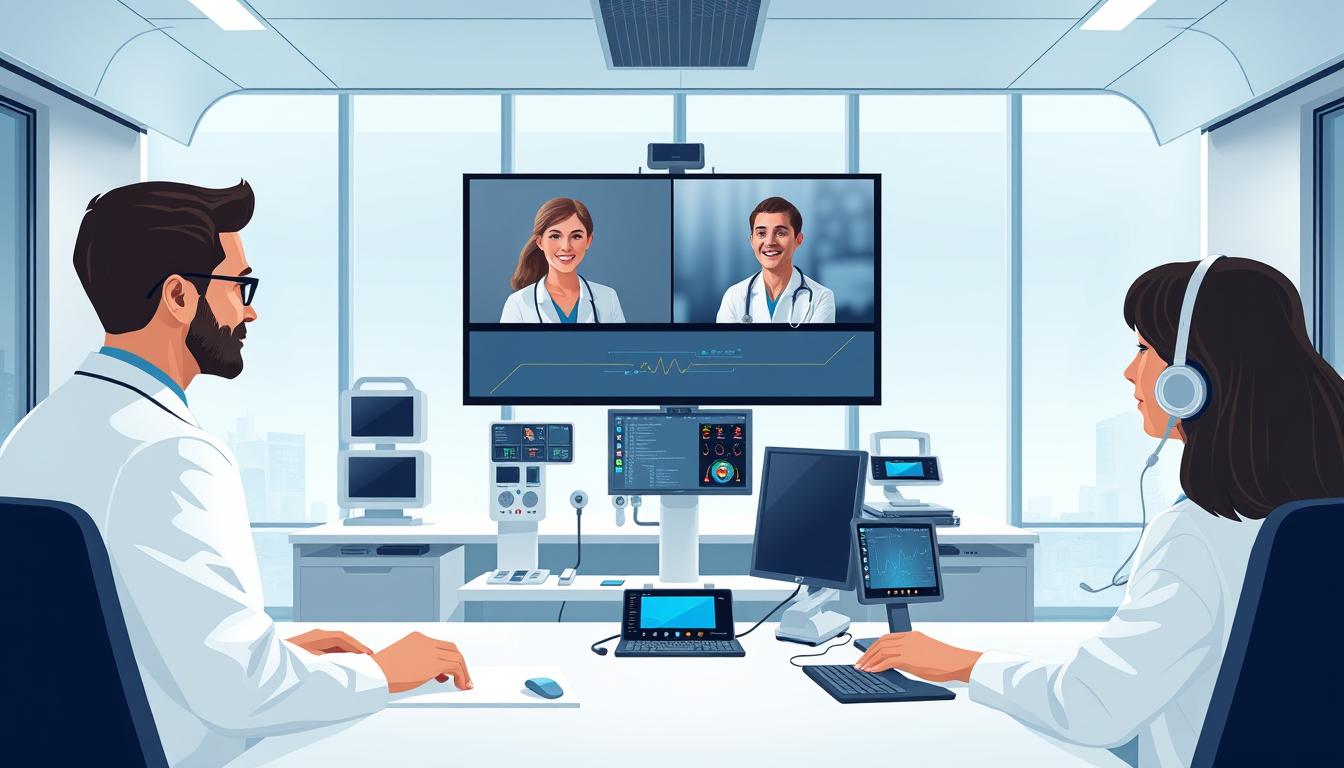
Telemedicine remote second opinion services let patients get a second look at their diagnosis and treatment plan online. They help confirm or change clinical decisions. This can avoid unnecessary procedures and clear up complex or disputed cases.
Definition and Purpose
A remote second opinion is a deep review of your medical records and plans by another specialist. They do this over the phone, video, or online. This way, you get a second opinion without having to travel.
They check if your diagnosis is right, if surgery is needed, and suggest other treatments. This is helpful for many conditions like cancer, heart problems, and rare diseases. It helps reduce the chance of wrong diagnoses and gives peace of mind.
Key Features of Remote Second Opinions
Experts are chosen by a team based on their skills and experience. Big networks like Teladoc and MyAmericanDoctor connect you with top U.S. doctors for these reviews.
First, a nurse or advocate gathers your medical history. Then, experts review your records and write a report for you and your doctor, if you agree.
These reviews are private and unbiased. You can talk to doctors over the phone, video, or through apps. They also support many languages, helping people worldwide.
| Feature | What it Does | Clinical Benefit |
|---|---|---|
| Expert Selection | Matches cases to subspecialists in large networks | Improves diagnostic accuracy and relevance |
| Structured Process | Intake, records aggregation, expert review, written report | Creates clear, actionable recommendations |
| Records Aggregation | Collects years of history and imaging for review | Provides complete context for decisions |
| Confidential Delivery | Reports shared with patient first, then clinicians with consent | Keeps privacy and maintains independence |
| Access Modes | Phone, video, secure app; some offer multilingual support | Reaches more patients, including those in remote or diverse areas |
| Digital Integration | Works with electronic health records and secure portals | Makes review faster and supports better care coordination |
Patients looking for a second opinion can use these services. They help compare different opinions. Virtual second opinions and e-consultations are key parts of modern healthcare, connecting patients with experts.
Benefits of Telemedicine Remote Second Opinions
Telemedicine lets patients get second opinions from experts online. This makes it easier to find the best care. It also saves money and time.
Access to Specialists
Remote services connect patients with top doctors in many fields. You don’t have to travel. Companies like Teladoc Health and MyAmericanDoctor help find the right doctor for you.
This is great for rare diseases and complex cancer cases. Even if your local hospital doesn’t have the right specialist, you can get help online.
Convenience and Flexibility
You can talk to doctors from home. You can choose to meet them anytime or schedule a time that works for you.
Case managers help with paperwork. You get a report to share with your doctor. This makes it easier for people who can’t travel.
Cost-Effectiveness
Many plans cover second opinions for free. Teladoc and some insurance companies offer this. Getting a second opinion can save you money by avoiding bad treatments.
It’s important to check if your plan covers it. This way, you know what to expect before you start.
How Telemedicine Remote Second Opinions Work
Understanding how telemedicine works helps patients make better choices. It involves clear steps like filling out forms, sending records, and getting expert advice. This advice is based on a detailed review of your medical history.
Initial Consultation Process
First, patients sign up on a website like Teladoc Health. They fill out a form with their info and why they need a second opinion. They choose if they want to talk by phone or video.
A nurse or social worker helps by getting more info and talking to your doctor. They make sure you understand the rules of privacy and what you can expect.
Submission of Medical Records
Having all your medical records helps experts give better advice. You can upload your records or let the platform get them for you. Teladoc can get records from up to three years ago with your permission.
Records are kept safe and in line with rules. A doctor then makes a summary of your case. This includes your medical history, what you’re currently dealing with, and any treatments you’ve had.
Receiving the Opinion
The specialist then reviews your case and writes a detailed report. This report might change your diagnosis or suggest new treatments. It explains why these suggestions were made.
How long it takes to get this report depends on how complex your case is. Most services try to get it to you within ten days. You can ask for more information through your Case Manager. The doctor might also call you to discuss what to do next.
For more information on what to expect, check out this guide: virtual second opinion services overview.
Choosing a Telemedicine Provider
Finding the right provider is key. It affects your health and peace of mind. Look for a provider that is thorough, open, and quick. They should also work well with your current healthcare team.
Factors to consider
Make sure the specialist is qualified. Check if they are certified and have the right experience. Good platforms match you with experts to make sure you get the best advice.
Choose a provider that is independent and open. They should give you advice without any conflicts of interest. Also, make sure they keep your health information safe.
Look at how they handle your medical records. A good provider will organize and summarize your records well. This helps them give you clear advice.
Find out how long it takes to get an answer. Ask if you can talk to the specialist again after the initial advice. Quick and clear answers help you make decisions faster.
Check the cost and what is covered. Some providers may be free or low-cost. See if they can help with prescriptions or finding local doctors.
Make sure the provider can speak your language. If you travel a lot, find one that works in many places. This makes it easier to get help when you need it.
Reputable platforms and services
Teladoc Health offers a lot of telemedicine services. They have expert opinions and a system for organizing your medical records. Many employers and insurance companies work with Teladoc.
MyAmericanDoctor helps people outside the U.S. get second opinions from American doctors. This service connects you with top U.S. specialists for advice.
Big U.S. health systems like Cleveland Clinic and NewYork-Presbyterian also offer second opinions. They have teams of experts who work together to help you.
When choosing, look for certified specialists and clear privacy policies. Also, check if they have good reviews and work well with local doctors. These things help make sure you get the best care from telemedicine services.
Common Medical Conditions for Remote Second Opinions
Remote second opinions help when cases are tricky or very important. Patients get help without leaving home. They check diagnoses, look at treatment options, and compare plans.
Cancer Diagnosis
Oncology is big on using telemedicine for second opinions. A second look at tests can change treatment plans. It might switch a patient from general chemotherapy to a more focused treatment.
Places like Cleveland Clinic and Cedars-Sinai offer virtual reviews. Stanford Medicine works with Microsoft to make decisions easier. This partnership uses AI to help doctors.
Complex Surgeries
Getting a second opinion for surgeries is smart. Experts look at images and notes to make sure it’s needed. They might suggest not doing the surgery at all.
Surgeries like joint replacements and heart surgery get reviewed. Telehealth lets experts talk to local teams. This can avoid unnecessary surgeries.
Chronic Illness Management
Remote opinions help manage long-term conditions. Heart problems, epilepsy, and Parkinson’s need careful treatment plans. Sometimes, advanced treatments are needed.
Virtual consultations help keep care on track. They adjust medications and plan care with specialists. Mental health gets extra help too.
| Condition | Primary Benefit of Remote Opinion | Typical Inputs Reviewed |
|---|---|---|
| Cancer | Confirm staging and target treatments | Pathology slides, imaging, prior treatment notes |
| Complex Surgery | Assess necessity and surgical approach | Operative notes, CT/MRI, functional assessments |
| Heart Failure | Optimize medication and device strategies | Echo reports, labs, medication history |
| Neurological Disorders | Refine diagnosis and therapy sequencing | EEG/MRI, neurologic exam summaries, medication trials |
| Autoimmune Conditions | Identify advanced therapies and referrals | Serology, specialist notes, imaging |
Insurance Coverage for Remote Second Opinions
The cost of telemedicine remote second opinions varies. It depends on your insurance plan and agreements with providers. Start by checking your insurance benefits. Many plans work with telehealth services like Teladoc or hospital systems.
Policy language can be hard to understand. Look for terms that explain advisory opinions and authorized treatment decisions. Some services give expert reviews that doctors use to plan care.
Out-of-pocket costs depend on your plan and how services are billed. If services aren’t covered, ask about fees for reviews and reports. Knowing costs helps you choose the best provider.
Additional costs may come up for tests or visits to specialists. These often need insurance approval. Check if your plan covers these costs and what steps you need to take.
Prescription coverage can change by location and insurance rules. If a doctor prescribes medication online, check if your plan covers it. Make sure to ask about pharmacy rules and any limits on mail-order prescriptions.
Use this checklist when you call member services:
- Confirm coverage for telemedicine remote second opinion services and virtual second opinion services.
- Ask whether telehealth specialist consultations are in-network and if prior authorization is required.
- Request a list of covered specialties and whether dependents are eligible.
- Get fee schedules for expert review, report delivery, and follow-ups when services are out-of-network.
- Verify prescription coverage for medications prescribed after online medical advice.
| Coverage Element | Questions to Ask | Typical Outcome |
|---|---|---|
| Eligibility | Is the member eligible? Are dependents covered? | Covered when included in employer or insurer partnerships; otherwised billed per service. |
| Cost Sharing | Are copays or coinsurance required for virtual second opinion services? | Copays vary; some plans waive fees for second opinions under certain programs. |
| Network Status | Are telehealth specialist consultations considered in-network? | In-network reviews lower out-of-pocket costs; out-of-network reviews may be billed to the patient. |
| Downstream Care | Will follow-up tests or specialist visits be covered after a second opinion? | Often require prior authorization; coverage depends on medical necessity criteria. |
| Prescriptions | Will medications from online medical advice be covered at home or while traveling? | Coverage depends on pharmacy networks, jurisdiction, and plan rules; check before filling. |
Legal and Ethical Considerations
Telemedicine helps patients and doctors a lot. But, it also brings up legal and ethical issues. These need to be solved before giving remote medical advice. This guide talks about privacy, consent, and fairness in digital health.
Patient Privacy and Confidentiality
Telemedicine services must protect patient privacy. In the U.S., HIPAA rules protect health info. Companies like Teladoc Health keep records safe and share them only with the patient.
Patients should know where their records are kept. They should also know who can see them and how reports are shared. Using encryption and regular checks helps keep patient info safe.
Informed Consent
Before starting, patients sign forms about remote care. These forms talk about risks and privacy. They also say if the doctor will be told and how records will be shared.
Experts should not have any conflicts of interest. Having clear rules and choosing experts wisely keeps opinions fair. Getting consent helps patients control who sees their report and how it’s used.
Challenges of Telemedicine Remote Second Opinions
Telemedicine remote second opinions have many benefits. But, they also face challenges that doctors and patients must deal with. This guide will talk about common problems and how to solve them.
Technology Barriers
Good internet and devices are key for virtual health talks. But, some areas and older folks might not have these things.
Big files like images and slides can slow things down. But, systems like Ambra help a lot. Quick follow-ups from staff also speed things up.
Rules about who can see patients in other states can be tricky. Travelers should check if their health plans work abroad. Employers and insurers should make sure telehealth works everywhere needed.
Miscommunication Risks
Online talks can miss important details that face-to-face talks catch. Using clear forms and summaries helps keep things straight.
Language differences can cause problems. Many platforms list languages and offer interpreters. Patients should check this before their appointment to avoid delays.
If the main doctor isn’t involved, things might not move forward. Having case managers share info and plan next steps helps a lot.
| Challenge | Impact | Practical Fix |
|---|---|---|
| Low bandwidth or outdated devices | Failed or poor-quality virtual healthcare consultations | Offer audio-only options, simplified upload portals, and device-check guides |
| Large medical records and imaging | Delayed review and extended wait times | Use secure cloud transfer tools and assign record coordinators |
| Licensing constraints | Limited specialist availability across states | Verify licensure upfront and maintain a network of cross-state providers |
| Loss of clinical nuance | Misinterpretation of symptoms or plans | Provide detailed clinical summaries and schedule follow-up e-consultations |
| Language barriers | Misunderstood instructions or consent | Confirm interpreter availability and list provider languages |
| Primary team not looped in | Implementation delays of recommended changes | Authorize case managers to coordinate and share reports |
Real Patient Experiences
Real stories show how telemedicine changes care paths. Patients and doctors talk about clearer diagnoses and faster help. They also share how treatment plans change after a remote review.
Case Studies of Successful Outcomes
An oncology case changed a patient’s treatment. A review of slides and images led to a new plan. This plan used targeted therapy instead of surgery.
In neurology, a patient’s seizures were better understood. Experts looked at EEGs and history. They found the seizures were not caused by the mind but by the brain.
Orthopedic and cardiac cases also show benefits. A patient avoided surgery thanks to a second opinion. They tried physical therapy and injections first, which helped a lot.
Testimonials from Users
Patients feel less worried after getting expert feedback. They feel more confident with clear options and a second opinion to share.
People like how easy it is to get help online. They don’t have to travel. They also like how complex info is explained simply.
| Aspect | Patient Report | Impact |
|---|---|---|
| Access to Specialists | Remote link to U.S. oncologists and neurologists from abroad | Faster expert input and broadened options |
| Diagnostic Accuracy | Re-evaluation of imaging and pathology | Clearer diagnosis and tailored treatment |
| Care Coordination | Case manager organizes records and explains reports | Reduced confusion and better follow-through |
| Convenience | Virtual visits replace long trips | Lower travel costs and quicker decisions |
| Emotional Effect | Written opinion and debrief ease anxiety | Improved confidence in chosen plan |
These stories show the benefits of remote medical opinions. They help make safer plans and improve communication between patients and doctors.
The Future of Telemedicine Remote Second Opinion Services
Telemedicine is changing. It’s moving from just consultations to being part of a bigger care plan. Now, health records, images, and telemedicine sites are working together. This makes getting help faster and more useful for everyone.
Innovations on the Horizon
We’ll see more doctors working together online. Companies and insurance groups are adding teams to help with tough cases. These changes will make it easier for people to get second opinions.
The Expanding Role of AI in Healthcare
AI will help doctors by spotting important issues and finding patterns in records. But, humans will always be needed to make the final call. Rules will be set to keep things fair and protect patients.
Telemedicine is getting better and more available. It will use a mix of human skills, teamwork, and AI. This will help patients and doctors make better choices. The future of telehealth looks bright and focused on the patient.
FAQ
What is a telemedicine remote second opinion and why seek one?
A telemedicine remote second opinion is when a specialist reviews your case online. They look at your diagnosis, records, and treatment plans. This helps confirm or change your diagnosis and find better treatment options.
It’s great for serious conditions like cancer and heart disease. It gives you peace of mind and helps avoid bad diagnoses.
How do remote second-opinion services select the reviewing specialist?
Services pick specialists based on their skills and experience. They use a team to make sure you get the best expert. This way, you get the right specialist for your case.
What are the typical steps in the initial consultation process?
First, you sign up and fill out a form about your health. Then, a case manager gets your medical records and talks to your doctor if needed. They prepare everything for the specialist to review.
How should patients submit medical records for a remote second opinion?
You can upload your records online or let the service get them for you. Some services even put together a summary of your records for the specialist.
What does the expert report look like and how long does it take?
The report is a detailed review of your case. It tells you if your diagnosis is right or if it needs changing. It also suggests treatment options. Most reports take about 10 days, but it can take longer.
Can I discuss the opinion with the reviewing specialist after I receive the report?
Yes, you can talk to the specialist after getting the report. They can explain things more and help with your next steps. The exact process depends on the service.
Are telemedicine second opinions covered by insurance or employer benefits?
Many plans cover second opinions for free. Check with your insurance or employer to see if you’re covered. This way, you can get a second opinion without extra cost.
What if my benefits do not include a second-opinion service—what are the costs?
If you’re not covered, you might have to pay for the second opinion. This includes the report and any follow-up talks. Make sure to ask about costs before you start.
How do remote second opinions protect patient privacy and confidentiality?
Good services follow strict privacy rules. They use secure online systems to keep your records safe. They also make sure you’re okay with sharing your report with your doctor.
Will a remote second opinion replace my treating physician’s recommendations?
Second opinions are just suggestions. Your doctor is in charge of your care. But, you can share the report with your doctor to help make decisions together.
Are telemedicine second opinions suitable for cancer and other complex conditions?
Yes, they’re great for serious conditions like cancer. They can help change treatment plans and suggest better options. Many services have experts in these areas.
How do language, licensing, and cross-border issues affect access?
Access can depend on the service and where you are. Some services support many languages and work with doctors in different countries. But, rules can limit who can give advice.
What technical requirements are needed for a telemedicine second opinion?
You need a good internet connection and a device with a camera. The service should be easy to use. Providers can help with any tech issues.
How do providers ensure the independence and ethical integrity of expert opinions?
Providers follow strict rules to keep opinions fair. They choose experts carefully and make sure there’s no conflict of interest. They also keep your information private.
Can a remote second opinion help avoid unnecessary surgery?
Yes, they can. Second opinions often find better ways to treat you without surgery. This can save you from big surgeries and help you recover faster.
What happens if additional testing is needed after the second opinion?
If you need more tests, the report will say so. You’ll need to arrange and pay for these tests yourself. The service can help with this.
How should patients choose between platforms like Teladoc, MyAmericanDoctor, or hospital-based programs?
Look at the qualifications of the specialists and how they choose them. Check their privacy and how fast they work. See if they work well with your current doctors.
What are the main limitations and risks of remote second opinions?
There are some risks like tech problems and delays. But, good services try to avoid these. They make sure you get the help you need.
How is AI being used in second-opinion workflows?
AI helps sort cases and find important information. But, a real doctor always makes the final decision. This makes sure you get the best care.
How quickly can one expect an expert opinion for urgent cases?
Urgent cases get fast service. Services like Teladoc work quickly when it’s really important. But, how fast it is depends on the case.
How can a patient share the expert report with their treating physicians?
You can ask the service to send the report to your doctor. Or, you can share it yourself. The service can help with this.
Do employers and insurers benefit from providing second-opinion services?
Yes, they can save money and improve care. Second opinions can avoid unnecessary treatments and save on costs. It’s a good thing for employees and insurers.