At times, success feels empty without good health. Maybe it’s missing workouts or bad sleep. Telehealth digital health coaching offers a solution. It uses digital tools and human insight to change habits for the better.
This guide is for ambitious people who want better health. It shows how digital wellness coaching and telehealth services work together. They offer personalized support and digital health tools to keep you well.
Online health coaching and virtual health coaching offer many benefits. They improve your health by helping you move more, eat better, sleep well, and manage stress. They also help you manage chronic conditions better.
Studies back up these benefits. They show that digital health coaching with a coach is effective. It helps more than automated programs alone.
This article is a step-by-step guide. It mixes strategy with real-life examples. It shows telehealth digital health coaching as a smart choice for lasting health. It gives clear steps for those ready to start.
Key Takeaways
- Telehealth digital health coaching blends personalized coaching with scalable digital tools for lasting behavior change.
- Digital wellness coaching improves access and tailors plans for busy professionals.
- Telehealth coaching services support measurable improvements in activity, nutrition, sleep, and stress.
- Evidence shows coach-led digital interventions boost engagement and retention versus automated-only approaches.
- Online health coaching and virtual health coaching are practical routes to better chronic-condition self-management.
Understanding Telehealth and Digital Health Coaching
Telehealth digital health coaching mixes doctor’s advice with how we behave to help us change for good. It uses video chats and apps with wearables and AI to give personal advice. This part explains how it works, why it’s important now, and how it’s different from seeing a coach in person.
Definition and Overview
Digital programs connect a coach with a client online. They use video, phone, or text. Coaches use data from smartwatches and glucose meters.
There are different types. Some use humans, some use AI, and some use both. Telemedicine coaching focuses on working with doctors. Remote health coaching helps change behavior. Online health coaching is flexible and can reach many people.
Importance in Modern Healthcare
Health systems and global groups see digital tools as key to making healthcare better. They help reach people in hard-to-reach places.
Digital tools help prevent and manage diseases by doing routine tasks and tracking data. They can work with devices like Apple Watch to help many people at once.
Key Differences Between Telehealth and Traditional Coaching
Telehealth coaching uses remote monitoring and messages to keep in touch. It can give feedback and use data from devices in plans.
In-person coaching offers a deeper connection and nonverbal cues. Digital tools alone might not keep people engaged. But, with a coach, people stick to plans better and get better results.
| Feature | Telehealth / Digital Health Coaching | Traditional In-Person Coaching |
|---|---|---|
| Delivery Channels | Video calls, messaging, apps, wearables | Face-to-face meetings, phone follow-ups |
| Data Integration | Continuous sensor data, automated logs | Occasional self-reports, paper records |
| Scalability | High—can reach many users across geographies | Limited by coach availability and travel |
| Engagement Strategies | Asynchronous nudges, short modules, AI chat | Deep conversational work, in-person rapport |
| Best Use Cases | Chronic disease management, preventive programs | Complex behavioral therapy, high-touch support |
Benefits of Telehealth Digital Health Coaching
Telehealth digital health coaching changes how we get care. It makes it easier to get help without traveling far. This is great for older adults and those with long-term illnesses.
Digital wellness coaching lets doctors make plans for you through apps. It’s cheaper and reaches more people, even in rural areas. A good telehealth platform helps you reach your goals with educational tools.
Improved Accessibility
Remote health coaching removes distance barriers. You can talk to doctors online instead of traveling. It’s perfect for those who can’t move around much.
Personalized Health Plans
Health coaches make plans based on your data. They help you set goals and track your progress. This way, you get help that fits your life.
Continuous Support and Motivation
Staying in touch with your coach keeps you motivated. They use your data to adjust your plan. Studies show this approach works well, even with technology.
| Benefit | How It Works | Impact |
|---|---|---|
| Accessibility | Video visits, asynchronous messaging, national app distribution | Reduced travel, wider rural reach, better follow-up |
| Personalization | Data-driven plans, weekly actions, tailored education | Higher adherence, targeted lifestyle change, measurable goals |
| Continuous Support | Wearable data, real-time alerts, coach check-ins | Sustained motivation, faster adjustments, improved outcomes |
| Scalability | Telehealth coaching platform with hybrid coaching options | Broader reach with maintained quality, cost efficiency |
How Telehealth Coaching Works
Telehealth digital health coaching uses tech and human help for lasting change. It starts with a detailed check of your lifestyle and health history. This sets the stage for working together with your coach.
Initial Consultation Process
It begins with a video or phone call. You talk about your activity, sleep, eating, and stress. Your coach also looks at your health and tech comfort.
Then, you get a weekly plan. It fits your health needs and daily life with tech.
Goal Setting and Tracking Progress
Coaches set clear goals with you. They help you pace yourself with confidence scores and steps. You get quizzes, photo tasks, and reminders to stay on track.
Your progress is shown on easy-to-read dashboards. Studies track your success over time. Seeing your progress keeps you motivated.
Tools and Technologies Used
Telehealth uses apps, websites, and wearables. These tools send data to your coach. Some programs use AI chatbots for more personal help.
They look at your steps, meds, food, sleep, and app use. This mix helps coaches understand you better in real-time.
Choosing the Right Digital Health Coach
Choosing a coach starts with what you want. Look for someone who matches your goals and how you like to communicate. It’s also important to find someone who fits well with you in the long run.
Credentials and Experience
Check if your coach has the right certifications. Look for things like the International Consortium for Health & Wellness Coaching (ICHWC) or EMCC-accredited credentials. Coaches with backgrounds in nursing or psychology can offer valuable insights.
Ask about their experience and how they keep learning. This shows they care about doing a good job and staying up-to-date.
Specialties and Areas of Focus
Find a coach who specializes in what you need. Whether it’s managing diabetes or improving mental health, look for coaches who focus on your area of concern. Good programs will tell you what they specialize in.
Look at the tools they use. Do they offer meal planning or ways to track your progress? Make sure they have tools that help you stay on track.
How to Assess Compatibility
Think about how you like to communicate. Do you prefer talking live or sending messages? Make sure the coach’s style fits yours.
Check if they have tools to help you stay engaged. Things like forums and reminders can be very helpful. Also, make sure the platform is easy to use.
For a better idea of what to look for, check out this virtual health coach platform. It shows you what features to expect from different platforms.
| Criteria | What to Check | Why It Matters |
|---|---|---|
| Credentials | ICHWC, EMCC, clinical degrees | Ensures evidence-based practice and regulatory awareness |
| Specialties | Diabetes, weight, mental health, geriatric care | Targets interventions to specific health goals |
| Communication | Video, chat, phone, hybrid | Matches client preferences and improves adherence |
| Platform Features | Telehealth security, client portal, meal planning, charting | Supports continuity, documentation, and behavior change |
| Engagement Tools | Reminders, community forums, progress dashboards | Boosts long-term retention and measurable results |
| Outcomes & Evidence | Published results, usability scores, testimonials | Confirms effectiveness and user satisfaction |
| Cost & Billing | Transparent pricing, integrated payments, insurance options | Prevents surprises and supports sustainable use |
Telehealth Digital Health Coaching for Chronic Conditions
Telehealth digital health coaching helps people with long-term illnesses. It uses education, tools, and regular talks. This helps patients make lasting changes.
Managing blood glucose is all about daily choices. Telehealth coaching guides those with diabetes. It covers nutrition, activity, and tracking blood sugar.
A study shows how effective these programs are. It’s available at this link. It talks about making these programs easy to use.
Managing Diabetes
Coaches create plans for diet and exercise. They also help with taking medicine and solving blood sugar problems. Regular talks keep patients on track.
Weight Management Strategies
Good weight programs track habits and offer education. They use data from wearables and check in often. This keeps people engaged.
Supporting Mental Health
Chronic illness can affect mood and sleep. Telemedicine coaching teaches stress management and better sleep. It builds confidence and problem-solving skills.
| Focus Area | Core Components | Typical Outcomes |
|---|---|---|
| Diabetes self-management | Nutrition coaching, activity plans, medication reminders, glucose logging | Improved routine adherence, better lifestyle markers, informed self-care |
| Weight management | Personalized action plans, habit tracking, wearable integration, coach check-ins | Higher retention, sustained behavior change, incremental weight loss |
| Mental health support | Stress reduction techniques, sleep hygiene, motivational interviewing, peer support | Greater self-efficacy, reduced perceived stress, improved sleep patterns |
| Usability & reach | User-centered design, simple interfaces, community features | Higher engagement among older adults; strong usability ratings in trials |
The Role of Technology in Digital Health Coaching
Technology changes how we get coaching. A telehealth coaching platform is where everyone meets. It makes coaching easy, big, and focused on the patient.
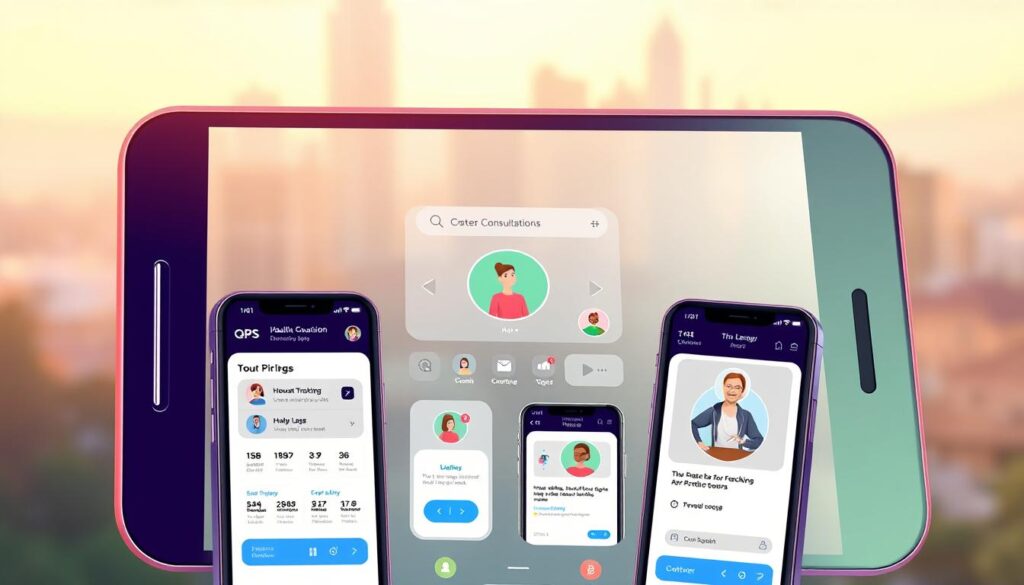
Mobile Health Apps
Mobile health apps put care in your pocket. Apps like VA Health and Kaiser Permanente tools help a lot. They have menus for Home, Action Plan, and more.
Designers use special metrics to make these apps good. They look at how easy they are to use and how pretty they are.
Teams work together fast. They include nurses, engineers, designers, and developers. This makes the apps better and keeps people using them.
Wearable Devices and Their Impact
Wearable devices give real data. They track steps, active minutes, and heart rate. This data goes into health logs.
Coaches can send reminders and feedback. Adding sensors for sleep and food can give more insight. This helps make coaching better.
Telecommunication Platforms
Telecommunication platforms offer live video and chat. They also have messaging and phone calls. This helps with both live coaching and follow-up.
Administrative portals manage everything. They check how well things are working and fix problems. They also help with scheduling. AI can help with simple tasks, but human touch is important.
| Technology | Primary Benefit | Typical Use Case |
|---|---|---|
| Mobile health apps | Accessible education and logging | Daily action plans, community support, symptom tracking |
| Wearable devices | Objective activity and physiologic metrics | Step goals, activity reminders, sleep trend monitoring |
| Telehealth coaching platform | Integration and workflow management | Video sessions, messaging, coach dashboards |
| AI agents and chatbots | Scalable routine support | Automated check-ins, triage prompts, behavioral nudges |
Challenges in Telehealth Digital Health Coaching
Telehealth digital health coaching has many benefits. But, it also faces some big challenges. These challenges affect how well it works and how often people use it.
Technology Barriers
Older adults and some groups find it hard to use small screens and complex menus. They need things that are easy to see and use. This means big fonts and simple buttons.
Not everyone has the right devices or can afford data plans. Studies show many people stop using health apps quickly. This is unless they are easy to use and offer human contact.
Designers should test their apps with the people they are for. This helps make apps better for everyone.
Patient Engagement and Compliance
Many people drop out of digital health programs. It’s estimated that about 43 percent stop. But, coaching can help people stick with it.
It’s hard to compare how well different programs work. But, making plans clear and using both humans and technology helps keep people interested.
Privacy and Security Concerns
Platforms must keep health information safe. This includes data from wearables and what people tell them. They must follow HIPAA and U.S. rules.
Keeping information safe means using encryption and secure platforms. It also means getting people’s consent and knowing how data is used. Strong policies help people trust these programs more.
The Future of Telehealth and Health Coaching
The next decade will change how we get care and manage health. New tech like sensors and AI will make telehealth better. Doctors and coaches will work together more, making care smoother.
Emerging Trends
AI will help give advice and make coaching more personal. Wearables will track important health info like sleep and heart rate. This will help coaches give better advice in real time.
Coaching will mix automated tips with human talks to keep people interested. Digital platforms will use science and data to help users.
Integration with Primary and Specialty Care
Coaching will become part of regular and chronic care. It will work with electronic health records to share info. This helps teams work together better.
Doctors and coaches can see how programs are doing. This helps make care better for everyone. It also helps with diseases like diabetes and mental health.
Potential Impact on Public Health
Telehealth coaching can help people who are hard to reach. It can help with big health problems like heart disease. It can also save money by reducing hospital visits.
For more on how virtual coaching works, see this review. It talks about how coaching can change health numbers.
- Scalability: future telehealth digital health coaching will serve larger populations with lower marginal cost.
- Quality: telehealth coaching services will adopt measurable standards to improve consistency.
- Access: digital wellness coaching can lower barriers for rural and mobility-limited patients.
Investing in good strategies and tech will help health the most. The future will mix tech, human touch, and policy for the best results.
Success Stories in Telehealth Digital Health Coaching
Real-world results show how telehealth coaching changes care for older adults and those with chronic conditions. Small programs see steady gains in self-care, activity, and confidence. This happens when coaches use clear plans, wearable data, and timely feedback.
Personal Transformations
Older adults are managing multiple chronic conditions better with telehealth coaching. They use wearable devices to track activity. This helps coaches give feedback, boosting self-confidence and sticking to new habits.
People say tailored goals, clear tracking, and regular check-ins are key. These are the heart of a good telehealth coaching platform. They make it easier to keep up with daily habits.
Testimonials from Clients
Studies show older adults like using telehealth programs like HAHA2022. They give high marks for ease of use and design. Users find it easy to navigate and it makes their routines simpler.
They love the in-app chat and community features. They say coaches respond quickly and share helpful tips. This shows what great telehealth coaching can do in everyday life.
Case Studies from Leading Programs
A review looked at 35 studies on telehealth coaching. Many were high-quality pilot studies or full trials. Programs combining coaching with digital tools saw better engagement and lifestyle changes.
Hybrid models, using both AI and human coaches, are promising. AI handles basic tasks, while humans add motivation. More work is needed to make AI better without losing the personal touch.
Telehealth Digital Health Coaching: Legal Considerations
Legal rules help telehealth grow. Providers, vendors, and employers need clear advice on licenses, payer rules, and privacy. This is for starting a telehealth coaching platform or growing services across states.
Understanding Licensure Requirements
Clinicians must check their state licenses and what they can do before working across borders. Health coaches have their own rules, but mixing coaching with medical care needs clear lines. Companies should know what they can do in each state and keep records of each provider’s credentials.
Insurance Coverage and Reimbursement
Insurance views on coaching is changing as more proof shows it helps with chronic diseases. Many plans and employer groups now pay for structured telehealth coaching for things like diabetes, weight loss, or prevention. Programs that track results, use the right billing, and meet payer needs are more likely to get paid.
Compliance with HIPAA Regulations
Keeping patient data safe is a must. A telehealth coaching platform must use encrypted messages, sign agreements with vendors, and keep data safe. Clear privacy policies and audit trails help follow HIPAA rules and build trust with users.
Research and use should follow rules and ethics. Developers can use World Health Organization digital health advice and national strategies. Regular risk checks and training staff help keep the program safe and strong.
Getting Started with Telehealth Digital Health Coaching
Ready to start? First, figure out what you need. Look at sleep, nutrition, activity, and stress. Then, set goals you can measure.
Next, check out telehealth platforms. Use MARS or uMARS scores to see how easy they are to use. Make sure they follow HIPAA rules. Choose between human, AI, or a mix for coaching.
When you sign up, check if the coach is certified. Look for ICHWC or EMCC. Do an intake and talk to the coach to make plans for the week. Use devices and portals to make tracking easier.
Don’t expect too much too soon. Changes can take weeks or months. Telehealth works best when it’s personal and keeps improving.
Learn more from WHO and the Global Repository on Digital Health Strategies. Read reviews and protocols like CRD42022363279. Use tools like MARS/uMARS and training programs to find the best platform and improve your skills.
FAQ
What is telehealth digital health coaching?
Telehealth digital health coaching is a way to work with a coach online. You can use web, mobile, video, text, phone, and apps. It helps you change your behavior and improve your lifestyle.
How does telehealth coaching differ from traditional, in-person coaching?
Telehealth coaching uses online tools and can reach more people. It’s like in-person coaching but online. It uses apps and sensors to help you change.
What benefits can users expect from telehealth digital health coaching?
You can get better health plans and see real changes in your life. It helps with managing chronic conditions. It’s also more affordable and accessible.
Is there evidence that coach-facilitated DHIs work?
Yes, studies show they work. They help people change their habits. This includes using apps and sensors with coaching.
How does telehealth coaching improve accessibility?
It helps people in remote areas get help. It’s good for older adults and those with chronic conditions. It’s also cost-effective.
What happens during the initial consultation?
First, you talk about your health goals. Then, you set specific goals and plans. You might use apps or wearables too.
How are goals set and progress tracked?
Goals are set with the coach’s help. You track progress with apps and wearables. The coach gives feedback to keep you motivated.
What tools and technologies are commonly used?
Apps, web portals, and wearables are used. They track your activity and health. AI helps too, making it easier to use.
What credentials should a digital health coach have?
Look for certified coaches. They should have training in health and wellness. This ensures they know what they’re doing.
How do I choose a coach who fits my needs?
Check their experience and what they specialize in. Make sure they’re certified. Look at their success stories too.
Can digital coaching help manage diabetes?
Yes, it helps with diabetes management. It focuses on diet, exercise, and medication. It’s a good way to manage diabetes.
What strategies work best for weight management in digital programs?
Good programs have personalized plans and tracking. They use apps and wearables. Regular check-ins with the coach help too.
How does coaching support mental health and wellbeing?
Coaching helps with stress and sleep. It builds confidence and problem-solving skills. It’s a good addition to mental health care.
Which mobile app features matter most for older adults?
Easy-to-use design is key. Features like home, action plans, and health logs are important. In-app chat and wearable integration are also good.
What role do wearables play in digital coaching?
Wearables track activity and provide data. They help with personalized coaching. They can also track sleep and diet.
What telecommunication options support coaching?
Video calls, messaging, and phone calls are used. Platforms should also have portals for monitoring and data integration.
What technology barriers should be anticipated?
Device access and usability are challenges. Older adults might find it hard to use apps. Make sure the design is easy to use.
Why do digital health programs experience high dropout rates?
Automated tools can be impersonal. Coach-facilitated programs are better. They offer personalized feedback and support.
How are privacy and security handled?
Platforms must follow HIPAA rules. They should use encryption and have clear privacy policies. AI tools need ethical oversight.
What emerging trends should professionals watch?
AI and hybrid models are growing. Wearables are getting better. Standardizing metrics and protocols is important.
How does digital coaching integrate with traditional healthcare?
It works with primary care and chronic care. It uses EHRs and administrative portals. It helps with population health.
What public health impact can coach-facilitated DHIs have?
They can help with UN SDG3. They can prevent chronic diseases and improve mental health. They’re cost-effective and accessible.
Are there real-world success stories from telehealth coaching?
Yes, many people have improved their health. They’ve changed their habits and behaviors. Older adults have also found apps easy to use.
What legal considerations apply to telehealth coaching?
Coaches need to know about state laws. Non-clinical coaching is different from clinical practice. Platforms must follow HIPAA and research ethics.
Will insurance cover telehealth coaching?
It depends on the insurance. Some cover it for chronic disease management. Keep track of outcomes and use recognized billing.
How do I enroll in a telehealth coaching program?
First, assess your health goals. Choose a platform that’s easy to use and secure. Pick a coach and start the program.
What are realistic expectations for outcomes and timelines?
Progress is gradual. You might see changes in weeks, but lasting changes take months. Coaching helps you stay on track.
Where can professionals find more resources and evidence?
Check WHO digital health guidance and the Global Repository. Look at systematic reviews and PROSPERO-registered protocols. Find accredited training programs for coach education.