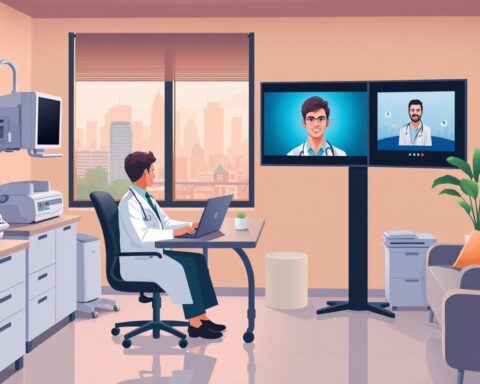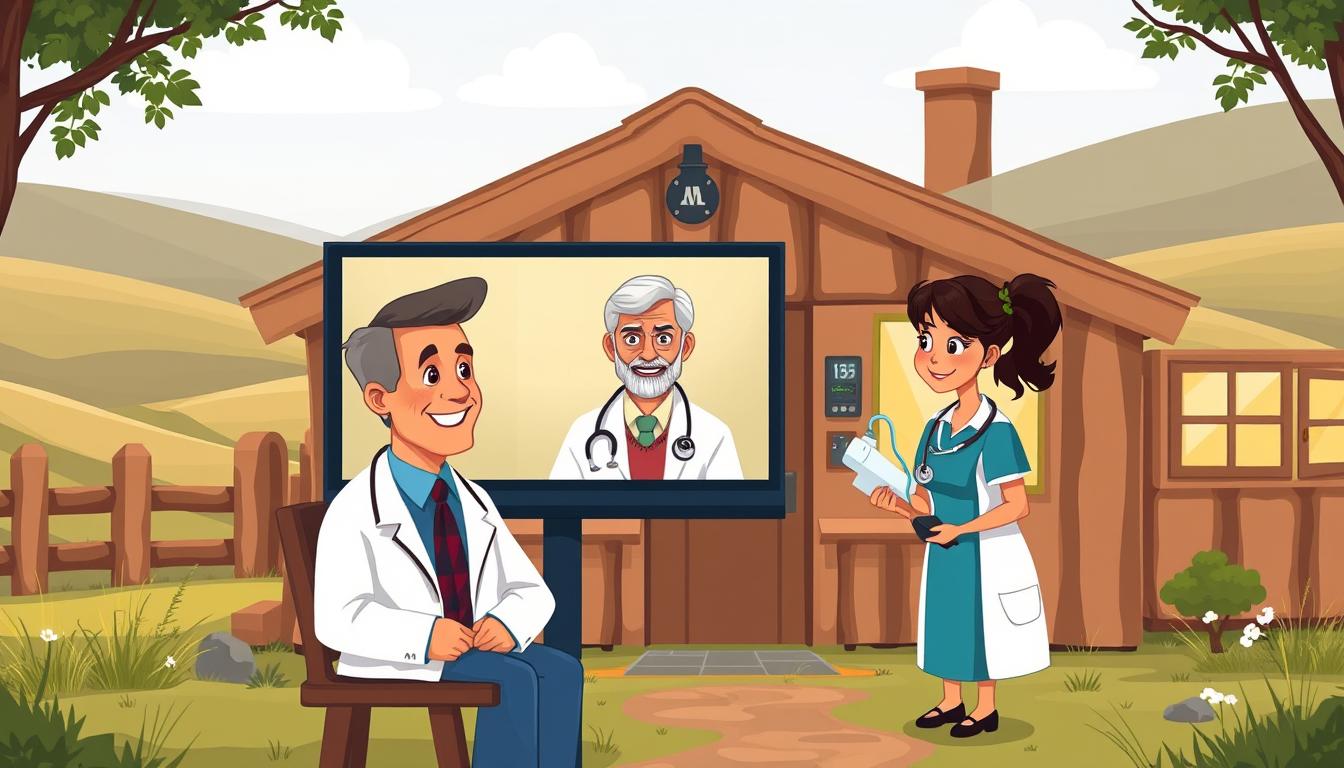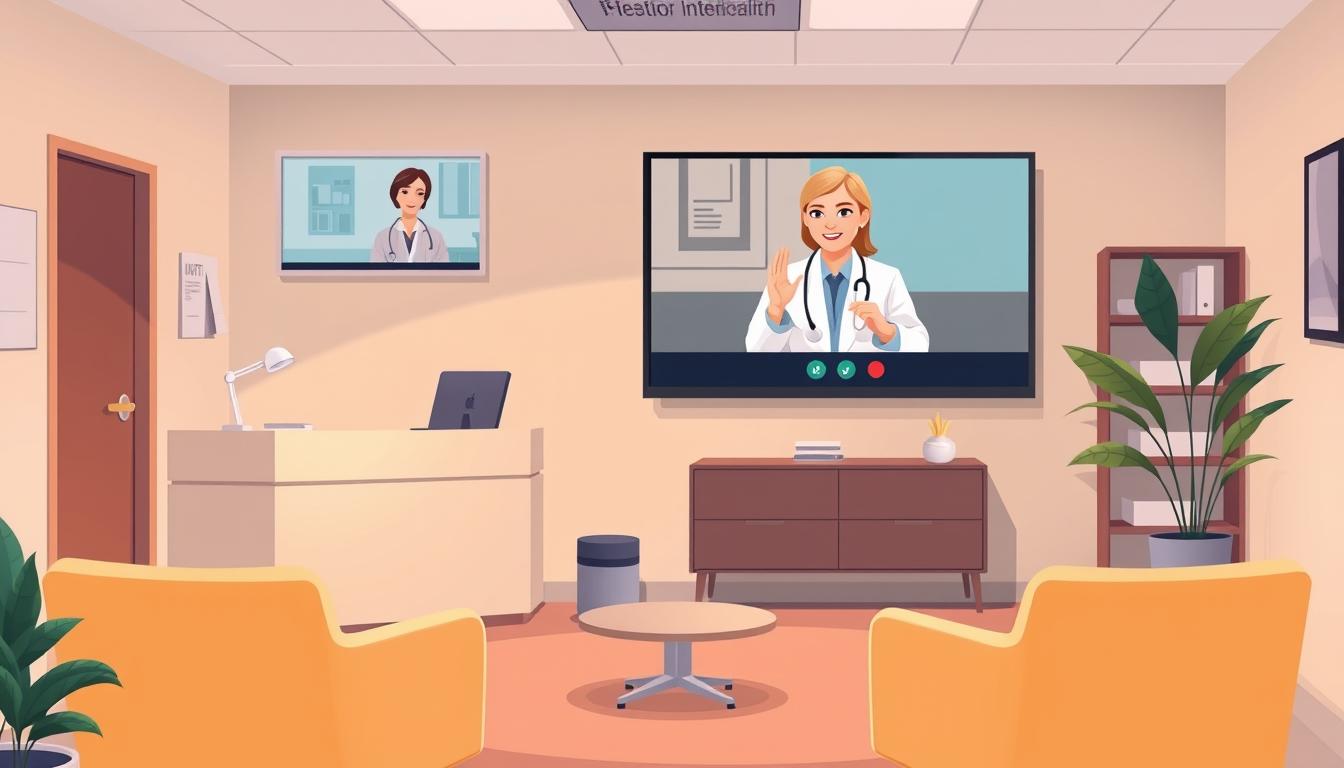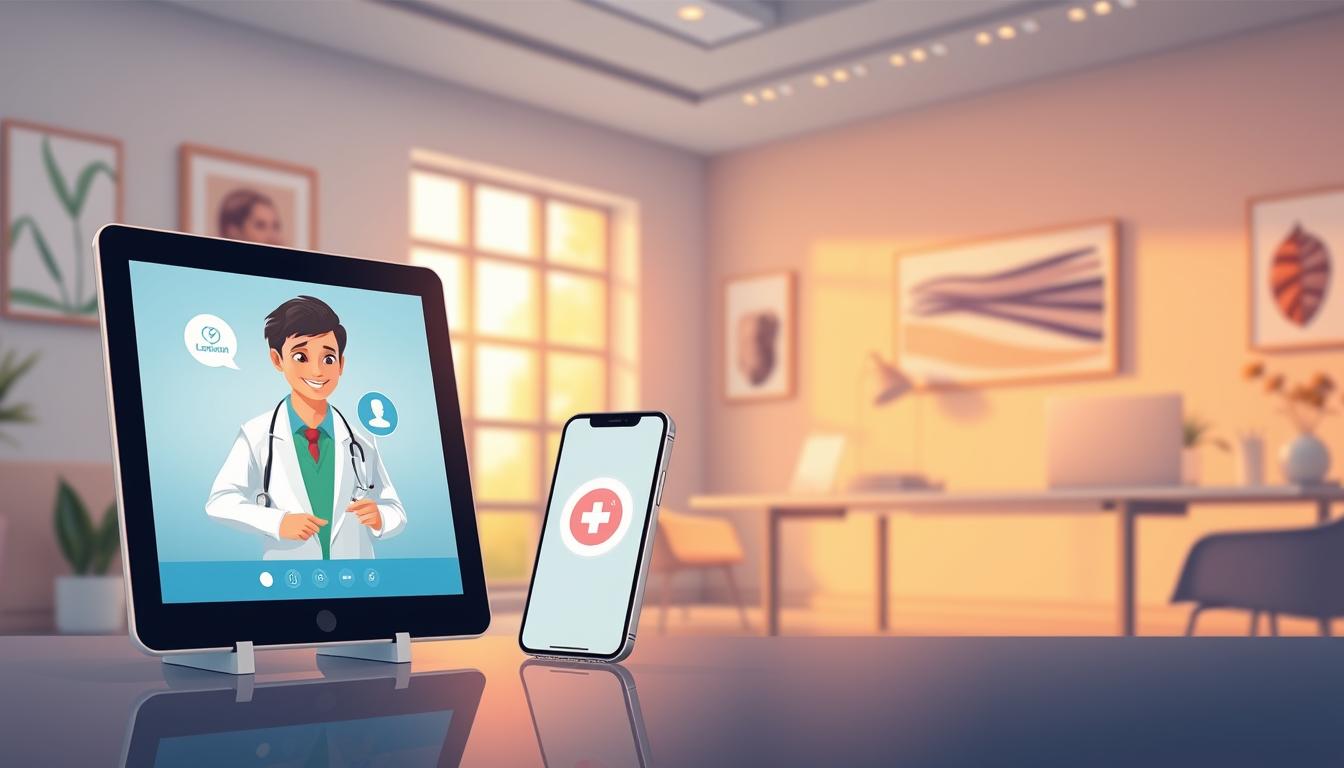
Ever had a sore throat or rash when you were busy? No time to go to the clinic? Many people have found a better way. They use telemedicine services to stay healthy without losing their day.
This guide talks about virtual care for non-urgent health needs in the US. It covers many areas like primary care and mental health. You’ll learn about online doctor visits and when to use virtual urgent care.
Telemedicine is available in all 50 states and Washington D.C. Some visits might cost nothing with insurance. For those without insurance, there’s a pay-per-visit option. The Mayo Clinic’s telehealth overview is a trusted source: telehealth resources.
Remember, virtual care isn’t for emergencies. Call 911 if it’s life-threatening. Some medicines can’t be prescribed online. This guide is for those who want quick, smart healthcare solutions.
Key Takeaways
- Virtual care options for non-urgent medical needs include primary care, urgent non-emergency care, mental health, and chronic disease follow-up.
- Telemedicine services are widely available across the US, but platform access can depend on state and insurance plan.
- Virtual doctor consultations and virtual urgent care save travel time and can reduce costs; some visits may be $0 with coverage.
- Online medical consultations cannot replace emergency care and may limit prescribing of certain controlled medications.
- This guide offers strategic, evidence-based steps to select and use virtual care effectively for busy professionals.
Understanding Virtual Care
Virtual care lets patients see doctors from home. They use video, chat, or phone. It’s great for quick visits and managing health over time.
What is Virtual Care?
Doctors talk to patients online or by phone. They check symptoms and write prescriptions. This way, patients can get help without leaving home.
Benefits of Virtual Care
Virtual care is open 24/7. It saves time and money. Patients can talk to doctors from anywhere.
It’s easy to use and works in many languages. Doctors can even check on patients’ health at home.
Types of Virtual Care Services
Virtual care helps with colds, flu, and more. It’s also for managing chronic diseases. Mental health services are available too.
There are special services like dermatology and nutrition advice. But, some things need to be done in person.
| Service Type | Typical Uses | Availability | Notes |
|---|---|---|---|
| Virtual Urgent Care | Colds, flu, UTIs, minor injuries | On-demand, same-day | Good for telehealth for non-urgent issues; not for emergencies |
| Virtual Primary Care | Chronic disease management, preventive care | Scheduled visits, follow-up | Includes remote monitoring and continuity tools |
| Mental Health | Counseling, psychiatric care | By appointment; some platforms offer urgent options | Age limits and prescribing rules apply |
| Specialty Consults | Dermatology, nutrition, condition programs | Scheduled; program-based access | Platforms like Teladoc Health and Doctor On Demand provide options |
| Symptom Assessment Tools | Initial triage and guidance | 24/7 digital access | Useful as part of broader remote healthcare solutions |
For more info, check out Scripps Virtual Care. It shows how easy digital health can be. But, some things need to be done in person.
Importance of Non-Urgent Medical Care
Getting help for non-urgent health issues early keeps you healthy. Virtual care makes it easy to get help for everyday problems. It helps doctors deal with issues early, before they get worse.
Recognizing Non-Urgent Medical Situations
Many common health issues can be checked online. These include colds, sore throats, and urinary tract infections. Even skin problems like rashes and acne can be looked at by video.
Minor injuries and mental health talks are also good for virtual care. It’s great for routine check-ups and getting more medicine.
Impact of Delaying Non-Urgent Care
Waiting too long for care can make health problems worse. Diabetes and high blood pressure can lead to serious issues. Ignoring mild infections can turn them into bigger problems.
Missing check-ups and not getting the right medicine can cost more later. Early virtual care can stop problems from getting worse. It helps by catching issues early and only needing in-person visits when really needed.
Cost-Effectiveness of Non-Urgent Virtual Visits
Virtual visits can save money for many people. Some plans make visits free or very cheap. CVS Health says primary care visits can cost $0–$144, and follow-ups $0–$99.
24/7 care is $0–$55. Mental health talks are $0–$85, and psychiatry visits $0–$215. Teladoc says 24/7 Care can be $0 with insurance or $89 without.
Knowing the cost helps those without insurance. Telemedicine is often cheaper than urgent care or the emergency room. This makes virtual care a smart choice for saving money.
Telehealth vs. Traditional In-Person Visits
Telehealth has changed how we get care for minor issues. It uses video, chat, or phone for doctor visits. But, in-person visits are better for hands-on checks and quick tests.
Key Differences Between Telehealth and Office Visits
Telehealth relies on what patients say and do at home. Doctors use remote tools and data. But, office visits allow for real exams and lab tests right away.
Telehealth is quick, but office visits might take longer. Where you live and your insurance can also affect your options.
Advantages of Telehealth for Patients
Telehealth means fast access to doctors, often in minutes. It’s great for those with busy lives. It’s also good for parents who don’t have to take their kids to the doctor.
Tools like blood pressure cuffs help manage health at home. You get updates and can talk to your doctor later. This helps everyone, including those who don’t speak English well.
Limitations of Virtual Consultations
Telehealth can’t replace emergency care or some treatments. Things like stitches or broken bones need a doctor in person. Some medicines can’t be given online, which limits treatment for some issues.
It’s not for everyone, like kids under 13 for mental health. Some places don’t allow it, and doctors might ask you to come in for more checks.
Popular Virtual Care Platforms
The market for digital health services has a few big players. They all offer secure video visits but vary in what they cover, how much it costs, and who can use them. Think about what you need, how easy it is to use, and what’s covered when picking a service.
Doctor on Demand
Doctor On Demand is great for primary care, urgent needs, mental health, and more. You can get help with diagnosis, treatment plans, and even prescriptions. It’s for adults 18 and up, focusing on ongoing health issues.
Teladoc Health
Teladoc Health offers a lot: primary care, urgent care, mental health, and managing conditions like diabetes. It works with many insurers and has a pay-per-visit option for those without insurance. Teladoc can also share your visit details with your regular doctor.
Amwell
Amwell helps with urgent care, mental health, and primary care. It works with many health plans and systems. Prices and what’s available can change, so check with Amwell or your insurance.
These platforms all use safe, secure technology. They differ in cost, what they cover, and who can use them. Your choice might depend on your insurance, where you work, and your health needs.
- Doctor On Demand: strong on preventive care and mental health.
- Teladoc Health: wide condition management and insurer reach.
- Amwell: deep integration with health systems and plans.
How to Choose the Right Virtual Care Provider
Choosing a virtual care partner needs a checklist. Look at credentials, access, and what others say. This helps find good care without hassle.
Assessing Providers’ Credentials
Check if doctors are certified and if nurses and therapists have the right licenses. Make sure they can manage medicines if needed.
See who they work with. For example, MinuteClinic and Teladoc Health are good partners. Knowing this helps trust their skills.
Availability and Accessibility Considerations
Look at when they are open. Some are always there, others by appointment. Find out if they have same-day visits and how long you might wait.
Check if they can help families. Some start at 18 months, others at 13 or 18. Make sure they can talk in your language and work on all devices.
Reviewing Patient Feedback and Ratings
Read what others say about their visits. Look for good things like quick service and clear talks. Ignore bad reviews that are just one-off.
See if they keep records and let you message them. Good platforms make it easy to keep up with your care.
Use this guide to pick the right one. Look at their skills, how easy it is to use, and what others say. This way, you’ll find the best for your needs.
Technology Requirements for Virtual Care
Good virtual care needs clear tech needs. Devices, connections, and software must work well together. This helps both doctors and patients have good remote visits.
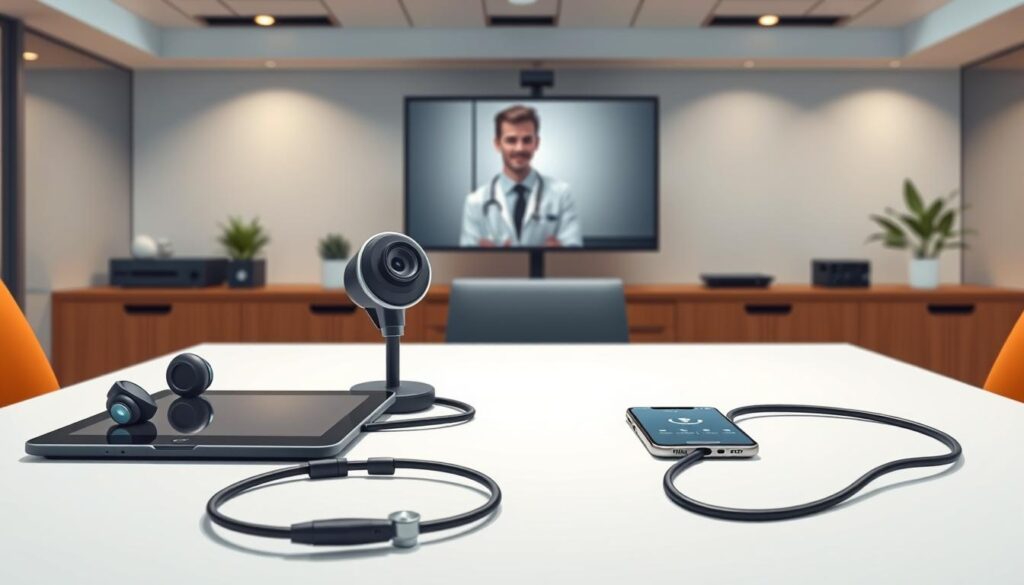
Essential Devices and Software
Most visits use a phone, tablet, laptop, or desktop. They need a camera and microphone. Apps like Teladoc Health work on phones and computers.
Keeping systems and browsers updated is key. This keeps visits smooth and safe.
Systems like personal health records keep important info safe. Features like renewing prescriptions and messaging help care flow. For more on what makes a good telemedicine platform, see this review.
Internet Connection Needs
A fast, stable internet is vital. Wired or strong Wi-Fi is best to avoid problems. Video calls need 1.5–3 Mbps upload and download speeds.
Check your internet before a visit. Pick a quiet, well-lit spot. If you lose connection, the doctor will try to reconnect or reschedule.
Privacy and Security Considerations
Good telemedicine platforms keep data safe. They use strong encryption and follow HIPAA rules. Cloud records should have strong security too.
Have your ID, insurance, and meds list ready. Don’t use telehealth while driving. Ask for help with language or access needs at the start.
| Area | Minimum Requirement | Recommended |
|---|---|---|
| Device | Smartphone or computer with camera and mic | Recent tablet or laptop with HD camera and noise-cancelling microphone |
| Software | Platform app or modern browser | Vendor app (Teladoc Health, Amwell) with two-factor authentication |
| Connection | 1.5 Mbps upload/download | Wired or 5 GHz Wi‑Fi with 10+ Mbps |
| Security | Encrypted session and HIPAA-aligned policy | Enterprise-grade encryption, access logs, and secure cloud storage |
| Patient Prep | ID, insurance card, med list | Quiet room, well-lit, pre-tested device and connection |
Insurance Coverage for Virtual Care
Knowing how insurance works with virtual care is key. Many plans offer benefits like 24/7 urgent visits or mental health counseling. It’s important to check your policy to avoid surprises.
Understanding Coverage Options
Insurers and platforms list services differently. CVS Virtual Care and Teladoc Health say many plans cover 24/7 care for free. But, primary care visits might cost more.
Mental health therapy and psychiatry often have their own prices.
How to Verify Your Plan Includes Telehealth
Enter your insurance info when you sign up for a telehealth platform. They check if you’re covered. Call your insurance for exact details.
Your employer’s benefits manager can also help. They know about any rules for using telehealth.
Comparing Costs: Virtual Visits vs. In-Person
Prices are clear for virtual visits. CVS charges $0–$144 for first visits and $0–$99 for follow-ups. Urgent care is $0–$55.
Mental health counseling costs $0–$85 per session. Psychiatrist visits start at $0–$215. Teladoc says many pay $0 for 24/7 care. Without insurance, it’s about $89 per visit.
Compare these costs to urgent care or the emergency room. Think about copays, fees, travel, and lost work time. Even with high-deductible plans, some services might cost more. Always ask about upfront costs without insurance.
- Tip: Use insurer customer service and platform eligibility tools to see if virtual care covered by insurance applies to your visit type.
- Tip: When you compare telehealth costs, include follow-up needs and possible prescriptions in your estimate.
Common Non-Urgent Conditions Treated Virtually
Virtual care helps with many everyday problems. You can get advice, prescriptions, and plans without going out. It’s great for respiratory infections, skin issues, and mental health.
Cold and Flu Symptoms
Doctors on Teladoc and CVS MinuteClinic check for cough, congestion, and fever. They can suggest treatments and prescribe meds if needed. It’s fast and cheaper than going to the doctor.
Skin Conditions
For skin problems, you can send photos and share your history. Issues like rashes and acne can be diagnosed online. Doctors On Demand and Teladoc offer these services. It’s quicker and easier than going to the doctor.
Mental Health Counseling
Online therapy helps with anxiety, depression, and more. Counselors and psychiatrists offer help through video and messaging. It’s available for those 13 and up.
Studies show virtual care is effective and saves money. It’s faster and cheaper than traditional visits. You can read more about it here.
Preparing for a Virtual Visit
Getting ready for a telehealth visit is easy. You’ll learn how to make your virtual doctor visit smooth and stress-free. This guide will tell you what to expect and what to bring.
What to Expect During the Consultation
First, you might fill out a quick symptom form. Then, you’ll join a secure video call from a quiet, well-lit spot. Your doctor might ask you to do a self-exam and share your recent health numbers.
They will tell you what they think is wrong and what to do about it. They might send you a prescription. You’ll get emails or texts to confirm everything. Afterward, you’ll get a summary of your visit and what to do next.
Questions to Ask Your Healthcare Provider
- What is the most likely diagnosis?
- What treatment do you recommend and why?
- Will you prescribe medication and where will it be sent?
- What red flags mean I should seek in-person care or an ER?
- Do I need labs, imaging, or a specialist referral?
- How will follow-up be coordinated and how can I message the care team?
Documents to Have on Hand
Have these ready to make your visit go smoothly. Carry your ID and insurance card. Also, bring a list of your medicines and any allergies.
Get your recent health numbers and a timeline of your symptoms. If you have a welcome kit, have your blood pressure and heart rate ready. Remember, if you’re a minor, check the platform’s age rules to avoid delays.
Future Trends in Virtual Care
The health sector is changing fast. Technology, policy, and what patients want are leading the way. Leaders at CVS Virtual Care, Teladoc Health, and Doctor On Demand are working on new products. These products will help care reach more people in their daily lives.
Innovations on the horizon
Remote patient monitoring is growing fast. Home kits and sensors send data to doctors. This lets doctors see how patients are doing in real time.
Electronic health records will soon show trends all in one place. This makes it easier for doctors to see patient data. New options like photo-based dermatology reviews will make getting help faster.
AI will help doctors decide who needs to see a doctor. Digital programs for diabetes and high blood pressure are becoming more common. These changes will give doctors more information between visits.
Increased adoption of virtual care
More employers, health plans, and health systems are using telehealth. They want to make care easier to get and cheaper. People like being able to get help anytime, in their own language, and through messages.
Hybrid models mix virtual and in-person care. This is becoming more popular. It’s changing how we get routine care and how it’s paid for.
Regulatory changes impacting virtual services
Policy changes are important too. States are making it easier for doctors to work across state lines. Rules on prescribing and paying for telehealth visits are being looked at.
Health systems and patients need to keep up with these changes. Knowing the rules helps them use telehealth responsibly and for the long term.
Conclusion: The Future of Non-Urgent Medical Care
Virtual care is changing how we get medical help for non-urgent needs. It’s easy, fast, and saves money. CVS MinuteClinic, Teladoc, and Doctor On Demand offer these benefits.
Emphasizing benefits
Remote care helps patients stay on track and feel better. It’s open 24/7, so you don’t wait long. Studies show it works well, with fewer missed visits and better care.
Learn more about virtual health assistants here.
Encouraging adoption
Starting with virtual care is easy. Check if your insurance covers it. Try a 24/7 visit for a small issue.
Use tools for translation and accessibility. Small steps can lead to big improvements in care.
The role of patients
Patients help shape the future of care. Give feedback and use secure messaging. Ask for more virtual benefits from employers and insurers.
This pushes care toward being smarter and more focused on patients. It leads to better non-urgent care.
FAQ
What is virtual care and how does it differ from telemedicine or telehealth?
Virtual care is like telehealth or telemedicine. It lets you talk to doctors online. You can get help for many things, like getting a prescription or advice.
It’s different from going to the doctor in person. You tell the doctor what’s wrong and they might ask you to do some tests. If they need to see you in person, they’ll tell you that too.
What non-urgent services are commonly available through virtual care?
You can get help for many things online. This includes things like colds, flu, and UTIs. You can also get help for chronic diseases like diabetes.
There’s also help for mental health, skin problems, and more. Companies like Teladoc Health and Doctor On Demand offer these services.
Are virtual care services available across the United States?
Yes, many places offer virtual care services. You can find them in all 50 states and Washington, D.C. Companies like CVS Virtual Care, Doctor On Demand, and Teladoc Health provide these services.
But, the services might not be the same everywhere. It’s best to check if they are available in your area.
How much do virtual visits cost and can they be free?
The cost of virtual visits can vary. Some visits might be free if you have insurance. But, it depends on your plan and deductible.
For example, CVS might charge
FAQ
What is virtual care and how does it differ from telemedicine or telehealth?
Virtual care is like telehealth or telemedicine. It lets you talk to doctors online. You can get help for many things, like getting a prescription or advice.
It’s different from going to the doctor in person. You tell the doctor what’s wrong and they might ask you to do some tests. If they need to see you in person, they’ll tell you that too.
What non-urgent services are commonly available through virtual care?
You can get help for many things online. This includes things like colds, flu, and UTIs. You can also get help for chronic diseases like diabetes.
There’s also help for mental health, skin problems, and more. Companies like Teladoc Health and Doctor On Demand offer these services.
Are virtual care services available across the United States?
Yes, many places offer virtual care services. You can find them in all 50 states and Washington, D.C. Companies like CVS Virtual Care, Doctor On Demand, and Teladoc Health provide these services.
But, the services might not be the same everywhere. It’s best to check if they are available in your area.
How much do virtual visits cost and can they be free?
The cost of virtual visits can vary. Some visits might be free if you have insurance. But, it depends on your plan and deductible.
For example, CVS might charge $0 for the first visit and $0 to $99 for follow-ups. Teladoc Health might charge $0 with insurance or $89 without it.
When is virtual care appropriate and when should I seek in-person care or emergency services?
Virtual care is good for non-urgent problems. This includes things like coughs, sore throats, and minor skin issues.
But, if you have a serious problem, you should go to the emergency room. This includes things like broken bones or severe injuries.
Can virtual clinicians prescribe medications, including controlled substances?
Yes, doctors can prescribe medicine online. But, they can’t always prescribe controlled substances. This is because of laws and regulations.
For things like mental health, the rules might be different. The doctor might not be able to prescribe certain medicines for the first visit.
What are the key advantages of using telehealth for non-urgent issues?
Telehealth is convenient and fast. You can get help in minutes or the same day. It’s also available at night and on weekends.
It saves you time and money by not having to travel. You can also get help in your own language and keep track of your health online.
What limitations should patients expect with virtual consultations?
Virtual care has some limits. Doctors can’t do hands-on exams or order lab tests online. You might need to see a doctor in person for some things.
Some services might not be available for everyone. This includes age limits and certain conditions. You might need to see a doctor in person for follow-up care.
How do Doctor On Demand, Teladoc Health and Amwell differ?
These companies offer similar services but in different ways. Doctor On Demand focuses on primary care and mental health. Teladoc offers a wide range of services, including condition management.
Amwell works with many health plans and systems. It’s important to check what services and costs are available in your area.
How should patients evaluate a virtual provider’s credentials?
Look for board certification and state licensing. Check if the provider is a doctor, nurse, or other healthcare professional.
Also, find out who the platform works with. Look at provider biographies and licensure information when you book a visit.
What technical requirements and environment should I prepare for a virtual visit?
You’ll need a smartphone, tablet, or computer with a camera and microphone. Make sure your internet connection is strong.
Choose a quiet, well-lit room. Test your audio and video before the visit. Have your ID, insurance card, and any relevant information ready.
How secure are virtual visits and what privacy precautions should patients take?
Major platforms use secure connections and don’t record visits. Make sure you’re in a private space during the visit.
Don’t use telehealth while driving. Keep your login information private and use official apps or websites.
How can I confirm whether my insurance or employer plan covers telehealth?
Check your insurance details when you sign up for a platform. You can also call your insurance company or talk to your benefits manager.
Platforms like CVS and Teladoc often show what services are covered. Your employer or plan determines what’s included.
What should I expect during a virtual consultation?
You’ll start by telling the doctor what’s wrong. Then, you’ll join a video visit from a private space.
The doctor might ask you to do some tests or prescribe medicine. They’ll also give you a summary of your visit and tell you what to do next.
What questions should I ask my virtual healthcare provider?
Ask about your diagnosis and treatment plan. Find out if you’ll get a prescription and where to get it.
Ask if you need to see a doctor in person or if any tests are needed. Also, ask how you can follow up with the care team.
Which non‑urgent conditions are specially cost‑effective to treat virtually?
Virtual care is good for many non-urgent problems. This includes colds, flu, UTIs, and minor skin issues.
It’s also good for chronic care follow-ups. Many platforms offer transparent pricing for uninsured patients.
What innovations are coming that will improve virtual care?
New technologies will make virtual care better. This includes remote monitoring and deeper integration with electronic health records.
There will also be more condition-management programs and digital therapies. Changes in laws and payment will also help.
How does delaying non‑urgent care affect health and costs?
Delaying care can make problems worse. This includes uncontrolled chronic conditions and infections.
It can also lead to missed screenings and higher costs. Getting help early can prevent these problems and save money.
How can patients influence the future of virtual care?
Patients can shape virtual care by giving feedback. Use secure messaging and health dashboards to stay involved.
Talk to your employer and insurance company about expanding benefits. Your input can help make virtual care better and more available.
for the first visit and
FAQ
What is virtual care and how does it differ from telemedicine or telehealth?
Virtual care is like telehealth or telemedicine. It lets you talk to doctors online. You can get help for many things, like getting a prescription or advice.
It’s different from going to the doctor in person. You tell the doctor what’s wrong and they might ask you to do some tests. If they need to see you in person, they’ll tell you that too.
What non-urgent services are commonly available through virtual care?
You can get help for many things online. This includes things like colds, flu, and UTIs. You can also get help for chronic diseases like diabetes.
There’s also help for mental health, skin problems, and more. Companies like Teladoc Health and Doctor On Demand offer these services.
Are virtual care services available across the United States?
Yes, many places offer virtual care services. You can find them in all 50 states and Washington, D.C. Companies like CVS Virtual Care, Doctor On Demand, and Teladoc Health provide these services.
But, the services might not be the same everywhere. It’s best to check if they are available in your area.
How much do virtual visits cost and can they be free?
The cost of virtual visits can vary. Some visits might be free if you have insurance. But, it depends on your plan and deductible.
For example, CVS might charge $0 for the first visit and $0 to $99 for follow-ups. Teladoc Health might charge $0 with insurance or $89 without it.
When is virtual care appropriate and when should I seek in-person care or emergency services?
Virtual care is good for non-urgent problems. This includes things like coughs, sore throats, and minor skin issues.
But, if you have a serious problem, you should go to the emergency room. This includes things like broken bones or severe injuries.
Can virtual clinicians prescribe medications, including controlled substances?
Yes, doctors can prescribe medicine online. But, they can’t always prescribe controlled substances. This is because of laws and regulations.
For things like mental health, the rules might be different. The doctor might not be able to prescribe certain medicines for the first visit.
What are the key advantages of using telehealth for non-urgent issues?
Telehealth is convenient and fast. You can get help in minutes or the same day. It’s also available at night and on weekends.
It saves you time and money by not having to travel. You can also get help in your own language and keep track of your health online.
What limitations should patients expect with virtual consultations?
Virtual care has some limits. Doctors can’t do hands-on exams or order lab tests online. You might need to see a doctor in person for some things.
Some services might not be available for everyone. This includes age limits and certain conditions. You might need to see a doctor in person for follow-up care.
How do Doctor On Demand, Teladoc Health and Amwell differ?
These companies offer similar services but in different ways. Doctor On Demand focuses on primary care and mental health. Teladoc offers a wide range of services, including condition management.
Amwell works with many health plans and systems. It’s important to check what services and costs are available in your area.
How should patients evaluate a virtual provider’s credentials?
Look for board certification and state licensing. Check if the provider is a doctor, nurse, or other healthcare professional.
Also, find out who the platform works with. Look at provider biographies and licensure information when you book a visit.
What technical requirements and environment should I prepare for a virtual visit?
You’ll need a smartphone, tablet, or computer with a camera and microphone. Make sure your internet connection is strong.
Choose a quiet, well-lit room. Test your audio and video before the visit. Have your ID, insurance card, and any relevant information ready.
How secure are virtual visits and what privacy precautions should patients take?
Major platforms use secure connections and don’t record visits. Make sure you’re in a private space during the visit.
Don’t use telehealth while driving. Keep your login information private and use official apps or websites.
How can I confirm whether my insurance or employer plan covers telehealth?
Check your insurance details when you sign up for a platform. You can also call your insurance company or talk to your benefits manager.
Platforms like CVS and Teladoc often show what services are covered. Your employer or plan determines what’s included.
What should I expect during a virtual consultation?
You’ll start by telling the doctor what’s wrong. Then, you’ll join a video visit from a private space.
The doctor might ask you to do some tests or prescribe medicine. They’ll also give you a summary of your visit and tell you what to do next.
What questions should I ask my virtual healthcare provider?
Ask about your diagnosis and treatment plan. Find out if you’ll get a prescription and where to get it.
Ask if you need to see a doctor in person or if any tests are needed. Also, ask how you can follow up with the care team.
Which non‑urgent conditions are specially cost‑effective to treat virtually?
Virtual care is good for many non-urgent problems. This includes colds, flu, UTIs, and minor skin issues.
It’s also good for chronic care follow-ups. Many platforms offer transparent pricing for uninsured patients.
What innovations are coming that will improve virtual care?
New technologies will make virtual care better. This includes remote monitoring and deeper integration with electronic health records.
There will also be more condition-management programs and digital therapies. Changes in laws and payment will also help.
How does delaying non‑urgent care affect health and costs?
Delaying care can make problems worse. This includes uncontrolled chronic conditions and infections.
It can also lead to missed screenings and higher costs. Getting help early can prevent these problems and save money.
How can patients influence the future of virtual care?
Patients can shape virtual care by giving feedback. Use secure messaging and health dashboards to stay involved.
Talk to your employer and insurance company about expanding benefits. Your input can help make virtual care better and more available.
to for follow-ups. Teladoc Health might charge
FAQ
What is virtual care and how does it differ from telemedicine or telehealth?
Virtual care is like telehealth or telemedicine. It lets you talk to doctors online. You can get help for many things, like getting a prescription or advice.
It’s different from going to the doctor in person. You tell the doctor what’s wrong and they might ask you to do some tests. If they need to see you in person, they’ll tell you that too.
What non-urgent services are commonly available through virtual care?
You can get help for many things online. This includes things like colds, flu, and UTIs. You can also get help for chronic diseases like diabetes.
There’s also help for mental health, skin problems, and more. Companies like Teladoc Health and Doctor On Demand offer these services.
Are virtual care services available across the United States?
Yes, many places offer virtual care services. You can find them in all 50 states and Washington, D.C. Companies like CVS Virtual Care, Doctor On Demand, and Teladoc Health provide these services.
But, the services might not be the same everywhere. It’s best to check if they are available in your area.
How much do virtual visits cost and can they be free?
The cost of virtual visits can vary. Some visits might be free if you have insurance. But, it depends on your plan and deductible.
For example, CVS might charge $0 for the first visit and $0 to $99 for follow-ups. Teladoc Health might charge $0 with insurance or $89 without it.
When is virtual care appropriate and when should I seek in-person care or emergency services?
Virtual care is good for non-urgent problems. This includes things like coughs, sore throats, and minor skin issues.
But, if you have a serious problem, you should go to the emergency room. This includes things like broken bones or severe injuries.
Can virtual clinicians prescribe medications, including controlled substances?
Yes, doctors can prescribe medicine online. But, they can’t always prescribe controlled substances. This is because of laws and regulations.
For things like mental health, the rules might be different. The doctor might not be able to prescribe certain medicines for the first visit.
What are the key advantages of using telehealth for non-urgent issues?
Telehealth is convenient and fast. You can get help in minutes or the same day. It’s also available at night and on weekends.
It saves you time and money by not having to travel. You can also get help in your own language and keep track of your health online.
What limitations should patients expect with virtual consultations?
Virtual care has some limits. Doctors can’t do hands-on exams or order lab tests online. You might need to see a doctor in person for some things.
Some services might not be available for everyone. This includes age limits and certain conditions. You might need to see a doctor in person for follow-up care.
How do Doctor On Demand, Teladoc Health and Amwell differ?
These companies offer similar services but in different ways. Doctor On Demand focuses on primary care and mental health. Teladoc offers a wide range of services, including condition management.
Amwell works with many health plans and systems. It’s important to check what services and costs are available in your area.
How should patients evaluate a virtual provider’s credentials?
Look for board certification and state licensing. Check if the provider is a doctor, nurse, or other healthcare professional.
Also, find out who the platform works with. Look at provider biographies and licensure information when you book a visit.
What technical requirements and environment should I prepare for a virtual visit?
You’ll need a smartphone, tablet, or computer with a camera and microphone. Make sure your internet connection is strong.
Choose a quiet, well-lit room. Test your audio and video before the visit. Have your ID, insurance card, and any relevant information ready.
How secure are virtual visits and what privacy precautions should patients take?
Major platforms use secure connections and don’t record visits. Make sure you’re in a private space during the visit.
Don’t use telehealth while driving. Keep your login information private and use official apps or websites.
How can I confirm whether my insurance or employer plan covers telehealth?
Check your insurance details when you sign up for a platform. You can also call your insurance company or talk to your benefits manager.
Platforms like CVS and Teladoc often show what services are covered. Your employer or plan determines what’s included.
What should I expect during a virtual consultation?
You’ll start by telling the doctor what’s wrong. Then, you’ll join a video visit from a private space.
The doctor might ask you to do some tests or prescribe medicine. They’ll also give you a summary of your visit and tell you what to do next.
What questions should I ask my virtual healthcare provider?
Ask about your diagnosis and treatment plan. Find out if you’ll get a prescription and where to get it.
Ask if you need to see a doctor in person or if any tests are needed. Also, ask how you can follow up with the care team.
Which non‑urgent conditions are specially cost‑effective to treat virtually?
Virtual care is good for many non-urgent problems. This includes colds, flu, UTIs, and minor skin issues.
It’s also good for chronic care follow-ups. Many platforms offer transparent pricing for uninsured patients.
What innovations are coming that will improve virtual care?
New technologies will make virtual care better. This includes remote monitoring and deeper integration with electronic health records.
There will also be more condition-management programs and digital therapies. Changes in laws and payment will also help.
How does delaying non‑urgent care affect health and costs?
Delaying care can make problems worse. This includes uncontrolled chronic conditions and infections.
It can also lead to missed screenings and higher costs. Getting help early can prevent these problems and save money.
How can patients influence the future of virtual care?
Patients can shape virtual care by giving feedback. Use secure messaging and health dashboards to stay involved.
Talk to your employer and insurance company about expanding benefits. Your input can help make virtual care better and more available.
with insurance or without it.
When is virtual care appropriate and when should I seek in-person care or emergency services?
Virtual care is good for non-urgent problems. This includes things like coughs, sore throats, and minor skin issues.
But, if you have a serious problem, you should go to the emergency room. This includes things like broken bones or severe injuries.
Can virtual clinicians prescribe medications, including controlled substances?
Yes, doctors can prescribe medicine online. But, they can’t always prescribe controlled substances. This is because of laws and regulations.
For things like mental health, the rules might be different. The doctor might not be able to prescribe certain medicines for the first visit.
What are the key advantages of using telehealth for non-urgent issues?
Telehealth is convenient and fast. You can get help in minutes or the same day. It’s also available at night and on weekends.
It saves you time and money by not having to travel. You can also get help in your own language and keep track of your health online.
What limitations should patients expect with virtual consultations?
Virtual care has some limits. Doctors can’t do hands-on exams or order lab tests online. You might need to see a doctor in person for some things.
Some services might not be available for everyone. This includes age limits and certain conditions. You might need to see a doctor in person for follow-up care.
How do Doctor On Demand, Teladoc Health and Amwell differ?
These companies offer similar services but in different ways. Doctor On Demand focuses on primary care and mental health. Teladoc offers a wide range of services, including condition management.
Amwell works with many health plans and systems. It’s important to check what services and costs are available in your area.
How should patients evaluate a virtual provider’s credentials?
Look for board certification and state licensing. Check if the provider is a doctor, nurse, or other healthcare professional.
Also, find out who the platform works with. Look at provider biographies and licensure information when you book a visit.
What technical requirements and environment should I prepare for a virtual visit?
You’ll need a smartphone, tablet, or computer with a camera and microphone. Make sure your internet connection is strong.
Choose a quiet, well-lit room. Test your audio and video before the visit. Have your ID, insurance card, and any relevant information ready.
How secure are virtual visits and what privacy precautions should patients take?
Major platforms use secure connections and don’t record visits. Make sure you’re in a private space during the visit.
Don’t use telehealth while driving. Keep your login information private and use official apps or websites.
How can I confirm whether my insurance or employer plan covers telehealth?
Check your insurance details when you sign up for a platform. You can also call your insurance company or talk to your benefits manager.
Platforms like CVS and Teladoc often show what services are covered. Your employer or plan determines what’s included.
What should I expect during a virtual consultation?
You’ll start by telling the doctor what’s wrong. Then, you’ll join a video visit from a private space.
The doctor might ask you to do some tests or prescribe medicine. They’ll also give you a summary of your visit and tell you what to do next.
What questions should I ask my virtual healthcare provider?
Ask about your diagnosis and treatment plan. Find out if you’ll get a prescription and where to get it.
Ask if you need to see a doctor in person or if any tests are needed. Also, ask how you can follow up with the care team.
Which non‑urgent conditions are specially cost‑effective to treat virtually?
Virtual care is good for many non-urgent problems. This includes colds, flu, UTIs, and minor skin issues.
It’s also good for chronic care follow-ups. Many platforms offer transparent pricing for uninsured patients.
What innovations are coming that will improve virtual care?
New technologies will make virtual care better. This includes remote monitoring and deeper integration with electronic health records.
There will also be more condition-management programs and digital therapies. Changes in laws and payment will also help.
How does delaying non‑urgent care affect health and costs?
Delaying care can make problems worse. This includes uncontrolled chronic conditions and infections.
It can also lead to missed screenings and higher costs. Getting help early can prevent these problems and save money.
How can patients influence the future of virtual care?
Patients can shape virtual care by giving feedback. Use secure messaging and health dashboards to stay involved.
Talk to your employer and insurance company about expanding benefits. Your input can help make virtual care better and more available.