There are times when a clinic visit is more than a checkup. It’s a lifeline. For many patients, a single virtual consult can mean timely care and avoided travel. This relief is what drives leaders to rethink care delivery.
This guide frames telehealth as a series of deliberate steps. It shows how combining in-person and virtual care needs solid infrastructure. This includes reliable connectivity, user-friendly platforms, and secure EHR links.
Leaders are advised to set clear goals. These should include clinical quality, operational efficiency, and cost control. They should measure progress with specific KPIs. Effective digital health solutions and virtual care platforms can help.
They can reduce technical debt and streamline workflows. They can also extend care to more people, including those in rural areas. This is possible with stakeholder engagement and regular audits.
Key Takeaways
- Telehealth integration succeeds when treated as a strategic, phased program.
- Prioritize infrastructure: connectivity, usability, and secure EHR integration.
- Set measurable goals for clinical quality, efficiency, and cost control.
- Design digital health solutions for accessibility and diverse patient needs.
- Combine vendor selection, training, and audits to ensure compliance and scalability.
Understanding Telehealth Technology
Telehealth uses digital tools to help patients from home. It includes video calls, messages, and tracking health data. It works best with good internet, easy-to-use apps, and strong security.
It uses devices to send health data in real time. This data helps doctors during online visits. The system should be easy for everyone to use.
Definition and Key Components
Telehealth includes video calls and messaging. It also has patient portals. All these tools work together with electronic health records.
It needs fast video, easy sharing of data, and strong security. Devices track important health data like blood pressure. Doctors get help from tools during online visits.
Importance in Modern Healthcare
Telehealth helps people in rural areas get care easily. It also helps doctors make quick decisions. This makes care better and more efficient.
Health systems that use telehealth can grow and save time. AI helps doctors work faster and better. This leads to better care and lower costs.
Learn more about telehealth at Mayo Clinic: telehealth basics and services. See how AI helps in cancer care: AI agents in oncology workflows.
Benefits of Telehealth Integration
Telehealth changes how we get care. It makes care more available, improves how doctors work, and saves money. This part talks about the good things that happen when we use connected care solutions.
Improved patient access to care
Telehealth helps people in far-off places see doctors easily. It lets doctors choose online visits when it’s safe. This means fewer missed appointments and better care.
It also helps people with disabilities by making things easier to understand. This way, more people can get the care they need.
Enhanced care coordination
When health records and telehealth work together, doctors have all the info they need. This makes care safer and better.
Sharing lab results and notes quickly helps doctors make faster decisions. This makes care smoother and better for everyone.
Cost-effectiveness for providers
Using cloud-based systems saves money on hardware and tech support. It also means less time for IT teams to fix things.
This leads to more money saved and better use of staff. Investing in these systems pays off in a year or two.
| Benefit | What Changes | Typical Impact |
|---|---|---|
| Access | Virtual visits and hybrid care models | More appointments kept; fewer travel barriers |
| Care coordination | EHR-telehealth linkage and API-based data flow | Faster decisions; fewer documentation errors |
| Operational costs | Cloud platforms and consolidated vendors | Lower IT spend; quicker ROI |
| Clinical quality | Integration of remote patient monitoring systems | Improved chronic disease management; early intervention |
| Adoption | Training and telehealth best practices | Smoother clinician uptake; higher patient satisfaction |
Challenges in Telehealth Adoption
Starting virtual care has its ups and downs. Leaders face legal, tech, and people issues. A smart plan can help avoid problems and speed things up.
Regulatory and Compliance Issues
HIPAA is key for U.S. providers. It ensures data safety with encryption and strict rules. Teams must follow these rules from the start.
State laws make cross-state care tricky. Teams must understand and follow these laws in scheduling and billing. This keeps care smooth.
Keeping data safe is critical. AI helps watch for threats, and clear plans for when something goes wrong are vital. Regular checks also help.
Technology Barriers for Patients
Not everyone has good internet or devices. This makes telehealth hard in some areas. It can also make visits and data quality poor.
Some platforms are hard for people to use. They need to work with disabilities. Following WHO-ITU guidelines helps make things better.
Not everyone knows how to use new tech. Simple steps and practice help patients feel confident. Easy-to-use tools are key.
Provider Resistance to Change
Doctors might worry about new ways of working. They might think virtual exams are not as good. Talking about these worries helps build trust.
Changing how things work is important. Get staff involved early and train them well. Start small and celebrate successes to keep everyone going.
Working with old systems can be tough. Check what you have, plan carefully, and keep backups. This keeps care going smoothly.
| Challenge | Root Cause | Practical Steps |
|---|---|---|
| Regulatory complexity | Varying state laws; HIPAA requirements; evolving telehealth rules | Map legal requirements, embed compliance into workflows, run regular audits |
| Cybersecurity threats | Unsecured endpoints; insufficient monitoring; outdated software | Deploy AI-based monitoring, incident response plans, routine patching |
| Digital access gaps | Poor broadband; limited device ownership; socioeconomic barriers | Invest in telehealth infrastructure development, offer loaner devices, provide low-bandwidth options |
| Usability and accessibility | Complex UIs; missing accessibility features | Adopt WHO-ITU accessibility standards, simplify interfaces, add captioning |
| Staff resistance | Workflow disruption; lack of training; skepticism | Engage clinicians early, deliver hands-on training, pilot and iterate |
| Legacy system integration | Incompatible EHRs; data migration risks | Assess systems, plan phased integration, keep robust backups |
Best Practices for Integrating Telehealth
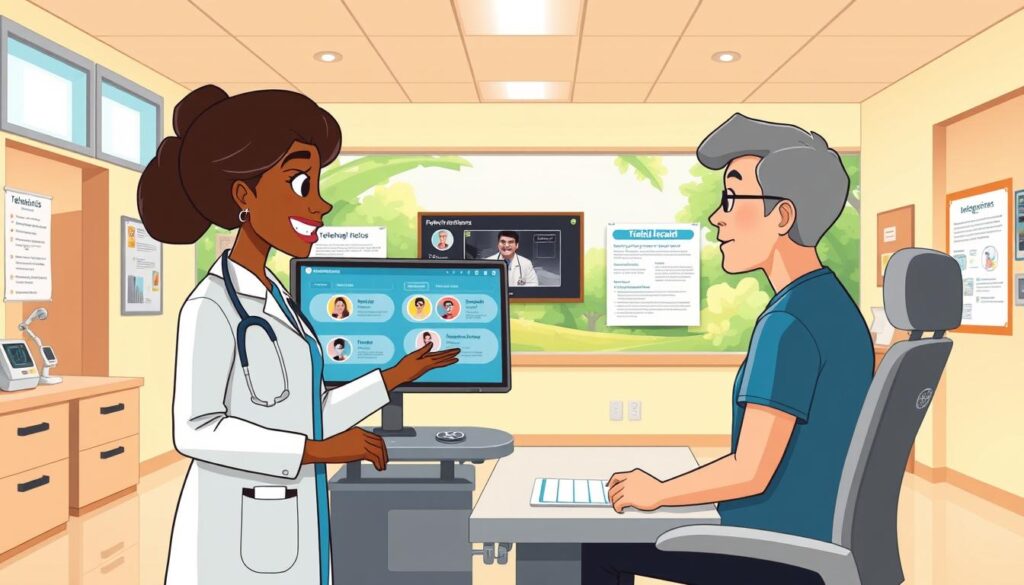
Start by carefully planning your telehealth program. First, check your systems, workflows, and goals. Then, set clear goals and how virtual visits will work with in-person care.
Make sure your system works well with others. Use standards like FHIR and HL7. Also, keep your system safe and roll it out in phases to avoid problems.
Developing a Strategic Plan
Start by looking at what you have now. Check your EHR, scheduling, and billing. Then, make a plan with different phases for testing and training.
Choose vendors that work well with your EHR. Make sure they offer good support and can grow with you. Include plans for training and keeping the system running smoothly.
Use technology to make things easier. This can help with scheduling, reminders, and paperwork. For more tips on EHR and telehealth, visit this page.
Training Healthcare Professionals
Make training specific for each role. Clinicians learn about virtual exams and paperwork. Staff and IT teams learn about scheduling and security.
Use simulations and demos to train. Keep training up to date. Ask for feedback to make training better. Get clinicians involved in choosing vendors to make them more excited.
Ensuring Patient Engagement
Make it easy for patients to use your system. Give them clear instructions and help with setup. Make sure your system is easy for everyone to use.
Send reminders and make it easy to reschedule. Use feedback to make your system better. Teach patients about keeping their information safe.
- Interoperability: Keep data up to date and devices working well.
- Automation: Use technology to make things easier for doctors.
- Equity: Make sure everyone can use your system, no matter where they are.
Follow best practices and plan well. With the right training and system, you can offer great virtual care.
Technology Solutions for Telehealth
Care teams should pick technology that makes work easier and keeps patient data safe. Using virtual care platforms, telemedicine software, and remote monitoring helps doctors make better choices. It also makes it easier for patients to get care.
Platforms for Virtual Consultations
Choose platforms with secure video and messaging. They should also have scheduling and billing. Make sure they follow HIPAA rules and work on phones and tablets.
Look for features like captioning and screen-reader support. This helps patients with different needs. Also, find platforms that can connect easily with EHRs to save time.
Electronic Health Record (EHR) Integration
Use APIs like FHIR and HL7 for easy data sharing. This helps doctors and nurses work together better. Make sure to test and move data before starting to avoid problems.
Use audit logs and controls to keep data safe. AI tools can help with paperwork. This makes work easier for everyone.
Remote Patient Monitoring Tools
Use devices like glucose monitors and blood pressure cuffs. These devices send data to doctors securely. Set up alerts and plans for when data shows a problem.
Use this data to help patients with ongoing health issues. This way, doctors can act quickly to help patients.
For more on telemedicine, see this summary: telemedicine research overview.
| Solution Area | Key Capabilities | Primary Benefit |
|---|---|---|
| Virtual Consult Platforms | Secure video, messaging, scheduling, billing, accessibility | Faster patient access and streamlined visits |
| EHR Integration | FHIR/HL7 APIs, audit logs, AI summarization | Seamless data flow and reduced clinician paperwork |
| Remote Monitoring | Connected devices, secure data ingestion, alerting | Proactive management of chronic conditions |
| Platform Ecosystem | Open APIs, native connectors, vendor support | Faster deployment and lower customization costs |
Telehealth and Patient Privacy
Keeping patient privacy safe is key in telehealth. Health systems need clear rules and tools. They also need to teach patients about privacy.
HIPAA Compliance Considerations
Look for platforms with strong security. They should have encryption and controls for who can access data. Make sure data flows are mapped right.
Do regular checks to keep systems safe. Update software often to avoid problems.
Safeguarding Patient Information
Use extra steps to log in, like codes sent to phones. Use secure places for messages and records, not public email. Watch for threats all the time.
Have a plan for when something goes wrong. Test this plan and know who is responsible for keeping data safe.
Educating Patients on Security Practices
Teach patients about good passwords and avoiding scams. Help them with tech and joining visits. Make privacy policies easy to understand.
Ask patients what they think to improve security. Use studies to help teach those who are new to tech.
Telehealth best practices mix tech security with teaching patients. This way, care is safe and easy to get.
Measuring Telehealth Effectiveness
Measuring telehealth needs clear goals and feedback. Healthcare leaders should set targets that meet patient needs. Use data to improve telehealth over time.
Key Performance Indicators
Track how many virtual visits and remote patient monitoring there are. Look at how fast patients get appointments and how far telehealth reaches. Check if patients are readmitted and if they take their medicine.
Also, watch how well telehealth works in daily operations. Look at no-show rates and how long visits last. See how much money telehealth makes and how much it costs.
Check if telehealth systems work well together. Use KPIs to see if rollout goals are met and if vendors do their job. This helps make telehealth better and more reliable.
Patient Satisfaction Surveys
Send out short surveys after visits to see how patients feel. Ask about ease of use, quality, and if they would recommend it. Use Net Promoter Score and patient outcomes to get detailed feedback.
Look at feedback from different groups to find out if telehealth is fair for everyone. Make changes based on what patients say. This helps make telehealth better for everyone.
Clinical Outcomes Analysis
Connect telehealth visits with patient data to see how well treatments work. Look at blood sugar and blood pressure levels, and if patients go to the hospital less. Use long-term data to see lasting effects.
Use AI to find patterns and predict who might need more help. Check these predictions against real results before using them. Share findings with doctors and teams to make telehealth better.
Keep checking KPIs, patient feedback, and health outcomes. This loop helps make telehealth better and more effective over time.
Future Trends in Telehealth Technology
The future of health tech will mix automation, insight, and easy patient experiences. It will make things easier for doctors and patients. It will also make sharing data between systems smooth and safe.
Artificial Intelligence in telehealth
AI will turn spoken notes into written records. It will also find patients at high risk and help doctors focus on them. AI will make notes shorter and keep them accurate, while keeping data safe.
Expansion of telepsychiatry and teletherapy
Virtual mental health care is growing fast. It will get better with more money for it and teams that mix old and new ways of working. It will use apps and devices to help doctors see how patients are doing over time.
Mobile health applications growth
More people will use health apps as internet and devices get better. Apps that help with chronic diseases and remind people to take medicine will be key. They need to work well with electronic health records to be widely used.
Here’s a quick look at what’s coming and how it will help doctors and patients.
| Capability | Primary Benefit | Implementation Considerations |
|---|---|---|
| AI-driven documentation | Faster notes, reduced clinician burnout | Workflow tuning, privacy safeguards, clinician oversight |
| Predictive risk stratification | Early intervention, targeted care | Data quality, bias mitigation, validation |
| Telepsychiatry platforms | Expanded access to mental health | Licensure, reimbursement parity, EHR linkage |
| Integrated RPM with behavioral apps | Richer outcome tracking | Device standards, consent management, analytics |
| Mobile health applications growth | Patient convenience, continuous engagement | API standards, accessibility, secure data exchange |
| AI-based security monitoring | Faster threat detection | False-positive tuning, incident response plans |
Telehealth in Rural and Underserved Areas
Telehealth changes how people get care in places far from doctors. It works by building up telehealth systems and teaming up with local groups. This makes sure patients and doctors have reliable ways to connect.
Bridging the Healthcare Gap
Virtual care brings special visits, managing chronic diseases, and check-ups to those far from clinics. Programs focus on getting fast internet, giving out devices, and teaching people how to use them. This makes it easier for everyone to use telehealth.
It’s important to make sure telehealth works for everyone, including those with disabilities. The goal is to make it easy to use, offer interpreter services, and have devices that fit everyone’s needs.
Case Studies of Successful Integration
Good examples start with understanding what’s needed, then try it out in phases, and grow with the help of doctors. Systems that connect electronic health records to virtual visits and remote monitoring see fewer missed appointments and better health outcomes.
Using devices for remote monitoring and following up with teleconsults lowers hospital readmissions. It also helps control blood pressure and diabetes better. Tracking results shows the benefits to payers and the community.
Partnerships with Local Organizations
Community health centers, public health departments, schools, and libraries are key places for telehealth. They offer technical support, reach out in a way that fits the culture, and provide safe spaces for virtual care.
Working together with broadband projects and non-profits helps get funding, devices, and internet. This approach makes sure telehealth services are strong, community-driven, and can grow.
Policy and Legislative Landscape
Public policy helps telehealth grow. Lawmakers and regulators make rules on funding, access, and tools. Clear rules help health systems use telehealth right.
Government Support for Expansion
Government gave grants and changed rules to help telehealth grow. The Centers for Medicare & Medicaid Services and state Medicaid programs helped. This made hospitals and clinics try telemedicine more.
International groups like the World Health Organization want everyone to have access. Policymakers must make sure telehealth is open to all, including those with disabilities.
Recent U.S. Legislative Changes
New laws helped telehealth grow by making payments fair and covering more people. They also let doctors work across states. This made telemedicine more popular in clinics.
But, states have different rules, making things hard for health systems. There’s a big debate on keeping changes, protecting data, and making sure systems work well together.
Future Policy Recommendations
Policymakers should make rules that help telehealth grow for good. Stable payments will help providers invest in telehealth.
States should work together on doctor licenses. Making sure telehealth is open to all is key. Also, making systems work together will help telemedicine.
It’s important to keep working on internet access in rural areas. Training doctors and checking security regularly will keep patient data safe.
Conclusion and Next Steps
Telehealth makes healthcare better by making it easier to get help and work together. It works well when it’s easy to use, safe, and can talk to other systems. Following the best ways to use telehealth helps it grow and work well.
New tools like AI and apps help too. But they must help doctors make better choices and keep patient info safe.
Starting a telehealth plan means checking your systems and setting clear goals. Pick tools that work well with others and test them first. Make sure your team knows how to use it and plan for growth.
It’s also important to have a good plan for security and learning. Start small and improve as you go. This way, you can make sure everything works smoothly.
Getting everyone on board is key. Doctors, IT people, and others need to work together. Choose vendors that are reliable and follow the rules.
For more help, look at WHO and ITU guides. Learn about HL7 FHIR and SMART on FHIR. Also, check out how other places use telehealth. This will help you do it right and safely.
FAQ
What is telehealth technology integration in healthcare systems?
Telehealth technology integration is a big change. It combines virtual care, video chats, and messaging. It also includes remote monitoring and health apps.
It makes sure systems work well together. This helps doctors and patients meet online when needed.
Which core components should be prioritized when planning telehealth integration?
Focus on fast and reliable internet. Make sure data is safe with strong encryption and passwords.
Use standards like FHIR/HL7 for EHRs. Make sure systems are easy for everyone to use. Follow WHO and ITU guidelines for accessibility.
Have a plan for how to do it step by step. Set goals and check progress. Keep patient information safe with privacy rules.
How does telehealth improve access to care?
Telehealth helps people get care from anywhere. It’s great for those in rural areas or with limited access.
It lets doctors see patients online instead of in person. This saves time and travel. It also helps people with disabilities by making systems more accessible.
What technical requirements support effective telehealth and remote patient monitoring?
You need fast internet and systems that work well together. Make sure data is safe and can be accessed easily.
Remote patient monitoring needs devices that send data to the EHR. The system should alert doctors when needed and work well with other tools.
How should health systems measure the success of telehealth integration?
Look at how often it’s used and how well it works. Check if patients are happy and if it saves money.
Also, see if it works with other systems and if it’s easy to use. Keep track of how well it meets goals.
What are the main regulatory and compliance considerations?
In the U.S., follow HIPAA rules for keeping data safe. Make sure it works with other states’ laws.
Do regular checks to make sure everything is secure. New laws might change how you do things.
How can organizations address cybersecurity and safeguard patient information?
Use strong security like encryption and passwords. Keep an eye out for threats and have a plan for when something goes wrong.
Limit who can see patient information. Make sure vendors follow the same rules.
What accessibility measures should telehealth platforms include?
Make sure it works for everyone, including those with disabilities. Follow WHO and ITU guidelines.
Use clear language and make it easy to use. Help people with different needs by making it accessible.
How can provider resistance to telehealth be reduced?
Get doctors involved early and show them how it works. Train them well and celebrate their success.
Show them how it improves care and makes things easier. Listen to their feedback to make it better.
What does a phased implementation roadmap look like?
Start with a plan and clear goals. Choose what to do first based on what’s most important.
Test it out in small ways and then do more. Make sure it works well with other systems and is secure.
How should vendors and platforms be evaluated?
Look for vendors that work well with EHRs and are easy to use. Make sure they have good security and support.
Check their plans for keeping things running smoothly. Make sure they follow privacy rules.
What training is required for clinicians and staff?
Train doctors and staff on how to use it. Use real examples and practice sessions.
Check how well they understand it and make changes if needed. This helps them use it better.
How can patient engagement and digital literacy be supported?
Make it easy for patients to use. Give them clear instructions and help when they need it.
Use reminders and make it easy to schedule visits. Help patients understand how to keep their information safe.
What role does EHR integration play in telehealth quality and coordination?
EHRs help doctors access important patient information. This makes care better and safer.
Standards like FHIR help systems work together. This makes it easier to share information and make decisions.
How can remote patient monitoring (RPM) be implemented effectively?
Choose devices that are accurate and safe. Set up a system for getting and using data.
Make sure it works with the EHR. Track how well it works and make changes as needed.
What are the costs and ROI timeline for telehealth integration?
It costs money to start, but it can save money in the long run. Look at how it affects your work and budget.
It usually takes a year or two to see the benefits. Keep track of how it’s doing and make changes as needed.
How should organizations use AI in telehealth responsibly?
Use AI to help doctors, not replace them. Make sure it’s accurate and fair.
Be open about using AI. Follow rules and make sure it’s safe and fair for everyone.
What policy changes would support long‑term telehealth sustainability?
Make sure it’s paid for and works with other states’ laws. Follow WHO and ITU guidelines for accessibility.
Make sure it works with other systems. Fund broadband and help people learn about technology.
How can telehealth close gaps in rural and underserved communities?
Use telehealth with broadband and devices. Work with local groups to reach more people.
Make sure it’s easy for everyone to use. Track how well it works for different groups.
Where can health systems find technical and accessibility guidance?
Look at WHO and ITU guidelines for making it accessible. Use standards like FHIR for working with other systems.
Learn from others who have done it. Follow best practices to make it work well.