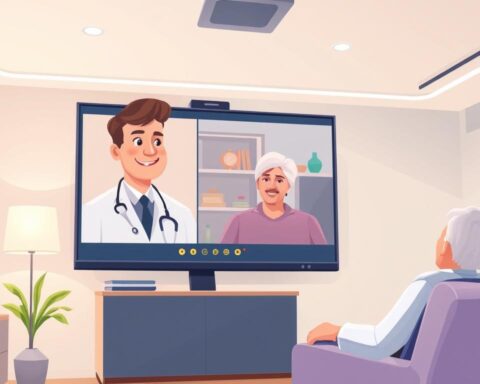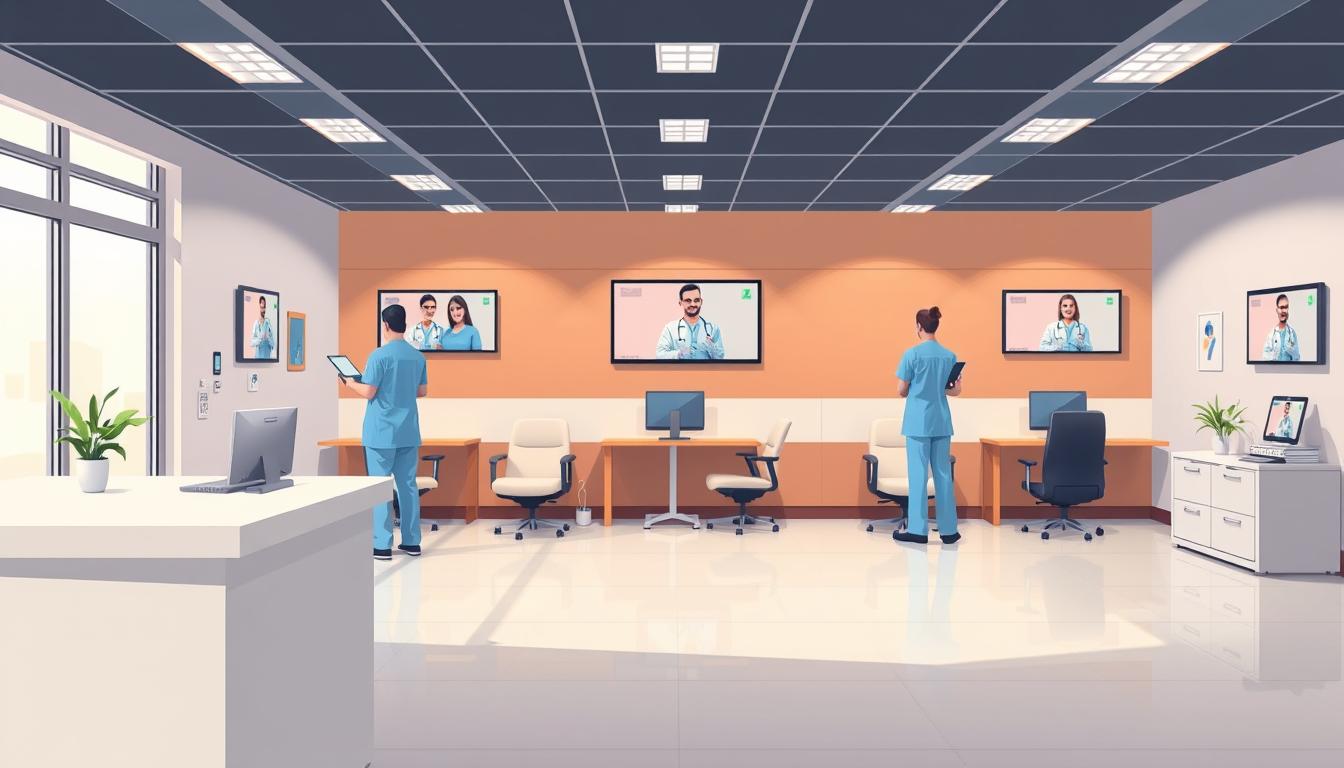
Ever had a health question at the worst time? Like a Monday morning call from HR or a kid with a fever after hours? These moments show how hard it is to get help when you need it. That’s why telehealth teletriage services are so important.
Telehealth, telemedicine, and teletriage are not the same. Telehealth is about wellness programs and monitoring. Telemedicine is about getting medical help over video or phone. Teletriage is when nurses quickly check symptoms and tell you what to do next.
In the U.S., these services change how companies care for their workers. Studies show they can help people get back to work faster and save money. For example, some programs offer 24/7 nurse help and solve simple problems in about 42% of cases.
This article is a guide for leaders. It helps you pick the right telehealth services, fit them into your work, and make sure they follow the rules. It also talks about training staff and looking at new technologies like AI.
Key Takeaways
- Telehealth teletriage services act as the first line of remote clinical assessment and care direction.
- Distinguish telehealth (broad services), telemedicine (clinical care), and teletriage (rapid symptom assessment).
- Well-designed virtual triage reduces ER visits and supports faster return-to-work decisions.
- Data from established programs shows strong alignment with in-person care and measurable ROI.
- This article offers practical steps for selecting, integrating, and scaling telemedicine solutions and online healthcare services.
Introduction to Telehealth Teletriage Services
Telehealth teletriage services have changed how clinics and employers handle urgent issues. This introduction explains key ideas, the benefits of virtual triage, and why more places are using telehealth technology.
Definition and Overview
Telehealth includes many remote services like monitoring patients and wellness programs. Telemedicine is a part of it, focusing on treating patients over video or phone. Teletriage is about checking symptoms and guiding patients to the right care.
At work, teletriage can be done by nurses or with special software. Medcor uses its own software and rules to help with injuries and first aid.
Key Benefits of Teletriage
Teletriage cuts down on visits to emergency rooms. It helps by giving advice for simple issues. It also makes tracking claims easier and helps follow safety rules.
Being available 24/7 makes care easier to get. It also makes employees happier. It helps get people back to work faster and saves money on workers’ comp.
Current Trends in Telehealth
More places started using telehealth after March 2020. CMS made it easier to use telehealth during emergencies. Now, many places use a mix of in-person and virtual visits.
More people are using apps and monitoring patients remotely. Nurses are playing a bigger role in virtual care. Research shows they need clear roles and training in using telehealth.
Using simple and affordable tools like Zoom is key. For more serious cases, systems from GE Healthcare and others help monitor patients. For more on telehealth and tele-triage, see this ACEP resource: telehealth and tele-triage.
| Aspect | Practical Impact | Representative Tools |
|---|---|---|
| Access | 24/7 availability; fewer unnecessary ER visits | Zoom, Doxy.me, FaceTime |
| Clinical Workflow | Real-time documentation and triage routing | Proprietary triage software, EMR integrations |
| Regulatory | Temporary licensure flexibilities; CMS waivers during emergencies | Policy updates, state licensing portals |
| Monitoring | Continuous data for trend analysis and escalation | GE Healthcare, Philips, Edan WMTS devices |
| Business Outcomes | Lower claim costs; better return-to-work metrics | Analytics dashboards, claims management tools |
How Teletriage Works in the US
Teletriage makes urgent care easier by using smart technology. People can talk, chat, or video call a care team. Nurses then check symptoms and decide what care is needed.
The Technology Behind Teletriage
Teletriage uses safe, cloud-based systems for quick data entry and storage. It has special software and tools to help nurses make the same decisions. This makes care more consistent.
It uses phone, web, and video for 24/7 access. It also tracks vital signs and connects with electronic health records. This makes sharing data easy.
It’s very secure, with features like audit trails and call recordings. Medcor explains more about teletriage and telehealth here.
Patient Flow and Management
It starts when someone calls or sends a web request. A nurse then talks to them to figure out what’s wrong.
The nurse might tell them to take care of themselves or send them to a clinic. They also write down what happened right away. This helps with reporting and making decisions faster.
It tracks how well it works, like how many problems it solves right away. This helps make the service better and plan for the future.
Integration with Healthcare Systems
Teletriage works well with other health systems. It uses secure connections to share data and reports. This makes it easy to move patients to the right place for care.
In work settings, it helps decide if someone can go back to work or if they need more care. It works for small or big groups, making sure everyone gets the right care.
With more online health services and smart technology, teletriage is a key tool. It helps employers and health systems save time and money while keeping people safe.
Advantages of Telehealth Teletriage
Telehealth teletriage services change how we get care. They remove barriers like distance and time. Now, patients can talk to doctors anytime, anywhere.
This cuts down wait times and makes people feel less worried. Companies that use virtual triage see better workflows. They also keep care going for people who are far away or always on the move.
Accessibility and Convenience
With round-the-clock access, people can get medical advice anytime. This is great for workers and families. It’s also good for those with chronic conditions or cancer.
Telehealth makes it easy to check in and manage symptoms. This is super helpful for people who are always moving or living far from doctors.
Cost-Effectiveness
Early triage means fewer visits to the ER or urgent care. This saves money for everyone. Companies that offer teletriage see less time off work and fewer claims.
It also makes it easier to handle claims and reduces legal risks. This is because everything is documented and recorded.
Improved Patient Outcomes
Quick decisions help people get better faster and avoid more problems. Nurses can monitor patients and track how they’re feeling. This helps manage symptoms and improve quality of life, even for those with cancer.
Virtual triage helps make sure everyone gets the same level of care. This reduces the chance of getting different treatments.
| Advantage | What It Delivers | Typical Evidence |
|---|---|---|
| Accessibility | 24/7 clinician access; reduced geographic barriers | Higher appointment reach in rural counties; increased caregiver engagement |
| Cost Savings | Fewer ER visits; faster claims processing | Employer ROI studies showing lower lost-time costs and claim frequency |
| Clinical Quality | Standardized assessments; quicker care pathways | Improved recovery times and symptom control in remote monitoring programs |
| Patient Experience | Convenient follow-up; reduced travel burden | Higher satisfaction scores from telehealth consultations and virtual triage users |
| Operational Efficiency | Documented calls; lower litigation risk | Faster adjudication and clearer clinical records for employers and payers |
Challenges Faced by Teletriage Services
Teletriage has many benefits, but it faces challenges. Legal, technical, and human factors need to be solved. This section talks about these challenges and how to overcome them.
Regulatory and Compliance Issues
Privacy rules like HIPAA are strict. They require secure platforms and strict access controls. Employers must follow OSHA and workers’ compensation laws to stay legal.
State laws about telemedicine change often. Care across states depends on clinician credentials and policies. Organizations must keep up with laws and have clear protocols.
For more on system safety, see this analysis at the National Library of Medicine: teletriage system review.
Technical Limitations
Interoperability is a big problem. Integrating teletriage with EHR and EMR systems is hard. It often needs custom work, which is expensive and slow.
Usability is also a challenge. Clinicians struggle with tools that are hard to use. This makes their work less efficient and stressful.
Remote assessments rely on patient reports. This limits the accuracy of diagnoses. Hybrid approaches and remote monitoring help, but there’s always a gap in clinical data.
Patient Engagement and Utilization
Adoption gaps happen when people feel unprepared for virtual care. Clinicians and patients need training to feel confident. Without it, they don’t use the platform consistently.
Equity and access are big concerns. Some patients lack internet, devices, or digital skills. Deployments must plan for different employee needs to avoid leaving some behind.
Behavioral and cultural factors also play a role. Some patients prefer face-to-face care. Employers or managers might resist changes. Good change management and clear communication can help.
Teletriage vs. Traditional Triage
Teletriage changes how we start care. It uses nurses and digital tools to figure out who needs help first. Traditional triage is hands-on, with doctors checking vitals and doing exams.
Comparison of processes
Traditional triage needs doctors to touch and see signs. They can order tests right away. Teletriage uses questions and algorithms to decide who needs help first.
Hybrid models mix the best of both. Teletriage sends only urgent cases to see doctors. This makes the emergency room less busy and helps those who really need it.
Patient experience differences
Virtual triage is quick and easy. Patients get help without leaving home. They can also get follow-up care online.
Some people want a doctor to touch them. Teletriage might not be enough for them. They might need to see a doctor in person.
Cost analysis
Telehealth saves money by avoiding ER visits. It also means less lost work time. Companies like Medcor see big savings by solving simple problems online.
Choosing the right tools costs money. You need to think about the cost of starting up. But, it’s worth it for the savings and better care.
| Factor | Traditional Triage | Teletriage / Virtual Triage | Hybrid Outcome |
|---|---|---|---|
| Access Speed | Moderate; depends on ED/clinic wait times | High; immediate telehealth consultations often available | Optimized; rapid screening then directed in-person care |
| Diagnostic Tools | Physical exam, vitals, point-of-care tests | Algorithm-driven symptom assessment, remote monitoring | Best of both; remote filter with targeted diagnostics |
| Patient Convenience | Low for travel-dependent visits | High; no transport needed, lower wait burden | Improved; only those needing hands-on care travel |
| Cost Impact | Higher per episode when unnecessary ED use occurs | Lower overall through reduced ER visits and claims | Net savings after integration and training costs |
| Continuity of Care | Good when follow-up arranged; variable when not | Strong for chronic care via telehealth consultations and RPM | Enhanced; seamless handoff between remote and in-person teams |
| Patient Confidence | Often higher for acute uncertain cases | High for convenience; lower when physical exam needed | Balanced; reassurance through clear escalation pathways |
Popular Telehealth Teletriage Platforms
When looking at top platforms, we see a big choice. Some offer a wide range of telemedicine services. Others focus more on teletriage. It’s important to think about how well a platform can grow with your needs.
Also, check if it fits with your current systems. This is key for online healthcare services.
Amwell
Amwell is great for urgent care and specialty visits. It also helps with mental health. It works well with big health systems.
It’s good for companies that need a big telehealth solution.
Teladoc Health
Teladoc Health has a lot to offer. It covers primary care, mental health, and managing chronic conditions. It’s a one-stop solution for many needs.
It’s chosen by companies looking for a wide range of services.
MDLive
MDLive is all about urgent care and mental health. It uses video and phone calls. It’s easy to use with work benefits and health plans.
It’s a good choice for those who need quick care for non-emergency issues.
For work injuries, Medcor is the go-to. It offers 24/7 nurse help and special algorithms. It’s different from general telemedicine.
Learn more at Medcor’s teletriage.
| Platform | Core Strength | Common Use Case | Fit for Employers |
|---|---|---|---|
| Amwell | Video visits, RPM, specialty care | Enterprise telehealth programs | High — scalable integrations |
| Teladoc Health | Comprehensive virtual care suite | Integrated chronic and mental health care | High — broad service mix |
| MDLive | On-demand urgent care, behavioral health | Employer and payer benefit integration | Moderate — cost-effective access |
| Medcor | Occupational teletriage, nurse-led protocols | Workplace injury triage and reporting | Very high — optimized for safety programs |
Impact of COVID-19 on Teletriage Adoption
The pandemic made telehealth services very popular. Health groups, employers, and clinics started using virtual care. This kept patients safe and made sure they could get help.
They found out what worked well and what didn’t. This included technology, staff, and rules.
Surge in Demand
Clinics saw a big rise in virtual visits. This was true for many areas, like cancer and primary care. Some places saw visits go up by almost four times.
Workplaces used teletriage to handle health issues. It helped keep workers safe and on the job when they could be.
Changes in Regulations
At first, rules were relaxed to help use telemedicine. HIPAA rules were made easier, and payers started to pay for virtual care more.
Later, rules got stricter again. This included clearer rules for billing and how doctors could prescribe medicine. States also changed rules to balance safety and access.
Future Outlook
Many changes in healthcare will stick around. Doctors will see patients in person and online. Remote monitoring and nurse-led care will also grow.
Groups should invest in good telemedicine tools. They should also train staff and plan well. This will make sure they can keep using remote care for a long time.
Telehealth Teletriage Best Practices
Good telehealth services need clear rules, skilled teams, and a focus on patients. Here are steps to make systems work well, train staff, and make patients happy. Each step is easy to follow and check.
Use a standard telehealth triage plan based on proven methods. Make sure nurses and doctors follow the same steps. Have clear plans for when to call for help or see someone in person.
Make sure teletriage notes go into electronic health records. This helps with billing and keeping track of patient care. Ask for notes that show when things happened, what was decided, and what the diagnosis is.
Training Healthcare Professionals
Teach telehealth skills in a structured way. Cover how to use triage tools, talk to patients online, and use the platform. Practice with real-life scenarios to get better at making decisions from a distance.
Be clear about who does what in teletriage. Tell nurses what to do, who to follow up with, and how to support patients emotionally. Keep checking if staff know their stuff and keep learning about technology.
Enhancing Patient Experience
Make it easy for patients to get help by phone, web, or app. Always be ready to help and tell patients what to do next. This makes them feel in control.
Build trust by keeping records and being open about what happens. Make sure patients know they will be followed up on and that their privacy is safe. Sometimes, see patients in person too, and use technology to make care more personal.
Measurement and Continuous Improvement
Keep track of how happy patients are, how well problems are solved, and if they come back. Listen to what patients and employers say to make things better. This helps avoid seeing the same patients over and over.
Look at data to find out what works and what doesn’t. Use this information to make the telehealth service better. This helps everyone get better care.
| Focus Area | Key Actions | Metrics to Monitor |
|---|---|---|
| Protocol Design | Adopt evidence-based algorithms; map escalation pathways; integrate with EHR | Protocol adherence rate; time-to-escalation; documentation completeness |
| Workforce Training | Simulation-based practice; digital communication coaching; role clarity | Competency scores; simulation pass rate; staff retention |
| Patient Access | Multi-channel entry points; 24/7 coverage; clear patient instructions | Call abandonment; time-to-contact; access satisfaction |
| Trust & Safety | Call recording; transparent notes; privacy commitments | Privacy incident rate; follow-up adherence; complaint rate |
| Clinical Integration | RPM and PROs; hybrid care pathways; EHR linkage | In-person follow-up rate; remote monitoring engagement; outcome improvement |
| Quality Improvement | Regular audits; feedback loops; data-driven updates to protocols | Resolution rates; repeat encounter rate; claims accuracy |
The Future of Telehealth Teletriage Services
Telehealth services will grow as they get better at handling data and making things clearer. Doctors and nurses will use tools to check on patients from afar. This will help them decide who needs help right away.
Health systems that work well together will get better at using data. This will help them plan better and keep people out of emergency rooms.
Innovations on the horizon
New tools will let doctors check on patients more closely. This will help them know when to act fast. New systems will sort patients by how much help they need.
Potential for AI integration
AI can help doctors make better choices without taking over. It can spot problems early and make notes faster. But, it’s important to keep things safe and trustworthy.
Forecasting industry trends
Telemedicine will mix with in-person care in new ways. Companies will choose systems that show clear results. Nurses will play a big role in leading care teams.
Only the best systems will lead the way. Stable money and clear rules will help things move faster. Teams that prepare now will be ahead in a fast-changing market.
Conclusion: Embracing Telehealth Teletriage
Telehealth teletriage services are now a big part of modern care. Healthcare leaders see remote medical advice as key. It helps make care more accessible, cheaper, and better for workplace health.
Success comes from clear goals, working systems, and ready doctors.
The Importance of Adaptation
Organizations need to really commit to telemedicine. Start with small tests to see how it works. Make sure it fits with electronic health records and is safe and follows rules.
Train doctors and nurses well. This way, care given from afar is always good and based on facts.
Final Thoughts on Future Growth
The future is about nurses leading teletriage. It will be part of bigger online health services. This includes RPM, patient reports, and virtual visits.
Look at vendors based on their clinical skills, how well they work together, and their reports. Medcor is a good example of success. See teletriage as something that can grow. Always check how it’s doing and make sure your team is ready.
FAQ
What is the difference between telehealth, telemedicine, and teletriage?
Telehealth is a wide term for remote health services. This includes checking health, wellness programs, and patient education. Telemedicine is about doctor visits and managing prescriptions online. Teletriage is when nurses quickly check symptoms and guide patients to the right care.
How does teletriage work in a workplace or occupational-health setting?
An employee or caregiver starts by calling or using an app. A nurse then talks to them to check their health. The nurse decides if they need self-care, a doctor visit, or urgent care.
What measurable benefits can employers expect from implementing teletriage?
Employers might see fewer ER visits and quicker returns to work. They could also save on workers’ comp and improve incident reports. Studies show teletriage can be very cost-effective.
Which technologies underpin effective teletriage platforms?
Good platforms are secure, cloud-based, and easy to use. They have tools for tracking health and connecting with EHRs. They also work with apps and devices for better care.
Are teletriage platforms secure and compliant with privacy laws?
Yes, they are designed to keep patient info safe. They use encryption and follow strict rules. But, it’s important for companies to check the vendor’s security.
Can teletriage reduce emergency department and urgent-care utilization?
Yes, it’s made to quickly check symptoms and send non-urgent cases to self-care. Studies show it can greatly reduce ER visits. Adding RPM and virtual visits can help even more.
How do teletriage services integrate with existing EHR and claims systems?
They use secure connections to send data to EHRs and claims systems. This makes tracking and claims easier. But, setting this up can be tricky.
What limitations or challenges should organizations anticipate?
There are challenges like different laws in each state and EHR issues. Training nurses and getting devices to patients can also be hard. But, with the right approach, these can be overcome.
How should organizations train nurses and clinicians for teletriage?
Training should cover how to use the platform and communicate online. It’s also important to practice and keep skills sharp. This helps nurses feel confident and ready.
Which commercial platforms serve enterprise telehealth and teletriage needs?
Companies like Amwell and Teladoc Health offer virtual visits and integration. Specialized providers focus on nurse-led care for employers. Look for platforms that fit your needs and offer good results.
How did COVID-19 change adoption and regulation of teletriage?
COVID-19 made virtual care more popular and relaxed rules. But, rules have gotten stricter again. This has kept teletriage in demand and led to new care models.
What role will AI play in the future of teletriage?
AI will help with decision-making and risk detection. But, it must be used carefully and validated. AI should help, not replace, human judgment.
How can organizations measure the success of a teletriage program?
Look at first-aid rates, ER visits, and how well nurses agree with decisions. Use dashboards and feedback to improve. This helps make the program better.
What are practical first steps for piloting teletriage in a company?
Start with a small test: pick a site or group, set goals, and choose a vendor. Train staff and watch how it goes. Then, grow it based on what you learn.
How does teletriage affect patient experience compared with traditional triage?
Teletriage is quick and easy, without the wait. It gives clear advice and follow-up. But, some might want a face-to-face check. Hybrid models and clear talk can keep trust.
What cost factors should leaders consider when evaluating teletriage vendors?
Look at costs for the platform, setup, training, and support. Compare these to savings like fewer ER visits and quicker claims. Vendors that show clear results are best.
How can teletriage support equity and access for remote or rural workers?
Teletriage helps by being available 24/7, without needing to travel. Use simple interfaces and help with devices. This makes it easier for everyone to get help.
What future innovations will most affect teletriage delivery?
New things like RPM, biosensors, and AI will change teletriage. They will help make assessments better and care more connected. These changes will improve how we use teletriage.