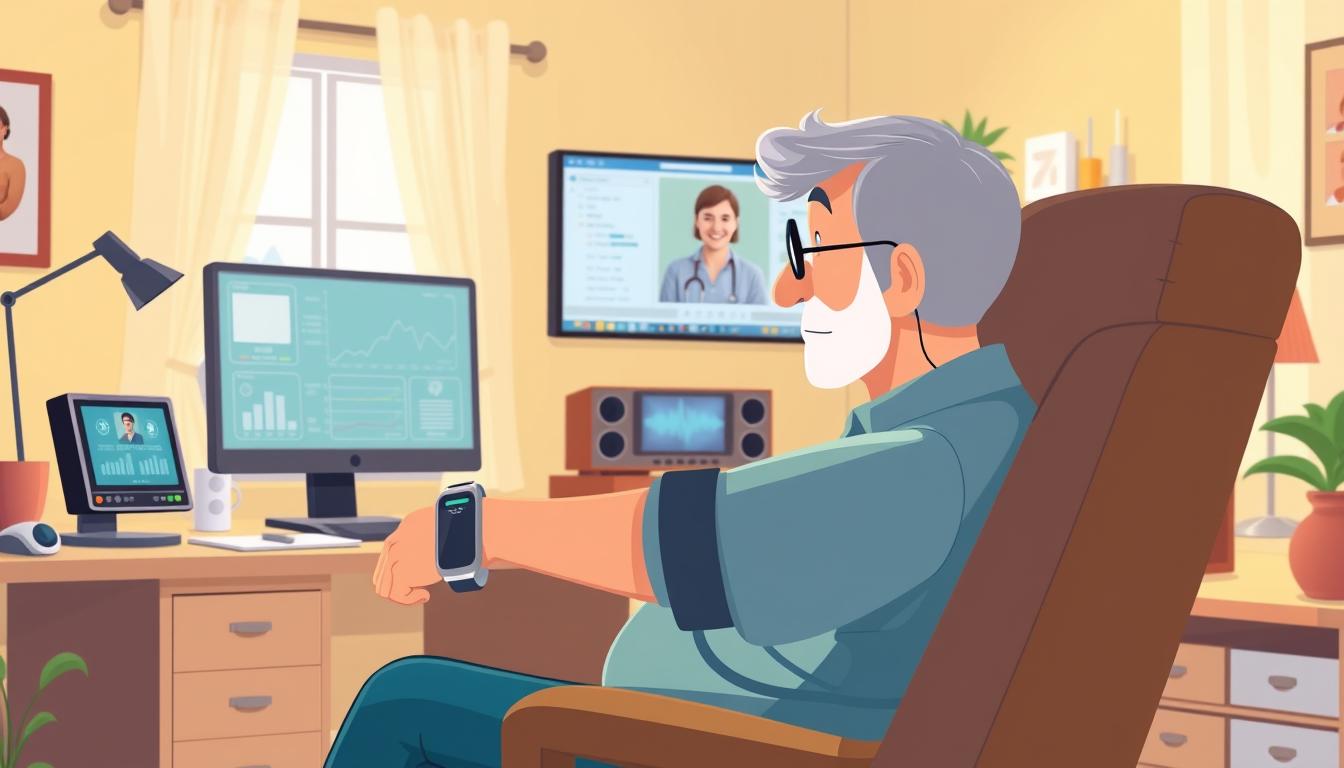
Some nights, a beep from a blood pressure cuff can calm a family more than a trip to the ER. Many know this mix of relief and worry. It’s about caring for someone with heart issues, diabetes, or COPD at home.
Telehealth brings doctors into your living room. It offers steady data and reassurance. This helps manage health at home.
Remote monitoring lets doctors see health data all the time. This includes glucose, oxygen levels, and blood pressure. It helps doctors act on trends, not just one-time readings.
Telemedicine connects devices to platforms for patient care. It offers portals, questionnaires, and education. This makes patients more involved and reduces hospital visits.
Policy and programs are key. CMS explains RPM needs devices that send data automatically. It also talks about billing and consent. British Columbia shows how RPM works in real life, from cancer to community care. See more at PHSA RPM white paper.
Key Takeaways
- Telehealth remote monitoring for at-home care connects patients and clinicians through continuous data sharing.
- Telemedicine for home care uses portals and devices to improve self-management and reduce hospital utilization.
- Digital health monitoring supports chronic conditions like diabetes, COPD, heart failure, and post-op recovery.
- Remote patient monitoring solutions require secure device uploads and clear billing, consent, and documentation.
- Real-world programs—spanning oncology to community paramedicine—demonstrate RPM’s impact on outcomes and system efficiency.
Understanding Telehealth Remote Monitoring
Remote monitoring makes regular doctor visits a thing of the past. It lets doctors keep an eye on patients at home. This way, they can spot problems early and help patients feel better sooner.
Definition and Overview
Remote monitoring collects important health data like blood pressure and heart rate. It uses devices and apps to help doctors make better choices. Patients can share their health info and talk to doctors online.
Key Technologies Involved
Medical devices and software work together for care. Devices like blood pressure monitors and smart scales send data to doctors. Wearables track activity and heart rate, helping doctors see trends.
Telehealth technology lets patients and doctors talk and share info online. It uses cloud platforms to store health data. This way, doctors can see how patients are doing and make changes as needed.
Benefits for Patients
Patients feel more in control with remote monitoring. It helps them avoid unnecessary doctor visits. It also helps doctors catch problems early, which can prevent serious issues.
Remote monitoring helps patients get the right care at the right time. It’s great for older adults or those with special needs. It lets them stay independent while doctors keep an eye on them.
It also offers helpful tips and reminders. For example, it can remind patients to take their medicine or exercise. The Mayo Clinic has a guide on telehealth that explains how it helps: telehealth essentials.
| Component | Function | Patient Value |
|---|---|---|
| Connected sensors | Measure vitals and auto-transmit | Reduces measurement error; supports early detection |
| Wearable devices | Track activity, sleep, heart rate continuously | Informs lifestyle interventions and rehab plans |
| Patient portals | Collect self-reported data and education | Empowers self-management; improves clinician communication |
| Two-way telehealth | Enables audiovisual visits and messaging | Maintains rapport; allows timely clinical response |
| Adherence tools | Send reminders and log therapeutic behavior | Boosts medication and exercise compliance |
The Importance of At-Home Care
At-home care changes how doctors and patients handle long-term health issues. It lets doctors keep an eye on patients all the time. This helps prevent sudden problems and helps manage health over time.
This approach fits with the trend of more care happening outside of hospitals. It meets the growing need for care in different settings.
Trends in Home Health Care
Remote patient monitoring uses sensors and analytics to catch small changes early. Machine learning and connected devices are making this technology more common. It’s being used for COPD, diabetes, and heart failure.
Experts think more people will use virtual health monitoring soon. This is because of the growth in wearable health technology.
Patient Preferences and Comfort
Patients feel more in control and connected to their care teams with telehomecare. They like using patient portals and getting timely messages from doctors. This makes them feel like they’re getting personal care.
Telemedicine for home care is great for checking in after surgery or for those needing comfort care. It respects patients’ comfort and privacy.
Cost-Effectiveness
Using remote monitoring leads to fewer emergency visits and lower readmission rates. It saves money by reducing the need for urgent care. It also cuts down on paperwork and costs related to hospital stays.
Recent changes in policies, like Medicare’s new rules, make it easier for providers to offer this care. It helps them save money and make care more affordable.
For more on wearable AI sensors and remote patient monitoring, check out this guide from Miloriano: wearable AI sensors and RPM.
How Telehealth Remote Monitoring Works
Telehealth remote monitoring lets doctors watch over patients from home. It uses devices, safe data sharing, and team work. This way, doctors can keep an eye on health, respond to alerts, and change treatment plans without seeing patients in person.
Devices Used in Remote Monitoring
Devices for remote monitoring include pulse oximeters, blood pressure cuffs, and more. Companies like Philips and Masimo make tools that send data automatically.
Wearables from Fitbit and Apple also help by tracking activity and heart rate. It’s important to pick devices that meet medical standards and can send data on their own.
Data Collection and Transmission
Systems collect health data and what patients say through devices and online portals. Tools like Epic MyChart or special telehomecare systems help by sending data safely and storing it in a way that follows privacy laws.
Thanks to automatic uploads and encrypted data, doctors can see trends and spot problems. Good support and easy setup help avoid mistakes and make things easier for everyone.
Role of Healthcare Providers
Doctors look at the data and decide what to do next. This might mean changing medicine, teaching patients, or setting up a face-to-face visit. The process includes setting up devices, capturing data, reviewing it, and making changes.
Doctors follow rules for billing and keeping records. They get consent from patients, keep accurate records, and bill for monitoring. Teams work with vendors to make sure devices and data flow smoothly.
| Component | Function | Example Vendor or Tool |
|---|---|---|
| Clinical Devices | Capture physiologic metrics automatically | Masimo, Philips, Dexcom |
| Consumer Wearables | Supplement activity and heart-rate data | Apple Watch, Fitbit |
| Telehomecare Platform | Questionnaires, messaging, document sharing | Epic MyChart, specialized RPM vendors |
| Connectivity & Security | Encrypted upload and storage; auto-sync | Secure cloud services, VPNs, EHR integrations |
| Clinical Workflow | Review, triage, intervention, documentation | Care teams, remote monitoring nurses, physicians |
| Patient Support | Onboarding, troubleshooting, education | Vendor tech support, clinic educators |
Using remote patient monitoring needs careful thought about devices, data safety, and roles. When done right, it lets teams make decisions based on real-time data. This keeps patients safe and involved at home.
Key Benefits of Remote Monitoring
Remote monitoring changes care at home. It turns occasional visits into constant support. Providers get real-time data, and patients get more freedom and clear plans.
This change comes from using telehealth, digital health monitoring, and virtual health services. Together, they help manage daily life and improve long-term results.
Improved Patient Outcomes
Tracking health data helps control chronic diseases. Devices track blood pressure, glucose, and oxygen levels. This helps doctors make better choices before problems start.
Studies show that using remote data leads to better treatment and fewer hospital visits. This is good for both patients and doctors.
Enhanced Communication with Providers
Regular updates lead to better talks between patients and doctors. Messages, education, and virtual visits help patients manage their health. This strengthens the doctor-patient bond.
Health systems like Mayo Clinic and Kaiser Permanente see better teamwork. This happens when digital and virtual services are part of care plans.
Early Detection of Health Issues
Constant monitoring lets doctors spot small problems early. This means they can act fast, avoiding emergency visits and expensive hospital stays. When telehealth fits with clinical work and billing, teams can respond quickly and show the impact of care.
Using these methods brings real benefits. Patients live better, use less acute care, and teams work better together. The key is combining patient involvement with reliable digital and virtual services.
Regulatory and Legal Considerations
Rules shape how healthcare groups use telehealth. They must balance patient needs with strict data and billing rules. This guide helps teams use telehealth safely at home.
HIPAA and Patient Privacy
Remote care sends health info all the time. Systems like Epic and Philips must keep data safe. They also need to track who accesses what and when.
They should tell patients how their info is used. This helps keep everyone’s data safe.
Secure messaging and sharing need clear rules. Teams must train staff and help patients use devices right.
Licensure Requirements for Providers
States set rules for where doctors can work. Medicare has rules for working across state lines. Providers must check these rules before treating patients far away.
Telehealth can help care for people in different places. But, teams must make sure they follow the law. This helps with billing and keeping records right.
Compliance Challenges
Billing for remote care needs careful following of rules. Teams must get patient consent and show that monitoring helps care plans. Devices must meet FDA standards when needed.
Some codes require collecting data for 16 out of 30 days. Only one doctor can bill for RPM per patient in 30 days for some programs. Teams must avoid double billing and keep records up to date.
- Make sure consent and privacy follow HIPAA and program rules.
- Check licensure and billing rules for each patient’s location before starting care.
- Ask vendors about device standards, data upload, and platform support.
- Train staff and patients on safe use, support, and documentation.
Using remote patient monitoring means planning for rules, tech limits, and clear reasons for care. With good policies and strong telehealth tools, teams can offer safe care at home.
Implementing Telehealth in At-Home Care
Starting telehealth at home means setting priorities. First, pick what conditions to watch. Then, plan how data moves between patients and doctors.
Doctors should keep patients involved and check on them often. This helps avoid hospital stays and makes care better.
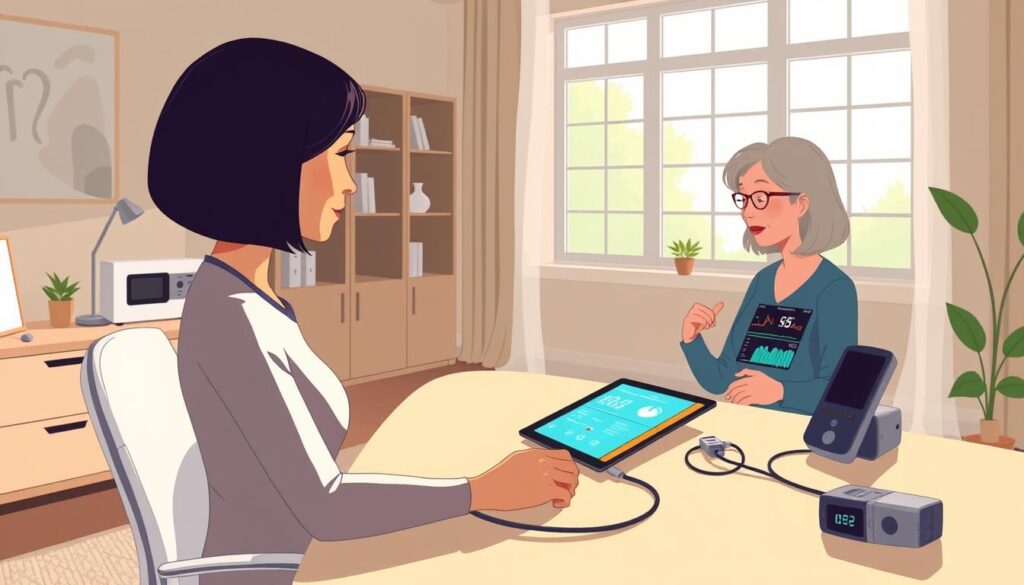
Steps for Healthcare Providers
Begin by setting clear goals and targets. Look at blood pressure, sugar levels, and wound healing. Make sure patients agree and need the care.
Plan who does what with the data. Decide who gets alerts and how often doctors check in. Use the right codes for billing.
Necessary Equipment and Technology
Choose devices that are safe and send data securely. They should work well with health records. Look for devices that are easy to use and accurate.
Use platforms that help with messaging and sharing documents. Good platforms offer help and guides to get started.
Training for Patients and Caregivers
Teach patients and caregivers how to use the devices. Show them how to take readings and fix problems. Use videos and guides for different learning ways.
Have a setup session and check in later. This helps keep everyone on track. Tell patients when to call the doctor for issues.
Challenges and Limitations
Remote care has big promises but faces real-world problems. Doctors and managers deal with technical, behavioral, and policy issues. These issues affect how telehealth works in daily life.
Technological Barriers
Not all devices or apps work the same. Companies like Philips and ResMed have good platforms. But, linking them to health records can be hard and needs constant IT help.
Rules from the FDA and Medicare add more challenges. They require specific devices and two-way audio-video for some programs.
Patient Engagement and Adoption
Patients must actively participate in remote monitoring. They need to take readings, charge devices, and use online portals. If they don’t understand technology or don’t want to, it’s hard to get good results.
Teaching patients and making it easy to start helps. Health systems that use nurse coaching and clear instructions see better results than those that don’t.
Issues with Connectivity
Not having good internet or cell service can stop data from being sent. This is a big problem in rural areas where internet is often weak.
When internet is spotty, data has to be entered manually or sent later. This makes it hard to act quickly and can cause billing problems.
Operational and Policy Constraints
Rules for getting paid and billing codes are complex and change often. Doctors and managers must keep up with these rules. They also have to handle consent, supervision, and limits on billing.
Investing in coding knowledge and legal advice can help avoid payment problems. Clear policies help grow telemonitoring programs without losing money unexpectedly.
Comparative View of Key Limitations
| Challenge | Impact on Care | Mitigation Strategies |
|---|---|---|
| Device compatibility | Data silos; extra IT work | Adopt interoperable standards; prioritize vendors with EHR connectors |
| Patient tech literacy | Lower adherence; incomplete data | Offer hands-on training; use simplified user interfaces |
| Connectivity gaps | Missed alerts; billing risks | Provide cellular-enabled devices; create fallback workflows |
| Regulatory and billing complexity | Claim denials; operational delays | Maintain compliance teams; update policies before rule changes |
| Workforce capacity | Provider overload; slower response times | Use triage algorithms; delegate monitoring to trained nurses |
The challenges are real but can be overcome. Choosing the right telehealth tech, teaching patients, and having clear rules can make telemonitoring work well.
Future Trends in Telehealth Remote Monitoring
The future of remote patient monitoring will cover more conditions and engage patients more. Platforms will focus on patients with better portals, more education, and secure sharing. This will make care better and keep patients connected.
Innovations on the Horizon
Look for FDA-approved devices that track health signals all the time. AI will spot early signs of trouble, helping doctors act fast. More data and better algorithms will catch problems sooner, like a recent study on remote monitoring.
Integration with Wearable Technologies
Wearable tech will link up better with EHRs. Smartwatches and sensors will send data right away. This lets doctors watch patients closely, not just in short visits.
Predictions for the Next Decade
Remote care will get more support from policies and money. Medicare and new codes will help pay for home care and training. Digital health will grow, making care better for chronic diseases.
Remote care will team up with therapy to help patients at home. This cuts down on visits but keeps care strong. Health systems that do this will do better and help patients more.
Everyone will work on making wearable tech better. It’s about finding the right amount of data for doctors. This is key for keeping digital health going strong.
Conclusion: The Future of Remote Monitoring
Remote patient monitoring is changing how we care for people. It moves from just visits to constant care based on data. This way, doctors can catch problems early and manage long-term diseases better.
It also makes patients more involved in their care. They get feedback and learn how to stay healthy. This helps everyone get better results.
Telehomecare adds more to this by letting patients take charge of their health. It includes special questionnaires and health info. This lowers the need for emergency visits.
It’s important to use devices that meet FDA rules. Also, systems that send data safely are key. Training and clear instructions make it work well at home.
How we pay for this matters too. We need the right rules and codes. This makes sure care at home is affordable and good quality.
The future looks bright. With the right setup, remote care can help more people. It can also cut down on hospital stays and save money for everyone.
FAQ
What is telehealth remote monitoring for at-home care?
Telehealth remote monitoring lets doctors check on patients at home. It uses special devices like pulse oximeters and blood pressure cuffs. These devices send data to doctors, who can then help patients better.
How does telehomecare differ from RPM and remote therapeutic monitoring (RTM)?
Telehomecare helps patients manage their health at home. It uses questionnaires and messaging. RPM focuses on devices that send data to doctors. RTM looks at therapy data, like how well a patient follows their treatment plan.
What conditions are best suited to remote monitoring and telehomecare?
These methods work well for chronic conditions like diabetes and heart failure. They also help with COVID-19. The goal is to catch problems early and prevent hospital visits.
What are the core components of an RPM program?
An RPM program has three main parts. First, patients learn how to use devices. Second, devices send data to doctors automatically. Third, doctors use this data to adjust treatment plans.
How does billing and reimbursement work for RPM under Medicare?
Medicare has rules for billing RPM. Devices must meet FDA standards and send data automatically. Doctors can bill for RPM, but only one can per patient per month.
What technology and security requirements must programs meet?
Programs need devices that send data securely. They also need patient portals for messaging and education. Everything must be HIPAA-compliant to keep patient data safe.
How do telehomecare portals support patient engagement?
Patient portals offer personalized education and messaging. They help patients stay connected to their care team. This leads to better health outcomes and fewer hospital visits.
What are the main clinical benefits of remote monitoring?
Remote monitoring catches health problems early. This leads to better disease management and fewer hospital visits. It also helps doctors and patients work together better.
What operational challenges should health systems expect when implementing RPM?
Implementing RPM can be tough. It requires the right devices and internet. It also needs clear rules for consent and billing. Training teams is also important.
How can providers increase patient adoption and sustained engagement?
Make it easy for patients to use devices and follow instructions. Offer clear guidance and support. This helps patients stick with the program.
How does connectivity affect RPM eligibility and effectiveness?
Good internet is key for RPM to work. Without it, data can’t be sent. Make sure patients have the right devices and internet.
What licensure and legal considerations should clinicians know?
Clinicians must follow state laws for remote care. They need to keep records of consent and data handling. It’s wise to get legal advice to stay compliant.
What evidence supports telehomecare and RPM effectiveness?
Studies show these methods improve health and reduce hospital visits. They help doctors catch problems early and treat them better.
Which metrics should organizations track to measure program success?
Track how often patients use devices and answer questions. Also, look at health outcomes and how often patients visit the hospital. This shows if the program is working.
What technologies and innovations are shaping the future of remote monitoring?
New technologies like wearables and AI are coming. They will help doctors catch problems sooner. Changes in laws and payment will also shape the future.
How should organizations prepare for scaling RPM programs?
Start by aligning technology with clinical care. Choose the right devices and make sure data flows securely. Train teams and set up billing and consent processes. Start small to refine your approach.
Are there limitations to what RPM can achieve?
RPM has its limits. It can’t replace in-person care for some needs. It also depends on patients using devices and following instructions. Careful planning can help overcome these challenges.