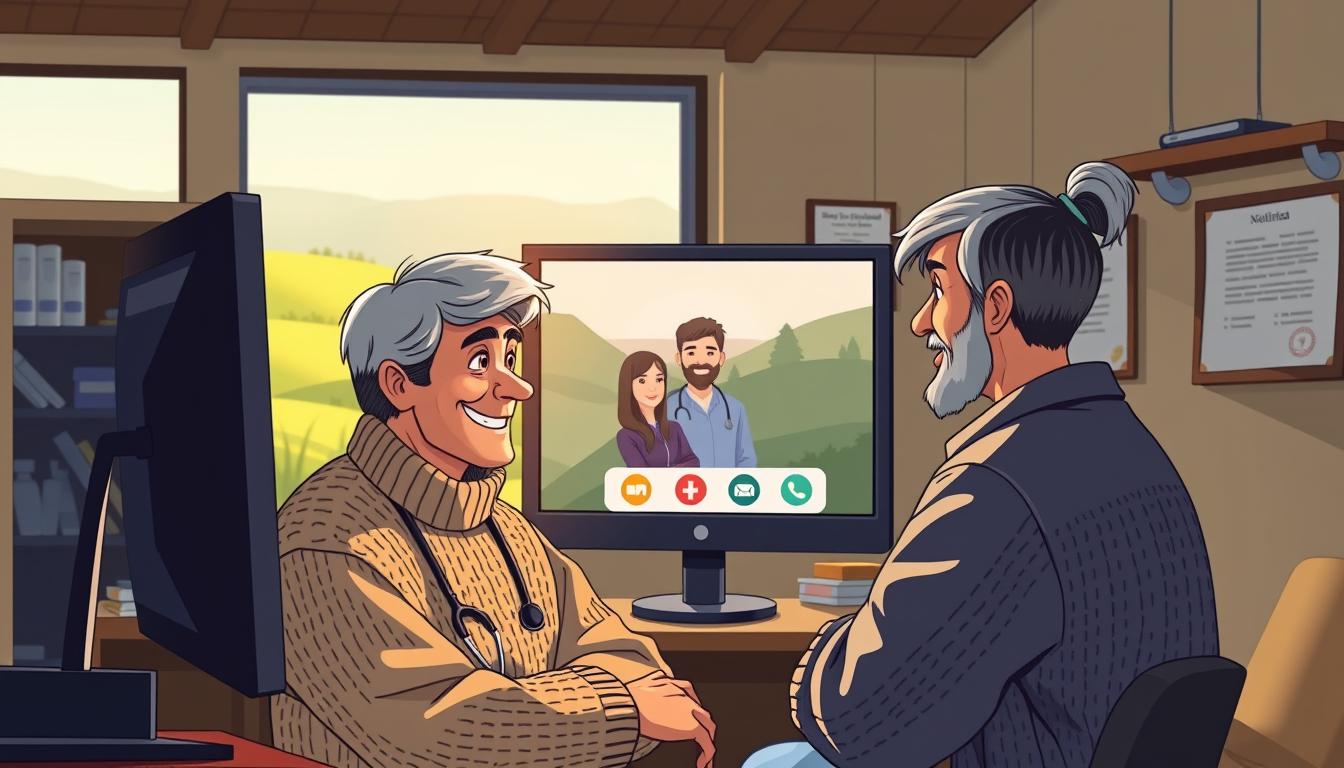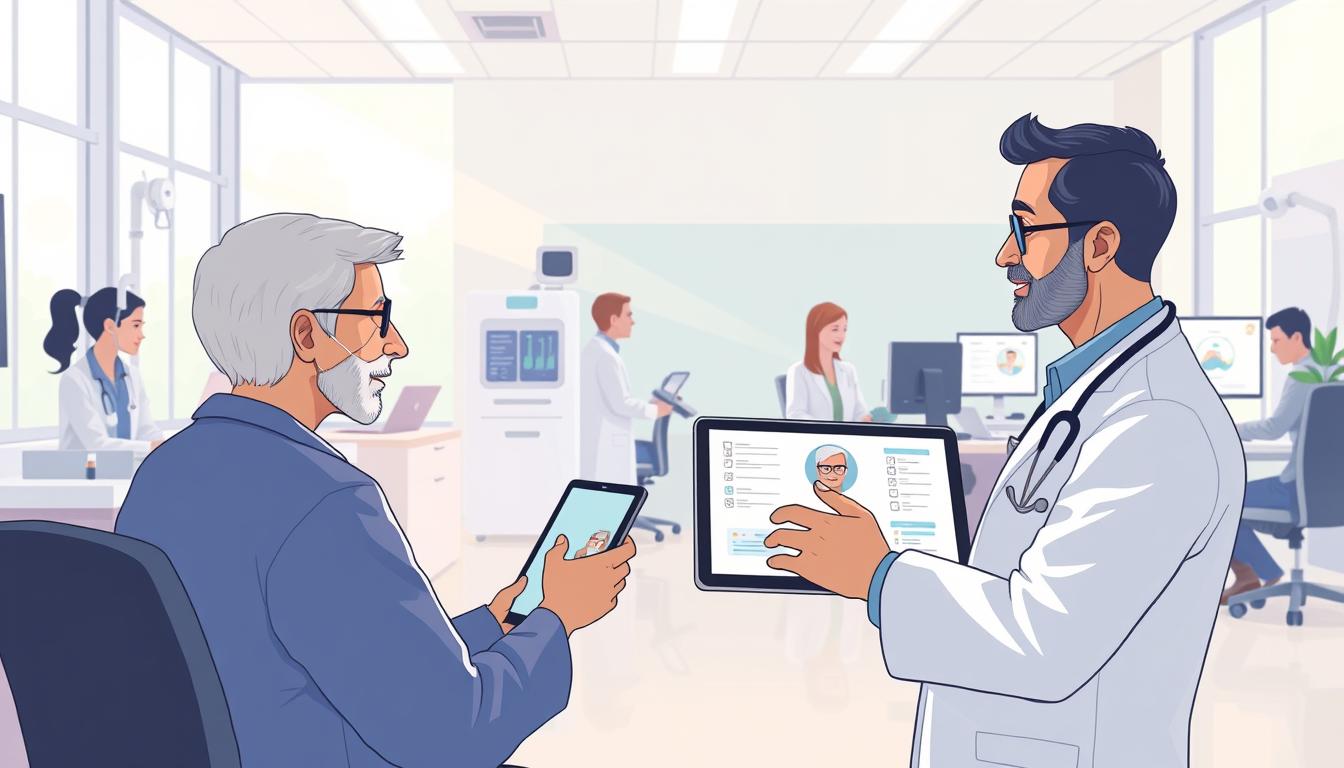
She remembers the first video visit that changed everything. A frail neighbor in rural Ohio avoided a long drive for a specialist consult. A primary care team in Boston kept care going through a laptop camera.
Those moments are not just stories. They show that virtual healthcare can work well when everything is in place.
This article offers a practical guide for leaders. They want to make telehealth work long-term. It’s not just one project. It’s a big change that affects many areas.
Ambulatory telehealth visits went from 0.3% to over 23% during the pandemic. Some Medicare visits even hit 42% online. But, use has dropped in some places, showing how hard it is to keep things going.
Home health agencies saw big benefits from remote care. But, they worry about keeping it up. Changes like CMS’s 2023 rules have made it harder for some to use digital health.
This guide will focus on key areas. It will cover policy changes, technology, and how to make care better for everyone. The goal is to help people make telehealth a lasting part of healthcare.
Key Takeaways
- Telemedicine grew a lot during the pandemic, but it’s not the same everywhere.
- To keep telehealth going, we need good policies, stable money, and smart workflows.
- Digital health has helped a lot, like for home health and care in rural areas.
- Changes in rules, like CMS’s codes, can really affect how we use digital health.
- The future of telehealth depends on using technology, training doctors, and focusing on patients.
The Rise of Telehealth in the United States
In 2020, the U.S. quickly changed how we get care. Doctors, insurance companies, and patients started using remote care. This big change changed how we see virtual healthcare.
Historical context and evolution of telehealth
Before March 2020, Medicare only covered a few types of telehealth. Telemedicine was rare, making up only 0.3% of visits before the pandemic. In nursing homes, it was even less, at about 0.15% of visits.
Then, policy changes made a big difference. New rules let doctors care for patients at home. This made it easier for more people to see doctors online.
Key drivers of telehealth growth during the pandemic
People were scared and wanted to stay away from others. This made telehealth very important. Clinics closed, so doctors started using telehealth to keep caring for patients.
More and more people used video visits with their doctors. By the pandemic, nearly a quarter of adults 65+ had at least one video visit. This showed that telehealth could work for many people.
Telehealth also reached more places. It went beyond clinics to nursing homes and homes. This showed that doctors and patients could adapt quickly.
The fast growth of telehealth was due to policy changes, need, and success. Now, there are debates about keeping telehealth going after the pandemic.
Legislative Changes Supporting Telehealth
The pandemic changed telehealth policy fast. Federal actions under Section 1135 and others removed limits. They allowed telehealth from home and relaxed HIPAA rules.
This helped telehealth grow after the pandemic. It let providers help more patients.
Policymakers added quick fixes to long debates. Medicare’s telehealth rules were extended until December 2024. Some changes were made permanent for mental health services.
But, some rules were only temporary. This made it hard for hospitals and health systems to plan.
Groups like the American Medical Association pushed for more permanent rules. They wanted telehealth to be covered the same as in-person care. They said if Medicare doesn’t cover it, private insurance might not either.
Some services got permanent coverage, like mental health. But, services like cardiac rehab lost support by December 31, 2024. Places like Federally Qualified Health Centers kept some support, helping those who need it most.
Changes were felt in real life. New codes added work for providers without extra pay. This affected staffing and budgets, making it hard to keep telehealth going.
The ups and downs show that clear rules are key for telehealth to grow. They also show that rules affect where health systems invest. Advocates keep pushing for Medicare to cover telehealth permanently. They want stable funding for virtual care.
Here’s a quick look at key changes, when they happened, and how they affected providers and patients.
| Policy Action | Date / Period | Primary Effect | Operational Impact |
|---|---|---|---|
| Section 1135 waivers and HIPAA enforcement relaxation | 2020–ongoing through extensions | Allowed home-based visits and broader platform use | Enabled rapid scale-up; raised long-term compliance questions |
| Medicare telehealth flexibilities (expanded service list) | 2020–Dec 2024 with selective permanency | Added mental health and other services to covered telehealth | Created access gains; left gaps where extensions expired |
| Introduction of G-codes for home health documentation (G0320–G0322) | July 2023 | Required detailed reporting without direct payment | Increased administrative work; limited financial incentive |
| Short-term coverage extensions to March 31, 2025 | Early 2025 | Maintained some telehealth reimbursement temporarily | Generated planning uncertainty for staffing and capital |
Benefits of Telehealth for Patients
Telehealth has changed how we get care. It helps those who can’t move much, live far away, or have a lot to do. It also cuts down on missed appointments and lets us see specialists we couldn’t see before.
Increased access to healthcare services
Virtual care brings doctors to places with few clinics. People in rural areas say they get better care and are happy to use telehealth. It also helps with home care by checking in often and keeping patients safe.
Remote patient monitoring keeps an eye on health between visits. It uses smart devices for dementia care and saves money. Doctors can catch problems early with RPM.
Many online consultations are quick, often in hours. This makes getting care easier and faster. You can read more about it here.
Improved convenience and reduced travel
Seeing a doctor online saves time and keeps you safe from germs. People in rural areas like it because it saves travel and keeps them safe. They also like it because it’s quick and fits into their busy lives.
For seniors and those without fast internet, there are audio-only options. This makes sure everyone can get care, no matter their age or income.
Many telehealth visits are as good as in-person ones. Patients are happy when they see doctors they know online. But, not everyone uses telehealth all the time. It depends on who’s available and how easy it is to use.
Challenges Faced in Telehealth Implementation
Starting remote care showed big gaps, not just tech ones. Hospitals, home health, and private practices face many hurdles. These include connectivity, device skills, staffing, and rules.
Technological barriers among patients and providers
Not everyone has good Internet at home. Boston Medical Center found big differences. Those without Internet at home were more likely to say no to video visits.
Older adults and people in rural areas struggle with video platforms. Doctors also have different levels of comfort with online visits. Some need training to use new tech.
Even with good Internet, some places don’t use telehealth much. This is because people don’t trust the doctors or think it’s not good care.
Concerns about data security and privacy
After the pandemic, rules got stricter again. Health systems now have to spend more on safe platforms. This makes things more complicated and expensive.
Everyone worries about data safety and keeping information private. To build trust, places need to use strong security and teach staff well. They also need to tell patients how they keep their info safe.
There’s also a lot of paperwork now. New rules, like CMS G-codes, add to the work without more money. This makes it hard for small places to offer more online visits.
There are also problems with staff and how things work. Places with not enough money or staff can’t see as many patients. Different rules in each state make it hard to work with doctors in other places.
To fix these problems, we need to invest wisely. We should improve Internet, teach people about tech, make paperwork easier, and make sure telehealth is safe. With these steps, telehealth can really help people get the care they need.
| Challenge | Impact | Actionable Response |
|---|---|---|
| Digital divide (connectivity) | Missed appointments; uneven access to care | Targeted broadband grants; community Wi‑Fi hubs |
| Device and digital literacy gaps | Poor video quality; lower patient confidence | Simple UX platforms; patient and clinician training |
| Regulatory fragmentation | Limits multi-state practice; slows scale | Interstate compacts; streamlined licensure workflows |
| Administrative burden | Higher costs; reduced adoption by small providers | Reform billing codes; automate documentation tools |
| Telehealth security and privacy | Trust erosion; legal and financial risk | Invest in HIPAA-compliant platforms; regular audits |
| Workforce constraints | Limited appointment availability; burnout | Hire telehealth coordinators; integrate RPM into workflows |
Adaptations by Healthcare Providers
Health systems changed how they deliver care to meet the need for virtual services. Clinics now have special days for video visits. They also make follow-ups short and add remote monitoring for chronic care.
Innovations in service delivery
Providers started special telehealth programs for people at high risk, like heart failure patients. These programs use video check-ins and remote monitoring to catch problems early. This helps lower readmissions.
Changes made care more efficient. Doctors can see more patients online, helping with staff shortages. Health systems also bought new platforms and improved EHRs to make things work better.
Training and education for healthcare professionals
Doctors and nurses needed new skills for virtual care. They learned how to do exams online, communicate well, and triage patients. They also learned to use monitoring dashboards and handle online-to-in-person handoffs.
Health systems that trained staff well saw faster adoption and more confidence. They used a mix of in-person and online staff to save time and keep care going.
Running focused trials is a good way to move forward. Providers should test new approaches, measure results, and choose technology wisely. For more on how telehealth is changing, see this OECD report: telehealth expansion in the post-pandemic world.
| Area | Practical Change | Expected Benefit |
|---|---|---|
| Care model design | Dedicated virtual visit days and RPM-enabled follow-ups | Higher access, reduced readmissions for chronic patients |
| Technology | HIPAA-compliant platforms with EHR integration | Smoother workflow, better data flow, long-term sustainability |
| Workforce | Training in remote exams and dashboard management | Improved clinician confidence and patient experience |
| Deployment strategy | Targeted pilots for high-impact populations | Evidence for scale-up and optimized resource use |
| Operational efficiency | Task distribution to specialized virtual staff | Increased patient contacts per clinician, better capacity |
Patient-Centered Care in Telehealth
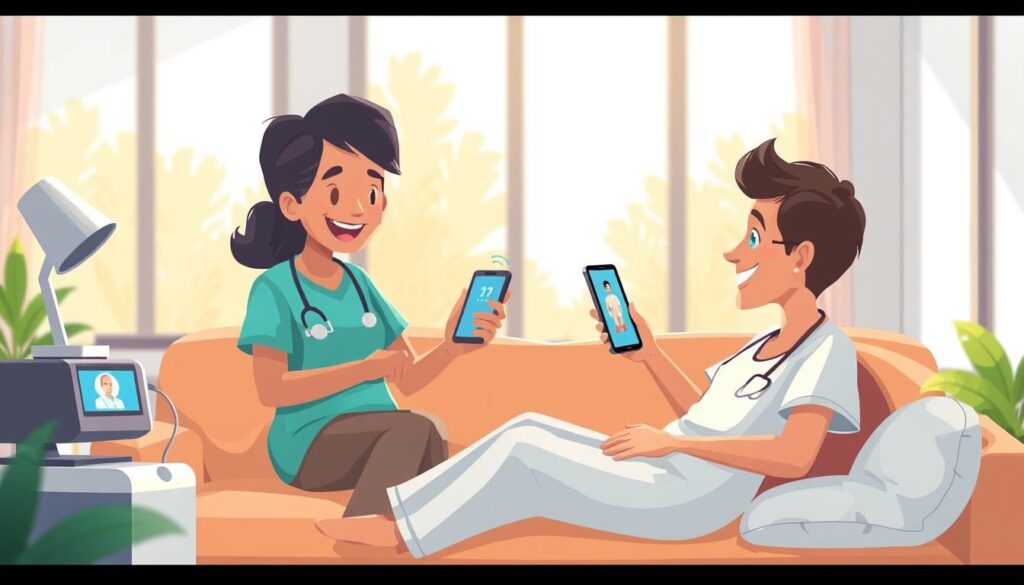
Virtual care works best with clear talk, smooth steps, and easy tech. Doctors should plan visits ahead, give easy-to-follow steps, and check if patients understand. This makes online visits feel safe and organized.
Setting clear hopes helps lower worries. Doctors should say what they can do online and when they need to see you in person. Many people found online visits just as good as seeing a doctor face-to-face during the pandemic. You can read more about it here: telehealth outcomes and trends.
Seeing the same doctor often makes people feel more at ease. This is true, even in rural areas. Regular visits, good internet, and clear privacy rules help build trust in online care.
Make sure everyone can get in. Offer phone calls for those without good internet, check tech before visits, and give simple tips. Keep in-person visits open for those who prefer them, like many in rural areas.
Include family and caregivers for complex cases. Their help during visits can improve care and planning. This teamwork shows a big benefit of telehealth: better care coordination without the need to travel.
Keep track and improve. Collect feedback to make virtual care better. Happy patients who come back show that telehealth can be a lasting choice when it meets real needs.
When talk, trust, access, and feedback match up, telehealth becomes a lasting choice. More people get the care they need online, thanks to telehealth.
Future Trends in Telehealth Expansion
Telehealth is moving from emergency use to regular care. People think telemedicine will grow as systems get better and invest in new tech. This change mixes medicine with tech, policy, and money to grow services wisely.
Integration of artificial intelligence in telehealth
Soon, AI will help sort patients and write notes faster. Tools from big companies and new startups will make writing notes quicker. They will also find important patient info and notice any problems.
AI will also send alerts for patients with heart issues. This helps doctors respond faster. With a doctor’s help, these alerts can keep people out of the hospital and help them stay healthy.
It’s important to use AI wisely. We need to test for bias, be clear about how AI works, and make sure it’s right. This keeps patients safe and builds trust in AI during virtual visits.
Predictions for long-term telehealth adoption
The best plan is a mix of in-person and virtual care. This way, people get the right care at the right time. It uses telemedicine but keeps hands-on care for when it’s needed.
What policies we choose will affect how much we use telehealth. Stable money and clear rules from places like Medicare will help. This will make more people use digital health solutions.
Bigger health systems will lead the way, while smaller ones will focus on what works best for them. This smart plan uses what they have to get the best results.
We’ll see more growth in managing chronic diseases, mental health, and keeping an eye on patients from afar. To keep telehealth growing, we need to invest in making sure everyone has access and fair rules.
Telehealth and Chronic Disease Management
Telehealth is now a big part of managing chronic diseases. Doctors use remote monitoring to keep an eye on patients. This helps them catch problems early and change treatments without seeing patients in person.
Home health agencies are using telehealth to cut down on hospital visits. They use video calls and devices to monitor patients with heart issues, high blood pressure, diabetes, and COPD. This approach has led to fewer emergency visits.
Success in telehealth depends on good plans and quick responses. Agencies need to have clear rules and staff to check the data. This helps them make sure patients get the right care.
Tracking important numbers is key to growing telehealth. Agencies look at how many patients they see, how happy patients are, and how much work doctors do. These numbers help them decide how to improve.
In rural areas, people like virtual visits. Studies show that patients want to see their usual doctors online. This makes care better and more personal.
Learning from others is important. Some places get money for telemedicine, while others cover costs themselves. Home health agencies might keep telehealth services if they save money in the long run.
Here’s a simple guide to start a telehealth program:
- Find patients who need help the most.
- Know what you want to measure before you start.
- Use tech that keeps patient info safe and works with your EHR.
- Make sure staff knows what to do with the data.
- Try different ways to pay for it to keep it going.
By following these steps, you can make a telehealth program that works well. As telemedicine grows, these programs will help doctors and nurses take better care of patients.
Ethical Considerations in Telehealth
Telehealth is growing fast after the pandemic. But, we must make sure it’s fair for everyone. This means making sure everyone can use digital health solutions.
Not everyone has good internet or devices. This makes health care harder for some. Some people can’t get the care they need because of this.
There’s a big debate about using audio or video for care. Some say audio is enough, but others think video is better. You can read more about this at ethical issues in telehealth.
Addressing disparities in access
Some areas are far from doctors and hospitals. Telehealth can help, but only if there’s good internet. Without it, some people might not get the care they need.
How we pay for telehealth matters a lot. If some visits aren’t covered, small clinics might close. We need to make sure everyone gets paid fairly for their work.
Ensuring equitable care for all populations
Keeping patient information safe is very important. Telehealth services must follow strict rules to protect privacy. This makes patients feel safer.
Designing telehealth services to be easy for everyone is key. This means making sure everyone can understand what’s happening. Companies like Epic and Teladoc are working on this.
Using AI in telehealth needs careful thought. We must make sure AI is fair and works well for everyone. Doctors should always be in charge, not just AI.
| Ethical Domain | Challenge | Practical Action |
|---|---|---|
| Access | Limited broadband and devices in rural areas | Fund broadband, subsidize devices, support community training |
| Reimbursement | Unequal telehealth payments harm small providers | Advocate for permanent Medicare flexibilities and fair codes |
| Privacy | Data risk with noncompliant platforms | Mandate HIPAA-compliant vendors and transparent consent |
| Accessibility | Platforms not serving people with disabilities or language needs | Require captions, multi-language support, and low-bandwidth options |
| Algorithmic fairness | AI trained on nonrepresentative samples | Validate models across populations and keep human oversight |
We need to support telehealth in many ways. This includes keeping some services free for audio calls. We also need to improve internet access and help small health agencies.
By being careful and thoughtful, we can make sure telehealth helps everyone. This way, we can make sure everyone gets the care they need.
Conclusion: The Future of Healthcare Delivery
Telehealth has grown fast, showing many benefits. It makes healthcare easier to get and more convenient. It also helps doctors keep an eye on patients from afar.
Emphasizing the importance of ongoing support
Groups like the American Medical Association and the American Telemedicine Association need to keep pushing. They should ask for permanent changes in Medicare and fair payments. They also need to make sure everyone can use telehealth, even those who can’t use video.
Looking ahead to a hybrid healthcare model
The best plan is a mix of in-person visits and online care. This way, doctors can see patients in person and also check in online. It’s all about making healthcare better for everyone, not just a quick fix.
We can all help make telehealth better. Doctors, leaders, and entrepreneurs can try new things and keep pushing for change. This way, telehealth will become a big part of how we get care.
FAQ
What is the strategic purpose of this guide, "Navigating Telehealth Expansion Post-Pandemic"?
This guide helps leaders and teams make telehealth last. It looks at policy changes, how to pay for it, and new tech. It also talks about making care better for everyone and using new tools like AI.
How dramatic was telehealth growth during the COVID-19 public health emergency?
Telehealth visits went from 0.3% to over 23% during the pandemic. Medicare visits even jumped to 42% in some places. Behavioral health saw a huge jump, with visits going up by about 45 times.
What emergency policies enabled rapid telehealth expansion in 2020–2021?
The government made rules to help telehealth grow fast. They allowed visits from home, relaxed some rules, and paid for more visits. This helped more people get care without going to the doctor’s office.
Have these emergency telehealth flexibilities become permanent?
Some changes are here to stay, like more mental health visits. But many changes need more work. This makes it hard for providers to plan for the future.
How have reimbursement rules changed for home health telehealth documentation?
In July 2023, new rules came out for home health. They added extra steps without paying for them. This makes it hard for home health agencies to use telehealth.
Which telehealth services are more likely to persist under current policy trends?
Behavioral health and follow-up visits are likely to stay. Services that help with chronic diseases are promising. But they need clear rules and money to grow.
Did telehealth adoption persist evenly across settings and geographies?
No. Telehealth grew in many places but not all. A survey in the Midwest showed a big drop after the emergency ended. This shows that support is key.
What are the primary benefits of telehealth for patients?
Telehealth helps people who can’t get to the doctor easily. It cuts down on travel and makes care more convenient. It also helps with chronic diseases by keeping an eye on them closely.
How does telehealth affect care convenience and travel burden?
Patients like not having to travel as much. In rural areas, about 62–63% said it helped a lot. It’s also more convenient when you see a doctor you know.
What technological barriers limit telehealth adoption among patients and providers?
Some people don’t have good internet or devices. Doctors face problems like not having the right tech and too much work. Fast and stable internet is key for patients to feel comfortable using telehealth.
Why are audio-only visits important for equity?
Audio-only visits help seniors and those without good internet. Keeping phone visits available is important. It helps make sure everyone can get care, not just those with the best tech.
What privacy and compliance challenges emerged after the emergency waivers ended?
Now, doctors and tech companies have to follow strict rules again. This means more costs and work. They need to make sure patient data is safe and follow rules about using health data.
How do state licensing rules complicate telehealth expansion?
Different rules in each state make it hard to offer care across states. The easy rules during the pandemic are mostly gone. This makes it tough for doctors to work in different places.
What operational adaptations have providers made to deliver telehealth effectively?
Doctors have set up special days for telehealth and hired staff just for it. They’ve also changed how they work to make it easier. This helps them keep up with in-person visits too.
Which patient cohorts yield the highest return on telehealth investment?
People with chronic diseases like heart failure and diabetes get the most benefit. Studies show they can avoid going back to the hospital and take their medicine better. This is because of regular check-ins and monitoring.
How should organizations pilot telehealth to test sustainability?
Start with small tests for specific groups. Set clear goals and use safe tech. Make sure to track how it’s going and what it costs before making it bigger.
What training do clinicians need for effective virtual care?
Doctors need to learn how to talk and examine patients over video. They should know how to handle emergencies and keep records right. This helps keep care consistent and builds trust with patients.
How can providers build trust and improve patient experience in telehealth visits?
Use tech checks before visits and have clear plans. Teach patients how to understand their care. Make sure they know who they’ll be talking to and how to get help if needed.
What measures address the digital divide to ensure equitable telehealth access?
Work on getting better internet, give devices to those who need them, and teach people how to use tech. Make sure care is available in many languages and is easy for everyone to use. Help small providers get the tools they need.
How will AI and automation shape telehealth’s future?
AI will help with quick checks, keeping records, and making decisions during visits. It can make care better and more efficient. But, it needs to be used carefully to avoid problems.
Are hybrid care models the likely long-term outcome?
Yes. The future will mix in-person visits with telehealth for follow-ups and monitoring. This way, care can reach more people while keeping quality high.
What policy actions would most help sustain telehealth expansion?
Keep the good rules, pay fairly for care, and keep phone visits available. Make it easier for doctors to work across states and give money for better internet and tools. Groups like the AMA and ATA need to keep pushing for these changes.
How can small home health agencies afford telehealth and RPM given current reimbursement gaps?
Small agencies should start small and focus on what works best. Look for partners, apply for grants, and push for better payment rules. Some agencies keep using telehealth even without direct payment because it saves money in the long run.
What ethical considerations should guide telehealth and AI deployment?
Make sure data is used right, models are fair, and patients know what’s happening with their data. Always have humans check AI decisions. Make sure care is available to everyone, no matter who they are.
Which operational metrics matter most when evaluating telehealth programs?
Look at how well it works (like fewer hospital visits), how happy patients are, and how doctors do. Also, check how well RPM works and if it saves money. This helps make care better over time.
What immediate steps should health leaders take to future-proof telehealth offerings?
Start small tests, invest in safe tech, and keep phone visits for those who need them. Work on rules and payment to make sure telehealth can keep growing.
How can stakeholders ensure telehealth reduces instead of widens health disparities?
Invest in better internet, give devices to those who need them, and teach people about tech. Make sure care is available in many languages and is easy for everyone. Help small providers get the tools they need.
What is the most realistic prediction for telehealth’s role over the next five years?
Telehealth will grow in managing chronic diseases, behavioral health, and monitoring. It will be part of a mix of in-person and virtual care. With the right rules and support, it can help more people get better care.