At times, an injury or surgery can change our daily life. We might limp on the sidewalk or find stairs hard. Our shoulders might not reach the shelves anymore.
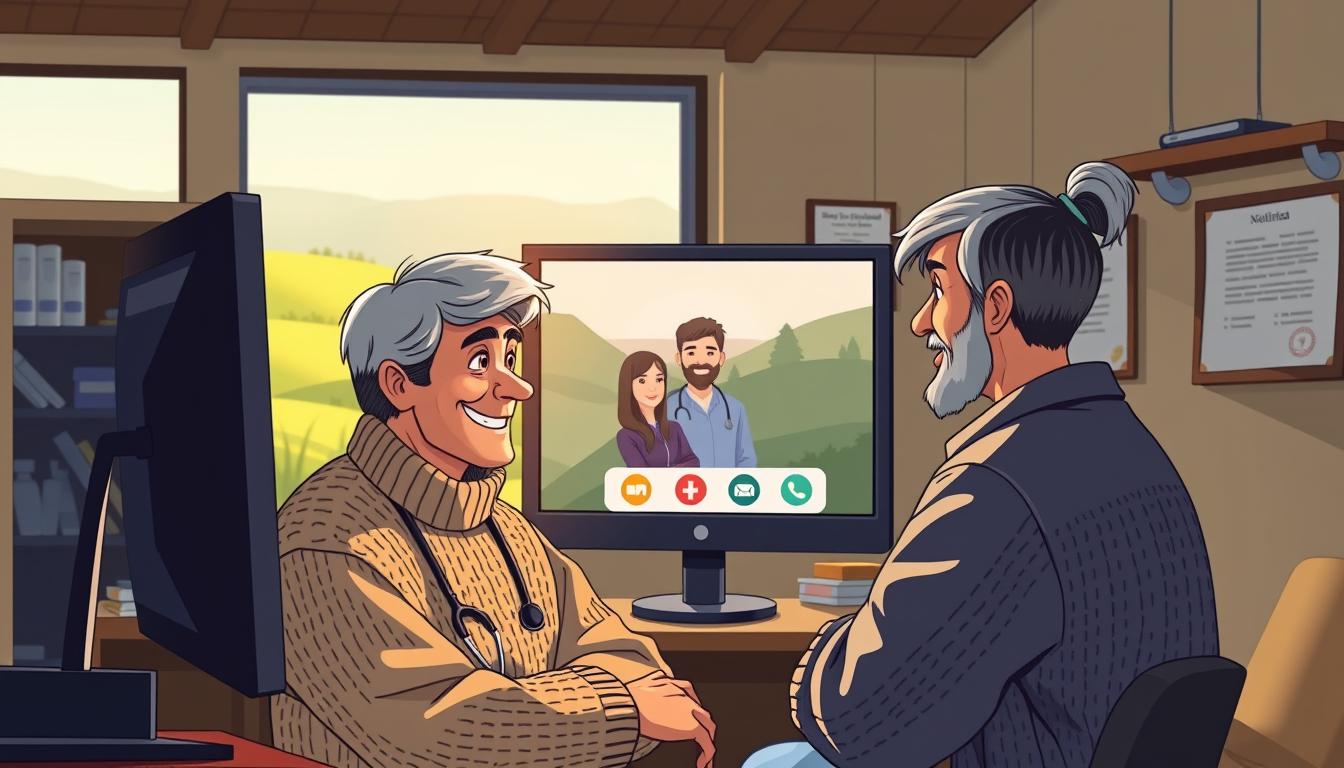
Virtual physical therapy made getting back to normal easier for many during the COVID-19 pandemic. It’s changing how we recover. The American Physical Therapy Association says virtual physical therapy is care given over the internet by licensed therapists.
Telehealth PT uses video calls and tools like home workouts and tracking. It helps people recover from surgeries like hip or knee replacements. It offers real-time help and checks progress to help people stick to their plans.
This article shows how virtual PT is more than just convenient. It’s also affordable and can reach more people. It helps both doctors and patients make smart choices for healing.
Key Takeaways
- Virtual PT offers complete care in many areas with licensed therapists.
- Telehealth PT combines video, tracking, and tools to feel like in-person visits.
- Remote PT works well for recovery after surgery and managing long-term muscle issues.
- Digital physical therapy saves money, is flexible, and helps people stick to their plans.
- Knowing the benefits of virtual physical therapy helps patients choose the best care.
Introduction to Virtual Physical Therapy
Virtual physical therapy is now a good choice for many. It uses technology to help when we can’t meet in person. Clinics use it for first visits, follow-ups, or as part of a mix of care.
What is Virtual Physical Therapy?
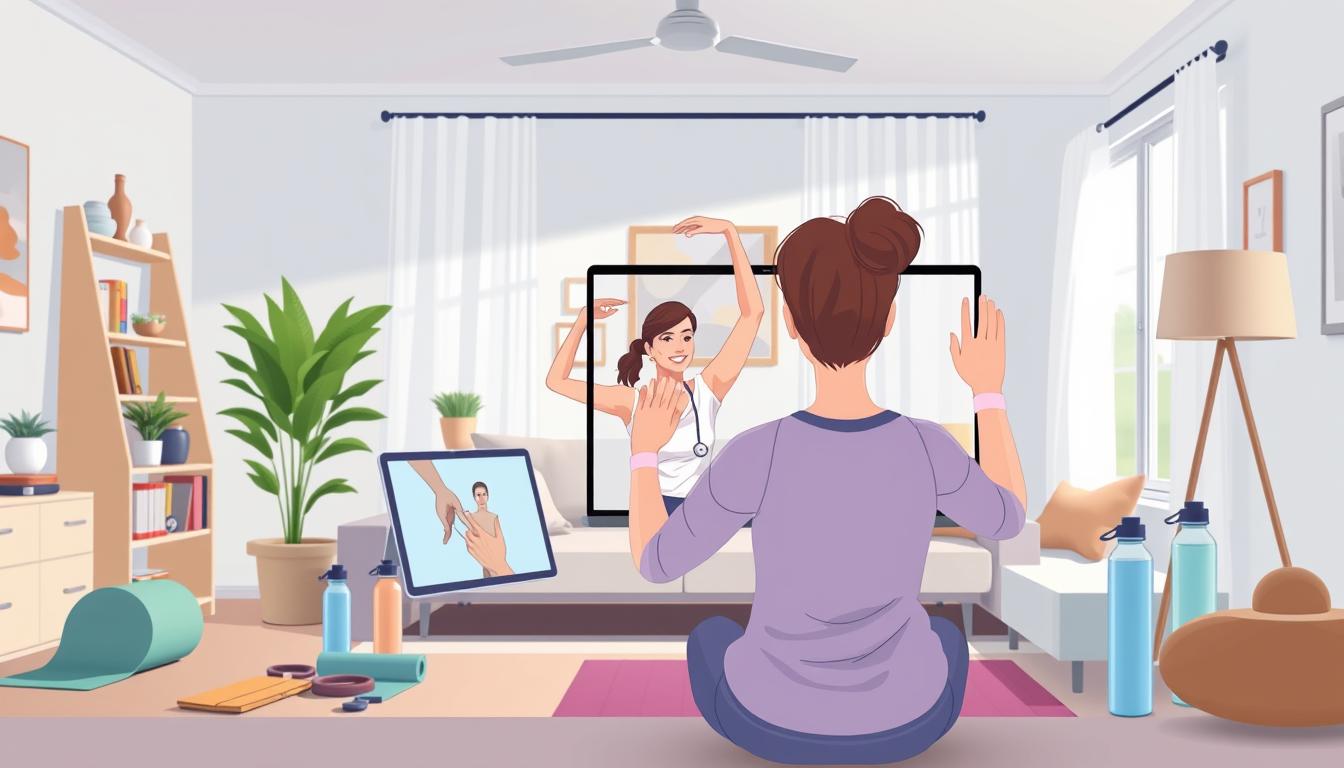
Virtual physical therapy, or telerehabilitation, uses the internet for care. It can be live or recorded. Live visits are like being in a clinic, but online.
Recorded videos and messages are used too. Therapists check these on their own time. They make decisions based on what they see and do.
When they need to touch you, they schedule a real visit. They use safe online tools and have plans for emergencies.
How Does It Work?
It starts with a video call to check how you’re moving. They give you exercises and show you how to do them. You can track your progress at home.
It also lets them use data from your devices. This helps them change your plan as needed. They can schedule, document, and talk to you securely.
This way of therapy helps with long-term issues and after surgery. They guide you live and check in later. They use your data to make your exercises better and safer.
Convenience of Virtual Sessions
Remote care changes how we get treatment. Now, we can talk to doctors more easily. This is great for people who are always busy.
Flexible Scheduling Options
Virtual visits mean we can see doctors at any time. This is good for those who can’t go to the office during regular hours. Places like HSS and Mayo Clinic say they can see patients faster now.
Video check-ups are now common. They make it easier for doctors to adjust plans quickly. This way, we can get the right care without waiting too long.
Access from Home
Getting care at home is easier. It saves us from worrying about traffic or parking. It’s also great for people who can’t move around much.
Doctors save time too. They can see more patients and keep better records. This makes everyone happier and more likely to stick to their treatment plans.
| Benefit | How It Helps Patients | How It Helps Clinics |
|---|---|---|
| Flexible Hours | Fits care around work and family obligations | Increases booking utilization and reduces gaps |
| Short, Frequent Touchpoints | Improves engagement and keeps rehab on track | Enables faster plan adjustments and better outcomes |
| Home-Based Sessions | Removes transportation barriers for mobility-limited patients | Reduces no-shows and expands reach beyond local area |
| Online Scheduling & Portals | Reduces wait times and simplifies appointment management | Automates workflow and lowers admin burden |
| Weather & Travel Resilience | Maintains continuity despite disruptions | Protects revenue and patient progress |
Enhanced Accessibility for Patients
Virtual care removes physical barriers. It lets more people get help when they need it. Telehealth reaches rural areas and older adults with musculoskeletal issues.
Here are the benefits for patients and clinics. Digital care improves equity and outcomes.
Overcoming Geographic Barriers
Virtual visits help clinics reach more patients. Rural folks get specialist care without long trips. This helps health systems too.
Telehealth helps with MSK problems early on. This can stop surgeries and save money for patients and payers.
Services for Those with Mobility Issues
Patients with mobility issues get care at home. This keeps their recovery on track and keeps them safe.
Remote therapy helps patients stick to their plans. This leads to better results and faster recovery.
Virtual platforms need to be easy to use. They should work well on smartphones. This helps more people use them.
| Barrier | How Virtual Care Helps | Measured Benefit |
|---|---|---|
| Geographic isolation | Remote consults with specialists, asynchronous exercise coaching | Faster access to care; fewer referrals lost to travel constraints |
| Transportation limits | Home-based therapy sessions and progress tracking | Higher appointment adherence; reduced missed visits |
| Early recovery mobility | Tailored remote rehab after surgery, safety monitoring | Improved functional recovery; lower complication risk |
| Digital access challenges | Mobile-first platforms, low-bandwidth options, clear UX | Greater inclusion of smartphone-reliant populations |
Clinics gain by using virtual care. Patients get better care that fits their lives. This makes remote therapy a key part of modern care.
Broader Range of Specialists
Virtual care lets patients see more specialists. They can talk to experts in many areas without leaving home. This helps make better choices and get the best care.
Access to Diverse Expertise
Online platforms help clinics offer special services. They can help with chronic pain, after surgery, and for neurological issues. This way, patients get the right care without traveling far.
Tools like wearables help therapists see how the body moves. This gives a clearer picture than just one visit. Seeing the same data helps specialists make better plans for patients.
Patient Choice in Providers
Patients can choose the right therapist for them. Online PT lets them pick based on experience or style. This makes care plans more effective.
Clincs that offer both online and in-person care get more patients. Many people used virtual care in 2022. For more info, see this article from USA Online University: virtual physical therapy research.
| Specialist Type | What Remote Access Adds | Patient Benefit |
|---|---|---|
| MSK Therapists | Gait and movement analysis via video and wearables | Faster identification of dysfunction; tailored exercise plans |
| Neurorehab Specialists | Remote monitoring of motor patterns and progress | Consistent adjustments to therapy; improved motor outcomes |
| Oncology Rehab | Specialized post-treatment protocols delivered virtually | Accessible support during recovery; reduced travel stress |
| Women’s Health | Confidential consultations and pelvic rehabilitation plans | Comfort and privacy; better adherence to protocols |
| Pediatric Therapists | Home-based assessments with parent coaching | Family-centered care; practical carryover to daily routines |
Improved Patient Engagement
Virtual care changes how patients work with therapy. It mixes clear instructions, timely data, and fun designs. This makes treatment more personal and helps patients stick to it.
Interactive tech turns simple exercises into guided sessions. It uses motion capture and learning machines to check form and give tips right away. Wearables track how far patients move and how many times they do exercises. This helps therapists adjust plans based on real data.
Therapists use videos, live chats, and games to keep patients interested. Tools help schedule reminders and check-ins. These tools show how virtual PT helps patients recover for a long time.
Interactive Technologies in Use
Motion sensors and AI check how well patients move in real time. They get tips and see how they’re doing during exercises. This helps them learn faster and make fewer mistakes.
Platforms like Physitrack and Vicon work with common wearables. They send data to therapists. This data helps patients move safely and get better faster. It shows how virtual PT helps after surgery.
Personalized Feedback Mechanisms
Reports show how patients are doing and what to do next. Clinicians can add notes and change plans based on these reports. Patients see their goals clearly, which motivates them.
Reminders, badges, and check-ins help patients change their behavior. Therapists use data to keep older adults safe. Studies show virtual sessions work as well as in-person ones. They offer big benefits of remote physical therapy.
| Feature | What It Measures | Patient Benefit | Clinical Advantage |
|---|---|---|---|
| Motion Capture | Joint angles, velocity, symmetry | Instant correction; fewer unsafe repetitions | Objective baseline for progression |
| Wearables | Reps, time under tension, activity levels | Clear feedback; motivational tracking | Personalized dosing and injury prevention |
| Instructional Video | Technique demonstrations, pacing | Accessible guidance at home | Standardized education across caseloads |
| Telehealth Sessions | Live observation and cueing | Real-time correction and rapport | Reduced adverse events; tailored adjustments |
| Practice Management Tools | Scheduling, reminders, outcome logs | Improved adherence and routine | Higher compliance; efficient follow-up |
Cost-Effectiveness of Virtual Therapy

Virtual care saves money for patients and clinics. It cuts down on travel time and missed work hours. This helps clinics see more people without needing more space.
Small changes in how things are done can save a lot. For example, better scheduling and less time at the front desk. A study showed virtual care is just as good as in-person care but cheaper. This means clinics can save on staff travel and fewer repeat visits. You can read more about it here.
Reduced Travel Expenses
Patients save money on gas, parking, and time off work. This makes them more likely to stick to their treatment plans. It can even stop them from needing expensive surgeries.
Clinics also save money when therapists don’t have to travel as much. This means they can spend more time with patients. It helps clinics make more money and offer better care.
Insurance Coverage Insights
More insurance plans now cover remote therapy, but rules vary. It’s important to know the rules to get the most benefits. Billing mistakes can lead to denied claims.
To avoid problems, check insurance policies and use the right codes. Explain costs to patients upfront. This helps keep care affordable and protects clinic income.
- Verify payor contracts and document medical necessity clearly.
- Code telehealth and RTM services accurately to maximize reimbursement.
- Communicate patient costs so out‑of‑pocket surprises are minimized.
Maintaining Consistency and Compliance
Virtual care makes it easier to keep up with therapy. It helps patients avoid long trips and busy schedules. This means they can stick to their therapy plans better.
Easier Adherence to Treatment Plans
Texts, portal prompts, and short video calls help patients stay on track. Telehealth and apps offer reminders and progress tracking. This helps patients follow their therapy plans better.
Continuous Communication with Therapists
Wearables and remote checks help therapists see if progress is slow. They can then change the therapy plan as needed. This is very helpful for people recovering from surgery.
Online dashboards and messages keep the communication going. This helps patients learn and feel more in control of their therapy.
Privacy and Comfort in Treatment
Telehealth physical therapy changes how we get care. It makes sure our health info stays safe. It also lets us relax more during sessions.
Confidentiality in Practice
Therapists use special platforms to keep our info safe. They follow rules to keep our data safe. This builds trust between us and our doctors.
Comfort of Home Environment
Doing therapy at home is really helpful. It lets doctors see how we move in real life. This makes therapy more effective and helps us feel more at ease.
| Aspect | Best Practice | Patient Benefit |
|---|---|---|
| Platform Security | Use HIPAA-compliant telehealth services and encrypt sessions | Protects sensitive records and communications |
| Informed Consent | Obtain written or recorded consent specific to virtual care | Clarifies expectations and legal protections |
| Emergency Protocols | Verify location each visit and have local emergency contacts | Ensures rapid response if needed |
| Environment Assessment | Guide patients to set up safe spaces for exercises | Improves effectiveness and reduces injury risk |
| Special Populations | Offer remote care for immunocompromised or post-op patients | Reduces infection exposure while maintaining guidance |
Doctors who use technology wisely help us a lot. They keep our info safe and make therapy better. This way, we get the most out of online therapy.
Limitations and Challenges
Virtual care has many benefits, but it also has challenges. Clinicians and patients face barriers. Clinics work hard to keep everyone safe while using digital physical therapy and telemedicine.
Potential Technology Barriers
Some areas have poor internet, and not everyone has the right devices. Older adults and those with less money often struggle. Clinics must find ways to help these groups.
The fast growth of virtual care during COVID-19 showed some problems. Therapists need clear steps for starting care and fixing issues during sessions.
Assessing Physical Limitations Remotely
Some physical checks can’t be done online. Things like checking joints after surgery need to be done in person. It’s important to know when to see a doctor in person.
Therapists use other ways to check on patients, like watching them move and guiding them. These methods help, but they’re not perfect. They can’t replace touching and moving joints.
Keeping patients safe is very important. Therapists check if patients are at risk of falling or have memory problems. They make sure patients have emergency contacts and follow safety rules. This helps keep patients safe while using telemedicine.
The Role of Technology in Therapy
Technology is changing how we get better. It mixes doctor skills with tools that help us get better faster. We can talk to our doctors online and share our health info easily.
Tools and Apps Used in Virtual Sessions
Doctors use special video chats and apps to help us. They also use sensors to see how we move. This makes sure they focus on helping us, not on paperwork.
Tools like computer vision give feedback on our exercises. AI helps make our therapy plans better over time. This makes tracking our progress easier and keeps us more involved.
Virtual Reality and Augmented Reality Innovations
VR and AR make therapy fun. They turn exercises into games. This makes us want to do our therapy more.
Wearables give us real-time feedback. This helps doctors know when to make changes. They can make our therapy even better.
For more info on virtual therapy, check out this article: virtual physical therapy evidence.
- Implementation tip: Choose HIPAA‑compliant vendors and run small pilots before broad rollout.
- Implementation tip: Prioritize mobile‑friendly interfaces to reach more patients.
- Implementation tip: Combine clinician oversight with sensors or computer vision to preserve care quality.
Future of Physical Therapy Sessions
Physical therapy is moving towards a new model. It will use technology more and focus on patient results. Clinics will use online tools for scheduling and tracking patients.
This change will help reach more people and keep them coming back. It will also make care better for both doctors and patients.
Emerging Trends in Telehealth
Technology like AI and machine learning will help make plans better. Tools like motion-capture and wearables will track progress. This makes online therapy more effective.
Virtual reality will soon be used for exercises and to make therapy fun. This will help people stick to their treatment plans. It will also make billing and insurance easier for everyone.
Predictions for Virtual Therapy Growth
Virtual therapy will grow fast in areas like after surgery care and chronic pain. Studies show it works just as well as in-person therapy. It will also make it easier to see specialists.
Success will depend on training doctors, making systems work together, and making therapy available to all. Clinics that focus on these areas will do well. They will offer better care and make a strong case for online therapy.
Conclusion: Embracing Virtual Solutions for Health
Virtual physical therapy is a smart, patient-focused way to care. It makes getting help easier, improves talking between patients and doctors, and helps people stick to their home exercises. For many, it works just as well as seeing a doctor in person.
Summary of Key Benefits
Virtual physical therapy is easy, saves money, and keeps care going. It’s safe, gives personal feedback, and makes people more motivated. It also helps clinics grow and lets people in far-off places get help.
Encouragement to Explore Virtual Options
Doctors and patients should think about using online PT. It’s a good mix with old ways of care. Use safe sites, make plans for both online and in-person visits, check with insurance, and train doctors well. For more on how it works, see this: virtual rehab advantages.
FAQ
What is virtual physical therapy (VPT) and how does it differ from traditional in‑person care?
Virtual physical therapy uses technology to help patients. It’s like talking to a doctor online. You can get help with exercises and advice from a physical therapist.
It’s not the same as getting hands-on help. But it can help a lot with exercises and advice.
How does virtual PT work in practice?
Virtual PT uses video calls for meetings and exercises. It also uses tools like apps and sensors to track progress.
Therapists watch how you move and give you exercises to do. They check how you’re doing and give feedback.
What are the main advantages of online PT sessions for patients?
Online PT is easy and convenient. You don’t have to travel or take time off work.
It’s great for people who can’t get to a clinic easily. It helps you stay on track with your care at home.
How does virtual physical therapy enhance accessibility for rural or underserved patients?
Virtual PT helps people in remote areas get help from experts. You can talk to a specialist without having to travel.
It’s easy to use and helps more people get the care they need. This can lead to better health outcomes.
Can virtual PT provide specialized care comparable to in‑person services?
Yes, virtual PT can be just as good as in-person care. Studies show it works well for many conditions.
It’s not for everything, but it’s a good option for many people. It lets specialists help you from afar.
What technologies are used in virtual rehabilitation?
Virtual rehab uses video calls and apps. It also uses sensors and tools to track your progress.
New technologies like VR and AR are being used too. They make rehab more fun and effective.
How do interactive technologies improve patient engagement?
Interactive tools give you feedback and track your progress. They make exercises more fun and help you stay on track.
They also help therapists tailor your care to you. This makes rehab more effective and enjoyable.
Are virtual PT sessions cost‑effective for patients and clinics?
Virtual PT can save money for patients and clinics. It reduces travel costs and lets clinics see more patients.
It can also help prevent more expensive treatments. But, insurance coverage can vary.
Will my insurance cover telehealth physical therapy?
Insurance coverage for virtual PT varies. Some pay for it, but others don’t.
It’s important to check with your insurance. This way, you won’t be surprised by unexpected costs.
How does virtual care support consistency and compliance with treatment plans?
Virtual care lets therapists check in more often. This helps you stay on track with your exercises.
It also helps therapists make changes to your care plan quickly. This keeps you moving forward.
Are virtual sessions secure and private?
Virtual sessions are secure if they use the right technology. Therapists need to follow rules to keep your information safe.
Many people prefer virtual sessions because they’re private. But, therapists must make sure everything is secure.
What limitations should patients expect with virtual PT?
Virtual PT can’t replace hands-on care. It also depends on having good internet and a device.
It’s not for everyone, like those at high fall risk. Therapists will decide if you need in-person care.
How do therapists manage safety and emergency procedures remotely?
Therapists have plans for emergencies during virtual sessions. They check if you’re safe to do exercises.
They also teach you how to set up a safe space at home. For high-risk cases, they might recommend in-person visits.
Can virtual PT help after joint replacement surgery?
Yes, virtual PT is good for recovery after joint replacement. It helps you stay on track with exercises and progress safely.
Studies show it works well and patients are happy with it. But, some early care might need to be in-person.
How should clinics implement virtual physical therapy effectively?
Clinics need to choose the right technology and train staff. They should make sure it’s easy to use and works with their systems.
They also need to have plans for how to mix virtual and in-person care. This helps them offer the best care.
What role will AI, ML, and VR/AR play in the future of physical therapy?
AI and ML will make rehab more personalized and effective. They’ll help therapists tailor care to you.
VR and AR will make rehab more fun and engaging. They’re great for complex cases and neurorehab.
Who benefits most from virtual rehabilitation services?
Many people benefit from virtual rehab. It’s great for those who can’t get to a clinic easily.
It’s also good for busy people and those who need to stay home. But, it’s not for everyone.
How can patients prepare for their first virtual PT session?
Make sure you have a good internet connection and a device. Wear clothes that are easy to move in.
Clear a safe space for exercises. Have your medical records and any devices ready. Confirm the appointment link and understand billing.
What measures improve equitable access to tele‑rehabilitation?
Make sure the technology is easy to use. Offer options for those with slow internet.
Make it simple to start and provide help in different languages. Loan devices or offer tech help to make it accessible.
How do clinics measure outcomes and quality for virtual PT programs?
Clinics use feedback from patients and data from devices. They track how well you’re doing and if you’re following the plan.
They also check for any problems and make sure you’re getting better. This helps them improve care.
What should clinicians consider when choosing virtual PT vendors?
Look for vendors that follow privacy rules and work well with your systems. Make sure it’s easy to use and has good support.
Check if it works with your billing and if it’s proven to be effective. This helps you offer the best care.
Are there specific conditions where virtual PT is specially effective?
Virtual PT is good for many conditions. It’s great for managing chronic pain and helping with recovery after surgery.
It’s also useful for neurorehab and helping women’s health. But, it’s not for everyone.
How does virtual therapy change the patient‑provider relationship?
Virtual therapy lets therapists check in more often. This makes it easier to stay on track with your care.
It also helps therapists tailor your care to your needs. This makes rehab more effective and enjoyable.