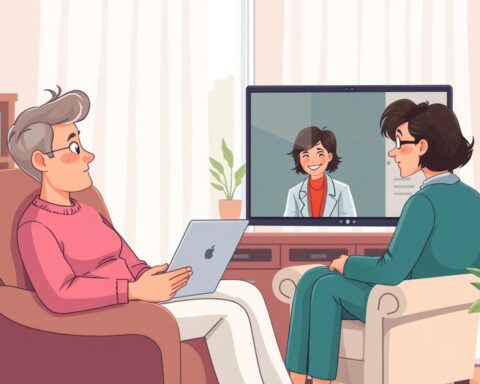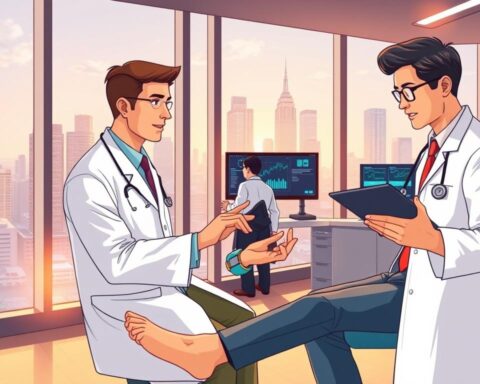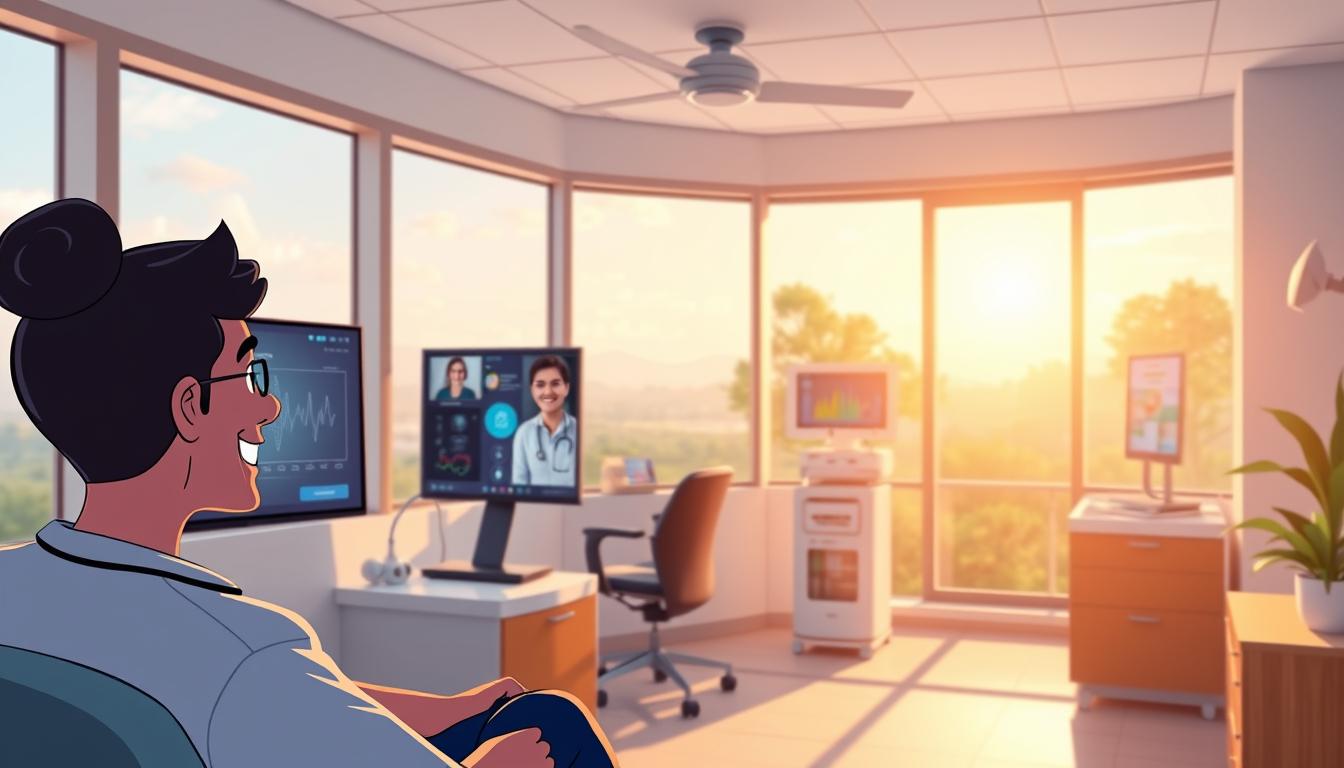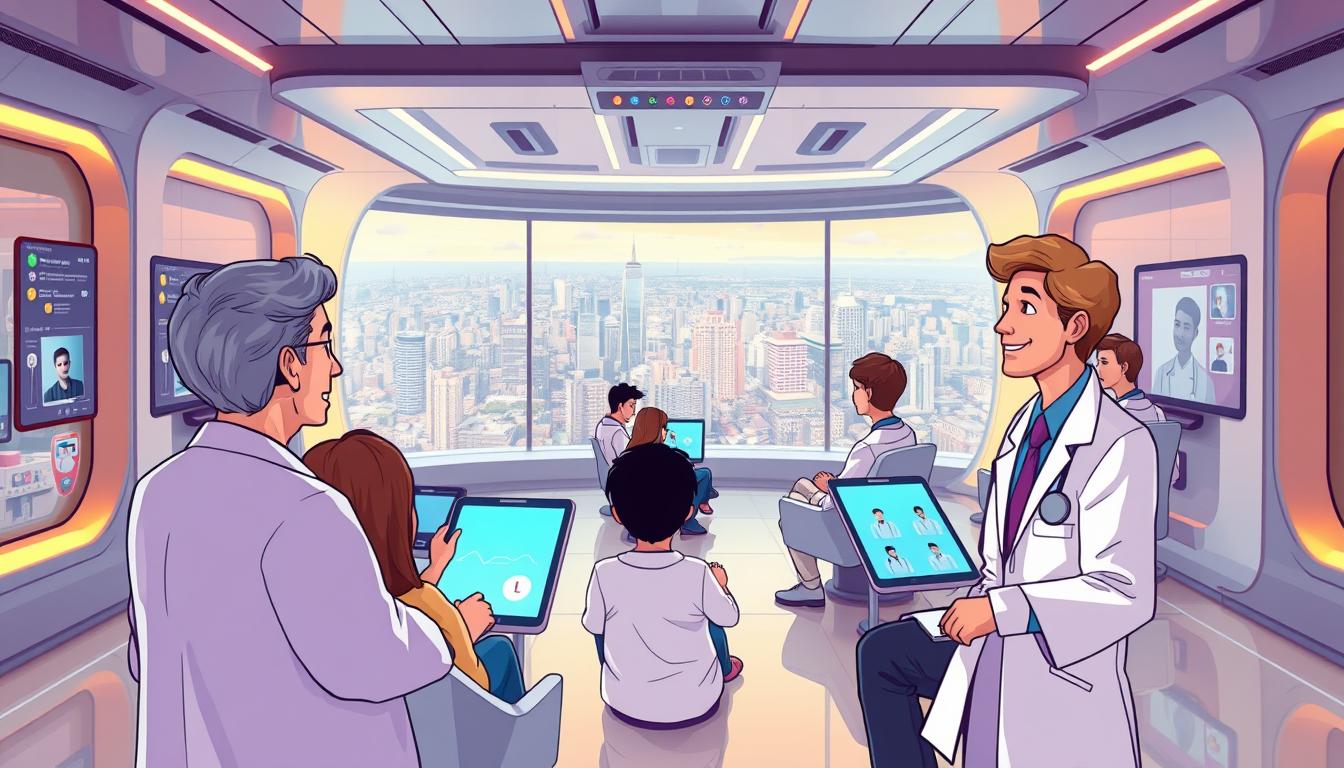
I remember waiting in a clinic for hours. My neighbor, miles away, missed an appointment because of travel and time. This memory is vivid, showing how hard it is to get care.
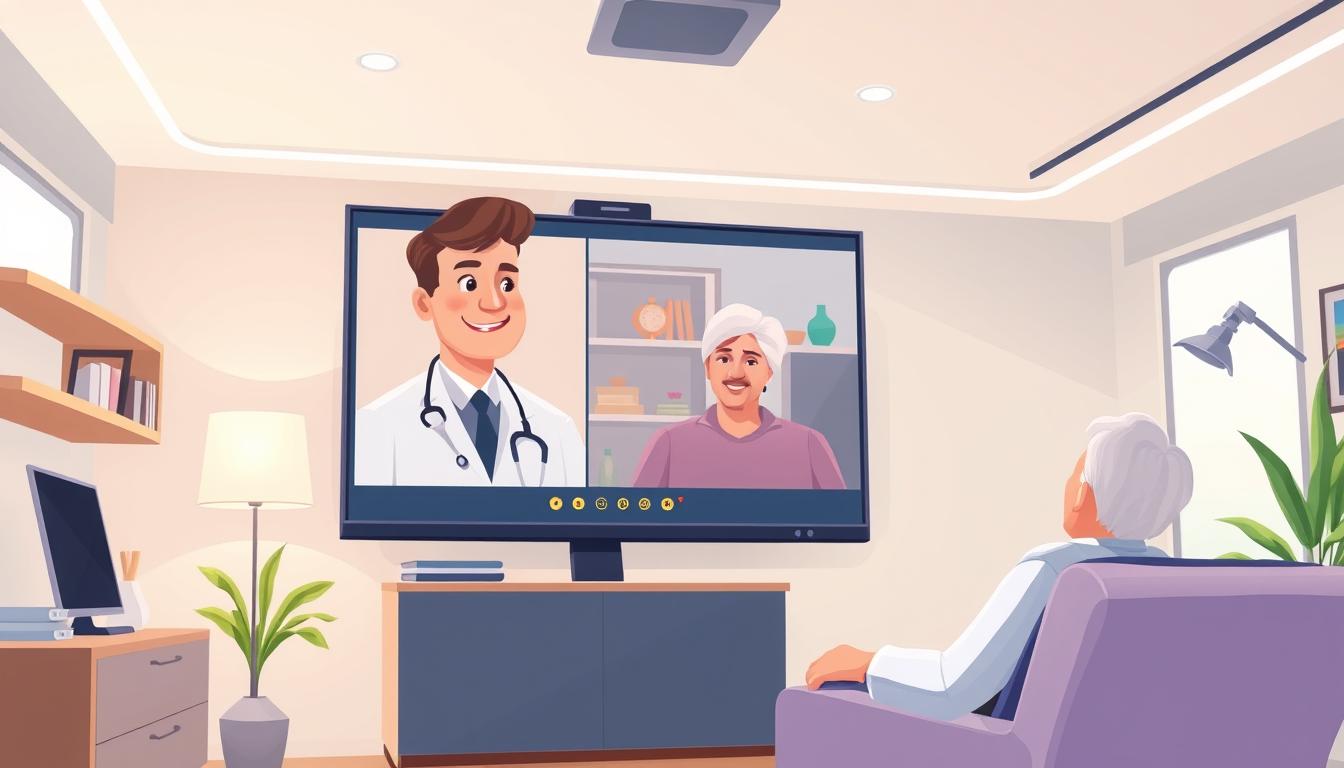
Telemedicine changes this story. It makes distance a problem we can solve. It gives hope to those who couldn’t get care before.
Telemedicine has grown a lot in 30 years. It really took off during the COVID-19 pandemic. This showed its strengths and weaknesses in public health.
It proved that virtual care can reach more people. But we need a plan to make it work for everyone.
Telehealth aims to make care easier and cheaper. It helps people in remote areas get the care they need. It also helps doctors keep learning and caring for patients.
Studies show it can save money and get more people to seek care. This is because it overcomes barriers like distance and lack of doctors.
Groups like the Pan American Health Organization are working on this. They want to make sure everyone can use telemedicine. They focus on making sure everyone knows how to use it and has the right technology.
For those who want to make a difference, there’s a clear goal. They should learn about telemedicine’s benefits and challenges. This way, they can help make healthcare better for everyone. For more information, see this review on telehealth research and results here.
Key Takeaways
- Telemedicine expands access by reducing travel, time, and cost barriers.
- Virtual care services matured over decades and surged during the COVID-19 pandemic.
- Remote medical services enable specialty reach into rural and underserved areas.
- Successful rollout depends on infrastructure, digital literacy, and coordinated policy.
- Ambitious leaders should weigh practical benefits and limitations to drive measurable gains.
What is Telemedicine?
Telemedicine changes how doctors and patients talk over long distances. It started with early electrocardiogram transmissions and radio talks. The term became popular in the 1970s.
The World Health Organization says telemedicine is health services over long distances. It uses tech for diagnosis, treatment, and more.
Definition and Overview
Telemedicine is about remote care that replaces or adds to in-person visits. It includes video calls and sending images securely. Patients get advice and care without going to a clinic.
Telehealth is wider than telemedicine. It includes watching patients from afar and teaching them online. Rules make sure it’s safe and works well.
Key Components of Telemedicine
Good telemedicine needs fast internet, easy-to-use sites, and tools for doctors. It also needs secure messages and clear rules. These help telehealth work well across different areas.
It has live video chats, sending images, and watching patients from afar. Mobile apps help track symptoms and schedule visits. Examples show how these parts help deliver care.
The Importance of Healthcare Access
Getting care is key for everyone. Cities have more doctors, but rural areas face big challenges. These include money, stigma, and not knowing how to use technology.
Understanding Disparities in Healthcare
Healthcare gaps are real. In 2021, more people used telemedicine, but some groups were left behind. Doctors want fair pay for online visits.
Money and internet access matter a lot. Poor people use telehealth less than rich ones. We need to make it cheaper and easier to use.
The Role of Technology in Bridging Gaps
Technology can help everyone get care. Telemedicine lets doctors check on patients from afar. It’s good for keeping people healthy.
AI makes care better by being fast and accurate. It’s getting more popular. But, we need to teach people how to use it.
Working together is key. Programs like PAHO’s help make care fair. We can learn from COVID-19 to make sure everyone gets help.
| Challenge | Technology Response | Equity Safeguard |
|---|---|---|
| Geographic isolation | Video consultations and remote monitoring to deliver specialist input | Subsidized connectivity and community access points |
| Low digital literacy | Simple user interfaces and step-by-step onboarding | Local training programs and multilingual support |
| Financial barriers | Low-cost telehealth platforms and asynchronous consults | Insurance parity and targeted subsidies |
| Provider shortages | AI-assisted triage and remote specialist networks | Regional workforce partnerships and fair compensation |
For planners and doctors, using tech wisely helps everyone. For more info, check out this review on telemedicine and AI in healthcare.
Benefits of Telemedicine for Patients
Telemedicine helps both patients and doctors a lot. It makes getting care easier and saves time. This is good for busy families and doctors too.
Convenience and Flexibility
Patients can book appointments and get medicine online. They can talk to doctors from home. This saves time and is helpful for those who are busy.
Online, people can see specialists without traveling far. This is great for ongoing health needs and check-ups.
Cost-Effectiveness
Online care saves money. It means less time and money spent on travel. It also helps doctors use less resources for simple visits.
Studies show big savings in rural areas. This is because people don’t have to travel far for care. It helps lower costs for everyone involved.
Improved Patient Outcomes
Telemedicine helps doctors make better decisions faster. It shortens wait times in emergency rooms. It also lets doctors keep an eye on patients after surgery.
It makes it easier for people to join clinical trials. This is because they don’t have to travel far. Patients say they get better care because of it.
Balanced View and Patient Preferences
Many people like telemedicine because it saves time. But some prefer to see doctors in person. They worry about not getting a full check-up online.
Some critics say telemedicine might not be as good as in-person care. They worry about technical issues and keeping a good doctor-patient relationship. But studies show it can be helpful when used right.
| Benefit | What Patients Gain | Typical Use Case |
|---|---|---|
| Convenience | Fewer trips, flexible scheduling, e-prescriptions | Routine follow-ups, medication checks |
| Cost Savings | Lower travel and lost-wage costs, reduced facility fees | Chronic disease management in rural areas |
| Clinical Access | Specialist consultations without long travel | Dermatology, psychiatry, endocrinology consults |
| Outcome Support | Shorter ER waits, postoperative monitoring, trial access | Triage services, remote recovery checks |
| Limitations | Incomplete physical exams, tech and privacy concerns | Acute undiagnosed conditions needing in-person care |
Telemedicine Models and Services
Telemedicine now has many models for different needs. Providers use both live and recorded tools to help more people. These services are key to today’s virtual care and telehealth.
Video Consultations
Video calls are the main way for many health needs. They help with first checks, follow-ups, and exams. People like video because it’s clearer than just talking.
Health systems use video for faster care and fewer missed visits. It works well with electronic health records for easier billing. Doctors learn how to use cameras and do exams online better.
Remote Monitoring
Remote monitoring uses devices to track health at home. It helps with recovery and managing long-term conditions. This can lower hospital stays and readmissions.
Wearables send data to health platforms for early help. AI spots issues like heart problems or infections early. For more on this, see this case study: wearable AI sensors and remote patient.
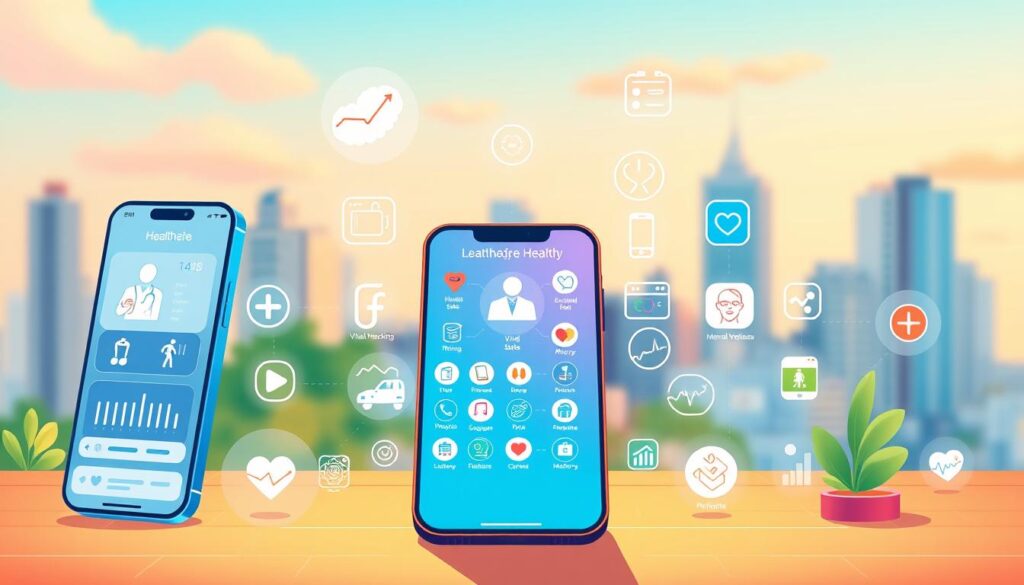
Mobile Health Apps
Apps let people schedule visits, remember meds, and track symptoms. They also help with mental health. These apps make life easier for both patients and doctors.
Apps bring care to people’s phones. They offer tools and lessons anytime. It’s important for apps to be easy to use and keep data safe.
Other models like sending images and messaging help when you can’t see a doctor. Using these models well needs good teamwork, training, and keeping data safe. This makes telehealth reliable and safe.
Overcoming Barriers to Telemedicine Adoption
Telemedicine is growing, but there are big challenges. Not everyone has good internet or the right devices. Also, some people don’t know how to use digital tools well.
Groups need to use technology in a way that helps everyone. This means making sure it works for people in rural areas and for those without homes.
Technological Challenges
Bad internet and weak Wi-Fi can ruin visits. This is a big problem in rural Texas and shelters. It makes people lose trust in telemedicine.
Not everyone has a smartphone. But even if they do, the screen size and battery life are important. Programs that teach people how to use devices and loaner programs help a lot.
Knowing how to use digital tools is not the same for everyone. Simple designs and easy-to-follow guides help. Working with libraries and health workers builds trust.
Regulatory and Legal Considerations
Healthcare providers face many rules. They have to follow HIPAA, keep data safe, and get the right licenses. Also, how to get paid for telemedicine visits is different for Medicare and private insurance.
Groups like the American Telemedicine Association help with these rules. Clear rules in hospitals make things easier and safer.
Working together and using open platforms can make things cheaper. This way, everyone can follow the rules. Making health data easy to share is also important.
Training doctors on privacy and doing regular checks on security are key. Having clear rules and reaching out to the community helps keep people using digital health tools.
| Barrier | Practical Response | Expected Impact |
|---|---|---|
| Broadband and connectivity gaps | Deploy mobile hotspots, partner with ISPs, create low‑bandwidth visit options | Fewer dropped visits, broader rural reach |
| Device shortages | Loaner device programs, kiosks at community centers, guided setup | Higher access rates, improved patient engagement |
| Digital literacy | User training, plain‑language instructions, peer navigators | Shorter visit times, better adherence to care plans |
| HIPAA and data security | Encrypted platforms, routine audits, staff compliance training | Lower risk of breaches, stronger patient trust |
| Reimbursement uncertainty | Documented workflows, payer liaison teams, use ATA guidance | Steadier revenue streams, wider service offerings |
| Workflow integration | Feasibility studies, EHR integration, pilot programs | Smoother clinician adoption, scalable models |
Telemedicine and Rural Healthcare
Rural areas often lack specialist care and have long travel times. Telemedicine helps by allowing remote consultations. This way, local doctors get help from experts far away.
Addressing Provider Shortages
Remote medical services let one specialist help many places. This way, more people get help without moving doctors. Telehealth also offers quick advice and support for ongoing care.
Training is key. Virtual learning and mentorship help doctors feel connected. This keeps them happy and working well together.
Improving Access in Underserved Areas
Telemedicine makes it easier for patients to get help without traveling far. It also saves money by reducing lost work time. Studies show it works well when there’s good internet and training.
Success needs good internet and affordable devices. Working with local groups and getting support from policies helps. This makes sure telemedicine keeps working.
For more info on making telemedicine work in rural areas, see this study: telemedicine implementation study.
- Benefits: more access to specialists, quicker advice, and better care for chronic conditions.
- Constraints: lack of internet, not enough devices, and need for local setup.
- Actions: improve internet, use portable kits, and fund training for doctors.
Telemedicine’s Impact on Public Health
Telemedicine has changed how public health teams work. It helps them quickly sort patients and keeps care going in tough times. It also cuts down on exposure during outbreaks.
Health systems that use telehealth can move faster and keep care steady when hospitals get too busy.
Enhancing Emergency Response
Remote talks speed up decisions in emergencies. Emergency rooms and FEMA use virtual tools to grow their capacity. This protects staff while helping more people.
Telehealth lets doctors check symptoms and decide where to send patients. This avoids unnecessary moves.
Public health teams use digital tech to manage supplies and staff across areas. They can talk to experts in real time. This makes planning for big needs better and based on data.
Infectious Disease Management
Remote checks and contactless tests lower the risk of spreading diseases. Telehealth lets doctors watch over patients at home. They can also manage treatments and connect to labs for tests.
Telemedicine feeds data into systems that track diseases. This data helps find where diseases are spreading. Public health teams can then focus their efforts where it matters most.
Telemedicine helps reach people with HIV and hepatitis C who are hard to find. It keeps treatment going, lowers barriers to getting help, and opens doors for those who are left behind.
Rules and standards from groups like the American Telemedicine Association and WHO guide safe use. Clear rules help make sure telemedicine works well with other health efforts.
| Public Health Function | Telemedicine Contribution | Example Outcome |
|---|---|---|
| Emergency Triage | Remote evaluation with clinician oversight | Faster patient sorting; reduced ER crowding |
| Outbreak Control | Contactless screening and remote monitoring | Lower transmission; improved case follow-up |
| Surveillance | Telehealth data feeding GIS and models | Targeted interventions; timely hotspot detection |
| Chronic Infectious Care | Remote adherence support and virtual clinics | Higher treatment retention for HIV and HCV |
| Policy & Standards | Adoption of guidelines and toolkits | Improved safety and system integration |
Patient Education and Telemedicine
Telemedicine changes how we learn about health. It mixes clinical care with clear instructions and tools. This mix helps patients make smart choices and care for themselves at home.
Empowering Patients through Technology
Interactive tools, video coaching, and messaging make online health visits more than just chats. Patients get detailed plans, medicine advice, and tasks to help them care for themselves.
Learning how to use these tools makes patients feel more at ease. Clinics that start with a short meeting and then follow up online make older adults and those in rural areas feel more confident. Programs that lend devices and work with communities help those without good equipment.
Resources for Informed Decision-Making
Good resources are key for patient education in telehealth. Telehealth sites should link to trusted content and work with health records. They should also give information that’s just right for the patient’s care.
Helpful tools include tutorials, quick guides, and help in many languages. Groups and shelters can teach digital skills. Public health training packages help teach both workers and patients.
It’s important to measure how well things are working. Look at how often people use the service, how happy they are, and how well they stick to plans. This shows what’s working and where to improve.
Keep things simple and ask for feedback often. Working with libraries or health centers helps reach more people. When online visits include education, care becomes ongoing. This improves access and results in the long run.
Future Trends in Telemedicine
Telemedicine will get better with new digital tech and changes in how we care for people. We’ll see tools that help doctors make better diagnoses and make care more personal.
The Role of Artificial Intelligence
Artificial intelligence will help doctors by reading images fast and spotting patients who need quick help. It will also help with tasks like writing notes and coding.
Machine learning will help with keeping track of health trends and doing routine tasks. This lets doctors focus on the important stuff.
It’s important to make sure AI is fair and works for everyone. We need to test it well to make sure it works for all kinds of people.
Integration with Traditional Healthcare Systems
Telehealth works best when it connects with electronic health records. This way, test results and prescriptions can move easily between online and in-person visits.
Working with e-prescriptions and health registries helps with keeping care quality high. It also helps respond quickly to health issues. Greece has shown how important it is to get these systems working together.
Doctors will often see patients in person and then check in online later. This mix helps get the best of both worlds: accurate diagnosis and easy access to care.
Standards, Equity, and Scaling
Following guidelines from groups like the American Telemedicine Association will help get more support. This includes money and rules that make it easier to use telemedicine.
To make sure everyone can use telemedicine, we need to improve internet access and train local people. Low-cost options and open-source tools can help communities without spending a lot of money.
By setting standards, funding for better tech, and making sure everything works together, we can grow telemedicine safely and effectively over the next ten years.
How to Access Telemedicine Services
Getting started with virtual doctor visits is easy. First, find health systems and clinics that offer telehealth. Look for big names like Kaiser Permanente and Cleveland Clinic. They usually list their telehealth options online.
Make sure the platform is safe and follows HIPAA rules. It should also work well with your doctor’s records and be clear about privacy. This makes it easier to get care and manage prescriptions later.
Finding the Right Providers
When searching for telemedicine doctors, check if they offer the care you need. Some services require a first visit in person. Look for programs in libraries and clinics that help with equipment and staff.
Find out if you can talk to the doctor by video or just by phone. Ask if you can try it out first to make sure everything works. This helps you have a better online doctor visit.
Navigating Insurance and Coverage Options
Understanding your insurance for telehealth is key. Medicare, Medicaid, and private insurance have different rules. Check if your plan covers online doctor visits and what your doctor needs to do to get paid.
Some employers and health plans offer telehealth benefits. Community programs and public services can help those who can’t afford it. Doctors who know the rules can make it easier to get paid.
Before your visit, check how prescriptions work and how they keep your information safe. Use local help for tech issues. With a little planning, you can get the care you need online and save money.
FAQ
What is telemedicine and how does it differ from telehealth?
Telemedicine lets doctors care for patients from far away. It’s about talking to patients online and checking on them. Telehealth is more. It includes health education and monitoring too.
Where did telemedicine originate and how mature is the field?
Telemedicine started in the early 1900s. It was called telemedicine in the 1970s. It has grown a lot, but there are challenges.
What are the core goals of telemedicine?
Telemedicine wants to make healthcare easier. It aims to save time and money. It also helps doctors reach more people.
What are the main telemedicine models and key components?
There are many ways to use telemedicine. It includes video calls and tracking health at home. It also uses apps and secure messaging.
How does telemedicine improve access and reduce costs?
Telemedicine makes healthcare easier to get. It saves money and time. It helps people get the care they need.
Can telemedicine reach marginalized or remote populations?
Yes, telemedicine can help those who are hard to reach. It uses special tools and training. But, it needs good internet and devices.
What technological challenges limit telemedicine adoption?
Slow internet and lack of devices are big problems. So is making sure data is safe. We need better technology and training.
What regulatory, legal, and reimbursement issues should providers consider?
Providers must follow rules and get paid for telemedicine. It’s important to know the rules and how to get paid. This helps keep telemedicine going.
How does telemedicine support rural healthcare and provider shortages?
Telemedicine helps doctors in rural areas. It lets them get help from other doctors. It also helps doctors stay in rural areas.
How did the COVID-19 pandemic change telemedicine use?
The pandemic made telemedicine more popular. It showed how it can help during hard times. But, it also showed we need to be ready for more.
What outcomes and clinical benefits can telemedicine deliver?
Telemedicine can make healthcare better. It can help people get care faster and more easily. But, it depends on how it’s used.
What limitations and concerns remain with virtual care?
Virtual care has its challenges. It can’t replace a real doctor visit. But, it can be helpful in some ways.
How can programs improve patient trust and acceptance of telemedicine?
Programs can make patients feel more comfortable. They can offer face-to-face visits first. They can also explain how telemedicine works.
What role do mobile health apps and remote monitoring play?
Apps and monitoring help patients stay on track. They can track health and remind patients to take medicine. This helps doctors help patients better.
How will artificial intelligence shape telemedicine?
AI will make telemedicine better. It will help doctors make decisions and predict health problems. But, we need to make sure it’s safe and fair.
What practical steps should patients take before a virtual visit?
Patients should check their devices and internet. They should ask about the visit and how to get help. This makes sure they get the best care.
How should organizations measure telemedicine impact?
Organizations should track how well telemedicine works. They should look at how many people use it and how happy they are. This helps make telemedicine better.
Where can clinics find tools and training to implement telehealth equitably?
Clinics can find help from places like PAHO. They offer tools and training for everyone. They also help with internet and devices.
How can providers choose telemedicine platforms and partners?
Providers should look for platforms that are safe and easy to use. They should make sure they work with other systems. They should also choose partners that help everyone.