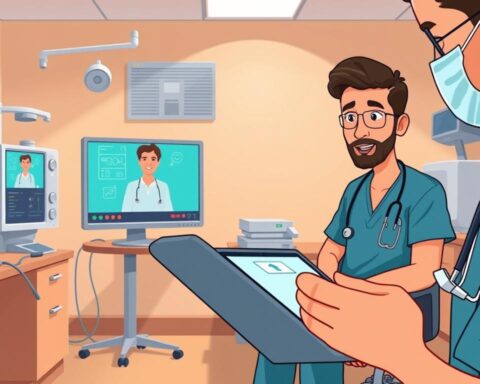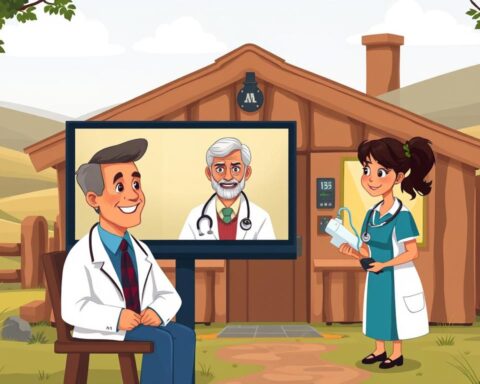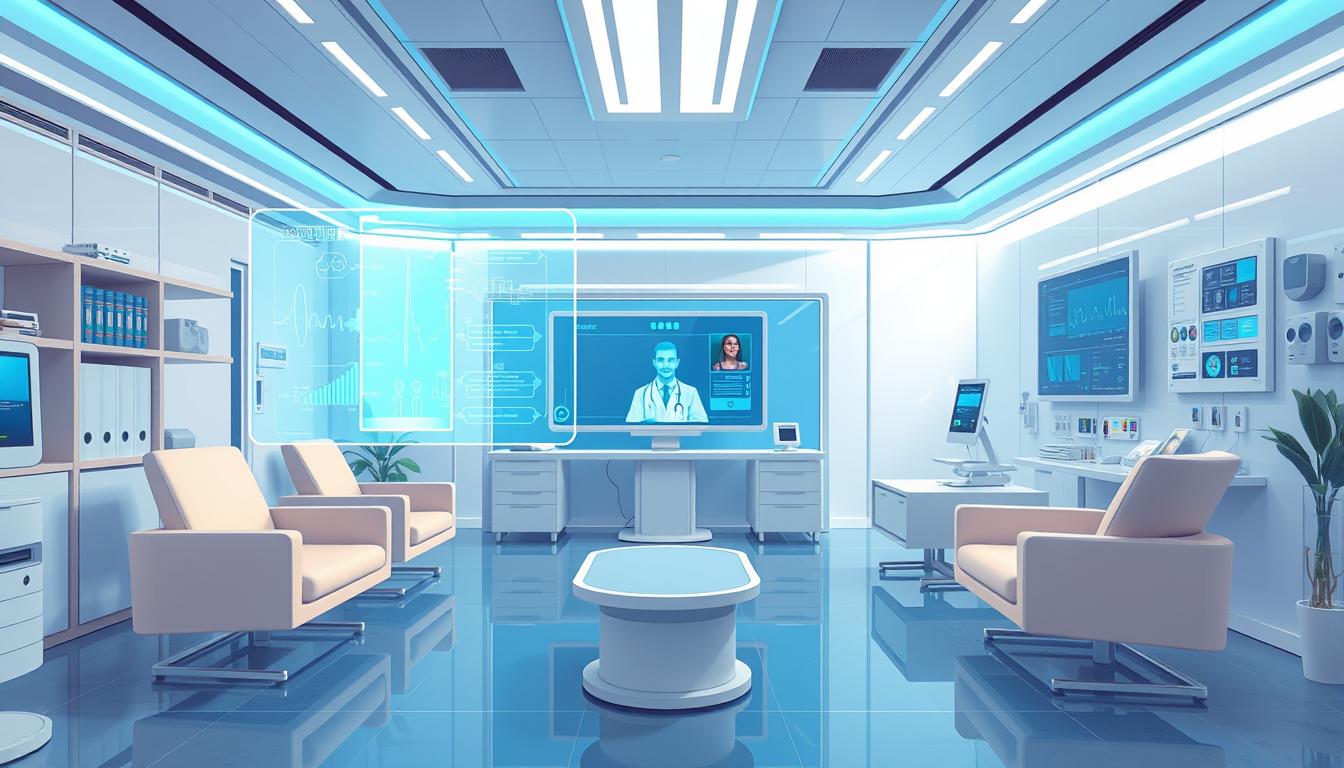
There are moments when a simple video call changes how care feels. A working parent talks to their child’s doctor from home. A patient in a remote area avoids a long drive for care.
Telemedicine has gone from new to essential. It’s now key for many clinics and health systems. Zoom, Doxy.me, and Amwell are just a few examples of how fast virtual care has grown.
This article sees digital health as a big chance and a big challenge. It talks about platforms, remote monitoring, IoT, AI, and more. It aims to help people and innovators make virtual care better and more efficient.
Key Takeaways
- Telemedicine technology advancements transformed access to care and patient-provider interactions.
- Telehealth innovation accelerated rapidly during the COVID-19 pandemic and remains central to delivery models.
- Virtual healthcare solutions include platforms, RPM, IoT, AI, and analytics — each with operational implications.
- Regulatory and security requirements are core considerations when adopting digital health advances.
- Practical strategies can help organizations scale telemedicine while improving outcomes and efficiency.
Overview of Telemedicine Technology
Telemedicine has become a big part of healthcare. It uses digital tools to help doctors reach more people. This makes getting medical help faster and easier.
Definition and Importance
Telemedicine means getting medical help from home. It includes things like check-ups and mental health talks. During the COVID-19 pandemic, it became even more important.
It helps people in remote areas get care without traveling far. It also helps doctors keep an eye on patients better. This can lower the chance of needing to go back to the hospital.
Key Components of Telemedicine
Telemedicine uses special software and platforms. These tools help doctors talk to patients and keep records up to date. They make sure everything is safe and easy to use.
Remote Patient Monitoring (RPM) tracks how patients are doing between visits. It uses devices to send information to doctors. This helps manage chronic diseases better.
Wearables and the Internet of Medical Things (IoMT) send data all the time. They help doctors see trends and make better plans for care. This makes care more personal.
Fast and reliable internet is key for telemedicine. It lets doctors see and talk to patients clearly. Other tech like AI and blockchain help too.
Together, these parts make telemedicine better. They focus on making care easier to get and more effective.
Recent Trends in Telemedicine Advances
The pandemic changed how we get care. It made telemedicine grow fast. Health places and clinics started using virtual visits quickly.
COVID-19 brought a big change. Platforms like Zoom and Doxy.me handled a lot of visits. People liked getting care from home and using simple tools.
Telehealth grew a lot. It helped with many health needs. People got care faster and didn’t have to travel as much.
More health services moved online. This included primary care and mental health. Many patients liked getting care from home because it was easy.
Wearable devices started working with health systems. They track heart rate and blood sugar. This helps doctors act fast when needed.
Remote patient monitoring became key for chronic care. Companies like Cloud DX helped doctors keep an eye on patients. This led to fewer hospital visits.
Telehealth and remote monitoring changed how we spend on health. They helped find problems early and saved money. Doctors say it’s all about good data and teaching patients.
Here’s a quick look at how things changed:
| Trend | Key Drivers | Representative Platforms | Reported Impact |
|---|---|---|---|
| Rapid Telehealth Adoption | Pandemic restrictions, patient demand, reimbursement changes | Zoom, Doxy.me, Amwell | ~38x utilization increase; higher patient satisfaction |
| Expanded Service Mix | Provider flexibility, technology maturity, patient preference | Epic Telehealth, Cerner virtual care modules | Routine visits, psychiatry, pediatrics fully virtualized |
| Wearable Integration | Improved sensors, API connectivity, clinician acceptance | Cloud DX, TELUS Health, Apple Health integrations | Continuous biometric feeds into clinical workflows |
| Remote Patient Monitoring | Reimbursement for RPM, device affordability, proven outcomes | RPM platforms tied to EHRs and care management tools | RPM claims spiked; readmission drops of 30–50% in some studies |
Regulatory Changes Impacting Telemedicine
Recently, the government made big changes for telehealth. These changes affect how providers, payers, and new companies work. A 60-day pause on new rules for virtual prescribing of controlled substances was announced.
This pause makes things uncertain for clinics that offer mental health and pain management online. They need to figure out how to keep serving patients.
States are key in deciding who can practice telemedicine. During the COVID-19 crisis, many states made it easier for doctors to work remotely. Now, they’re looking at how to make sure telemedicine is safe and effective.
New Telehealth Policies
Regulators want to make it clear how doctors can work across state lines. They also want to set standards for telehealth services. The delay in DEA Telehealth Special Registration might slow down virtual prescribing.
Stakeholders should keep an eye on federal and state updates. This will help them stay informed about new rules.
Policy changes aren’t just about prescribing. The changes also affect how health tech is used. For more on this, check out this analysis of executive orders. It talks about how these changes affect services across borders and data sharing.
Insurance Coverage Updates
Insurance companies have different rules for telehealth. This makes it hard for telehealth programs to plan their finances. The rules on what services are covered and how much they cost vary a lot.
Remote patient monitoring is getting more recognition from insurers. This means more claims for RPM. Insurers are working on better rules for these claims.
Providers need to show how telehealth saves money and improves health. Clear data and results help in getting better coverage. This is important for telehealth to grow.
Leaders should keep up with CMS, state rules, and what private insurers say. This helps them plan and reduce risks. Staying informed about policy changes and insurance updates is key to success in telemedicine.
Innovations in Telemedicine Platforms
Telemedicine has grown from simple video calls to full clinical systems. Leaders in this field are combining secure video, device data, and clinical workflows. This helps care in many settings, improving both clinician and patient experiences.
Video calls now need clinical-grade features like encryption and low latency. Platforms like Zoom for Healthcare, Doxy.me, and Amwell meet these needs. They also handle scheduling, billing, and documentation.
New VR and AR tools offer immersive guidance and remote therapy. This creates new ways for complex consultations.
Video Conferencing Software
Clinical video must work with records and devices. It needs APIs for equipment integration, secure storage, and analytics for clinicians. 5G networks improve video quality, making remote exams better.
Telepharmacy lets pharmacists dispense and counsel without visits. Regulated workflows are key, including consent capture and structured notes. Teams focus on modular architectures for easy feature additions.
Mobile Health Apps
Mobile apps offer tailored care. Digital therapeutics and teletherapy platforms adjust treatments based on patient data. They aim for easy-to-use interfaces to engage more users.
Mobile telemedicine software must be secure and work with devices and EHRs. It includes dashboards for real-time adjustments. Examples show how remote monitoring and DTx platforms improve care by using continuous data.
Investment in telehealth tools grows due to demand for patient engagement and care. Teams that focus on design, security, and interoperability create scalable services. These services include telepharmacy, virtual rehab, and chronic care.
For more on these trends, see this industry overview: trends and innovations in telemedicine.
Data Security in Telemedicine
Telemedicine changes how we get care by moving patient data around. It’s a chance to make care safer and build trust with patients. We need to use good ways to protect this data.
Protecting Patient Information
Things like remote monitoring and video calls send out a lot of patient data. We use strong encryption to keep this data safe. This way, only the right people can see it.
It’s also important to keep devices safe. Regular updates and checks help stop bad stuff from happening. Using extra steps to log in and checking who can do what helps too.
New ways like blockchain help keep data safe forever. It makes it hard for anyone to mess with it. This is good for keeping records straight and safe.
But, bad guys are always coming up with new tricks. So, we need to keep checking and learning. Teaching staff and patients about staying safe online is key.
Compliance with HIPAA Regulations
In the US, HIPAA rules are a must for telehealth services. They make sure data stays safe and is not lost. This includes using secure ways to talk and send data.
When working with others, like cloud services, we need special agreements. These agreements make sure everyone knows their part in keeping data safe. This shows we’re doing the right thing.
We also need to make sure everything is set up right and checked often. If we’re working with people in other countries, we have to follow their rules too. This means we have to be extra careful with data.
By using good technology, making agreements, and always watching out for risks, we can follow HIPAA rules. This helps us keep care safe and grow telemedicine.
Enhancements in Remote Monitoring
Connected devices and platforms are changing how doctors keep track of patients. Now, remote patient monitoring uses devices, cloud analytics, and workflows. This helps care at home and early action.
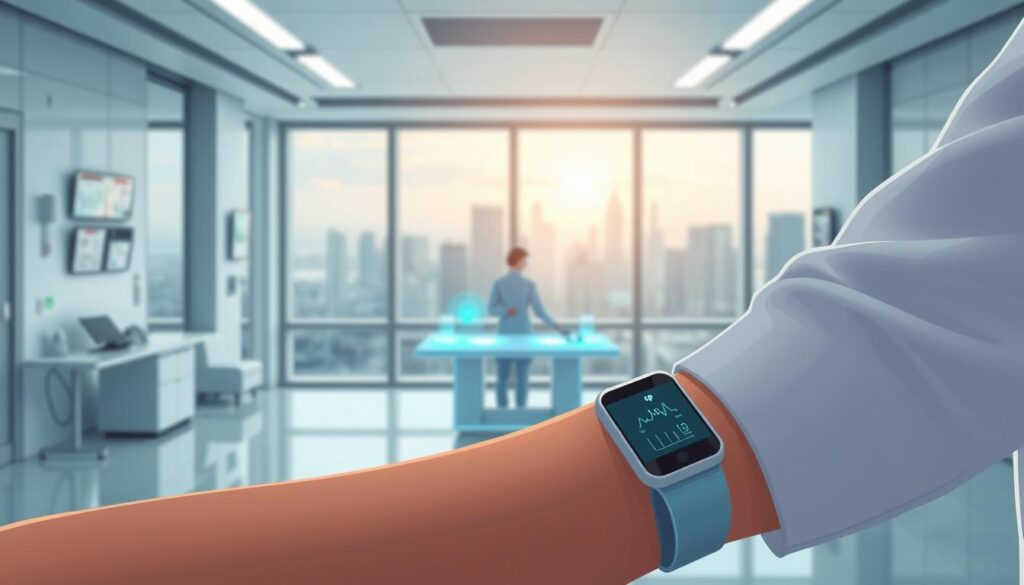
Healthcare uses many IoMT devices like wearable ECGs and smart scales. These send data to RPM platforms. There, doctors can see trends and set alerts.
Companies like TELUS Health and Cloud DX show different ways to use devices and platforms. They focus on strong connections and safe data sharing.
Standard data formats and working with EHRs help make sense of the data. This turns raw data into useful insights for care teams.
Benefits of Continuous Patient Monitoring
Monitoring helps catch problems early. Studies show RPM can cut hospital visits by 30–50%. It also means doctors can act fast.
Programs also save money, with costs down by $2,000–$5,000 per patient each year. This money can be used for more important services.
Patients benefit from tools that help them stay on track. They get dashboards and feedback. This makes it easier for them to manage their health at home.
Getting it right means making sure devices work well and are safe. It also means doctors and patients trust the system. This leads to care that’s proactive, based on data, and fits into daily life.
Accessibility of Telemedicine Services
The move to digital care looks promising for better access. But, there are real challenges. This part looks at steps and models that help make telehealth better for everyone.
Bridging the Rural Healthcare Gap
Remote monitoring and teleconsultations are helping in Canada and rural U.S. areas. Companies like TELUS Health and Cloud DX show how they can keep patients safe at home. This reduces hospital visits.
But, there are big hurdles like bad internet and uneven 5G. We need to fix these to make video visits and data sharing better. Investing in rural internet and helping carriers is key.
Addressing Digital Literacy Challenges
The digital gap hits older adults and those new to tech hard. Easy-to-use apps and simple setup help. This builds trust and lowers dropout rates.
Training and support make services better. Mixing online and in-person care helps more people. Regular updates and testing ensure services meet patient needs.
| Challenge | Practical Response | Expected Impact |
|---|---|---|
| Limited broadband in rural areas | Public–private broadband grants, prioritized 5G deployment, low-bandwidth telehealth modes | Improved connection stability; broader telehealth accessibility |
| Low digital literacy among seniors | User-centered app design, step-by-step onboarding, caregiver support programs | Higher appointment completion rates; greater patient confidence |
| Fragmented RPM adoption | Standardized device integrations, partnerships with vendors like Philips and ResMed, reimbursement alignment | Continuity of care in remote populations; reduction in unnecessary hospital visits |
| Language and accessibility barriers | Multilingual interfaces, screen-reader compatibility, captioned video visits | Expanded access for diverse communities; equitable telehealth accessibility |
| Trust and privacy concerns | Transparent consent flows, HIPAA-aligned platforms, patient education on data use | Greater adoption rates; sustained engagement with digital health advances |
We need to focus on patient education and easy setup. We also need to measure how well services work. By doing this, we can help more people use digital health tools.
Future Directions in Telemedicine Technology
Telemedicine is changing how we get care. It’s using smarter tools and clearer ways to work. AI in telemedicine is moving from small tests to big uses in health care.
Places like Mayo Clinic and Mount Sinai are testing new ways. They use AI to help doctors make quicker decisions. This makes care faster and better.
Artificial Intelligence Integration
Clinical teams use AI to help with tough diagnoses. AI looks at images and finds things doctors might miss. This makes care more accurate.
Chatbots and NLP systems help doctors with simple tasks. This lets doctors focus on the hard stuff. Big companies like IBM Watson Health and Google Cloud AI help make this happen.
They offer tools that make it easy to start using AI. Digital twin modeling and AI decision trees help plan care. This way, doctors can try out different plans before they start.
Predictive Analytics in Patient Care
Predictive analytics use lots of data to help care. It looks at EHRs, monitors, labs, and images. This helps doctors know who might need help soon.
It helps doctors make plans just for each patient. But, it needs good data and clear ways to share it. Doctors need to see the data to act fast.
It’s important to make sure AI is fair and safe. This keeps patients’ trust. For a quick lesson on AI in health care, check out this link: AI in healthcare: diagnosis and beyond.
As health care gets more digital, we need to make sure it works well. We need to match tech with how doctors work. This will help make care better, cheaper, and fair for everyone.
Conclusion: The Future of Telemedicine
Telemedicine is changing fast. New tools like remote monitoring and artificial intelligence are making care better. We need to see telemedicine as a mix of online and in-person visits. This mix will help health outcomes and save money.
For a quick look at what’s new in telemedicine, check out this summary from the National Library of.
But, there are big challenges ahead. Rules and payment vary by state, making things hard. Also, different systems don’t talk to each other well. This slows down care.
Keeping patient data safe is another big issue. We need to spend more on security and follow rules closely.
Starting telemedicine can be tough. It takes money for new tools and picking the right vendors. Doctors and patients need to get used to new ways of working together.
Some patients need to see doctors in person. So, we need to mix online and in-person care.
Telehealth is full of promise. New tech can help more people, manage chronic diseases better, and cut down on hospital visits. Programs using remote monitoring have shown big savings.
To grow, we need to work on making systems talk to each other. We also need to train doctors and patients. And we must measure how well telemedicine works. This will help make care fairer and better for everyone.
FAQ
What is telemedicine and why does it matter now?
Telemedicine lets doctors see patients from far away. It’s great for people in rural areas. It also helps keep patients safe from germs.
It makes sure patients get the care they need. And it can save money by reducing hospital stays.
How did the COVID‑19 pandemic change telehealth adoption?
The pandemic made telehealth very popular. It went from almost no use to a lot of use. Doctors used Zoom and other apps to see patients.
These apps helped with urgent care and other important services. They made sure patients got the care they needed.
What are the core technical components of a telemedicine solution?
A good telemedicine system needs a few things. It needs secure video and apps that work with health records. It also needs devices to monitor patients.
Fast internet and cloud services are important too. And using AI and blockchain helps keep data safe and work smoothly.
How do wearables and IoMT integrate with telemedicine platforms?
Wearables send health data to apps. These apps let doctors check on patients in real time. This helps doctors make better decisions.
Apps like Cloud DX and TELUS Health show how this works. They help with chronic diseases and after surgery care.
What clinical value does continuous patient monitoring provide?
Monitoring patients helps catch problems early. It lets doctors send alerts and make changes fast. This can lower hospital visits and save money.
It also helps patients take care of themselves. They can see their data and get feedback.
What regulatory changes should providers watch for?
Providers need to keep up with new rules. These rules cover who can practice and how to use devices. Some rules changed during the pandemic.
It’s important to watch what CMS and state boards say. This helps with practicing across states and getting paid.
How consistent is insurance coverage for telemedicine and RPM?
Insurance coverage for telemedicine varies. Some places pay the same as in-person visits. Others don’t.
RPM is getting more recognized and paid for. But, rules differ, so providers need to follow them closely.
Which video platforms meet clinical requirements and what features matter?
Zoom, Doxy.me, and Amwell are popular choices. They need to be secure and work with health records. They should also be easy to use.
Features like low latency and 5G support are important. They help with smooth video calls. New features like AR/VR are coming too.
How do mobile health apps and digital therapeutics fit into telemedicine?
Apps help with teletherapy and monitoring. They collect data and help with treatment. They work with RPM and health records.
Apps make it easier for patients to stay on track. They help doctors make changes quickly.
What are the primary data security risks in telemedicine?
Telemedicine deals with a lot of sensitive data. There’s a risk of data breaches and device problems. It’s important to keep data safe.
Using strong encryption and secure devices helps. Regular checks and good vendor choices are key.
How do providers ensure HIPAA compliance for telehealth?
HIPAA rules are strict. Providers must protect patient data. They need to use secure connections and have good vendor agreements.
They also need to train staff and patients. This ensures everyone knows how to keep data safe.
What technical requirements are critical when using IoT devices for care?
IoT devices need to be secure and work well. They should send data safely and work with other systems. Reliable internet is also important.
Keeping devices up to date and working well is key. This helps doctors and patients get the most out of these devices.
Can telemedicine help close the rural care gap?
Yes, telemedicine can help. It brings specialist care to rural areas. This reduces the need for long trips and hospital stays.
But, internet access is a big problem. Better internet is needed to make telemedicine work well in rural areas.
How do teams address digital literacy and the digital divide?
Teams can make apps easier to use. They can also train patients and caregivers. This helps everyone use technology better.
They can also offer both online and in-person visits. This helps people who are not tech-savvy.
How is AI being used in telemedicine today?
AI helps with many things in telemedicine. It can analyze images and help with diagnosis. It can also help with chatbots and predicting patient needs.
Cloud services and AI platforms make this possible. They help doctors and make care better.
What role does predictive analytics play in patient care?
Predictive analytics look at patient data to predict needs. It helps doctors plan care and catch problems early. This makes care better and more proactive.
It needs data from many sources and cloud services. This helps doctors make informed decisions.
What are the main challenges to scaling telemedicine solutions?
Scaling telemedicine is hard. There are many challenges. Rules and payment vary, and it’s hard to make systems work together.
Keeping data safe and getting people to use it are also big challenges. But, with the right approach, it can work well.
What strategic steps should organizations take to responsibly scale telemedicine?
Organizations should invest in good technology and training. They need to make sure data is safe and work well with other systems.
They should also watch for new rules and test their systems. This helps make sure telemedicine works well and is worth it.
Which vendors and technologies exemplify current telehealth innovation?
Many companies are leading in telehealth. Zoom, Doxy.me, and Amwell are making video calls better. Companies like TELUS Health and Cloud DX are improving RPM.
Cloud services and AI are also important. They help make telemedicine better and more efficient.
How should entrepreneurs evaluate telemedicine market opportunities?
Entrepreneurs should look at what’s needed and what’s possible. They should test their ideas and see if they work. They should also make sure their technology is secure and works well.
Working with established providers and payers helps too. This makes it easier to get started and grow.
What future innovations are likely to shape telemedicine?
Telemedicine will get even better. AI and analytics will help doctors more. Digital therapeutics and telepharmacy will grow.
AR/VR will make remote care even more realistic. And, better internet will make telemedicine work better everywhere.