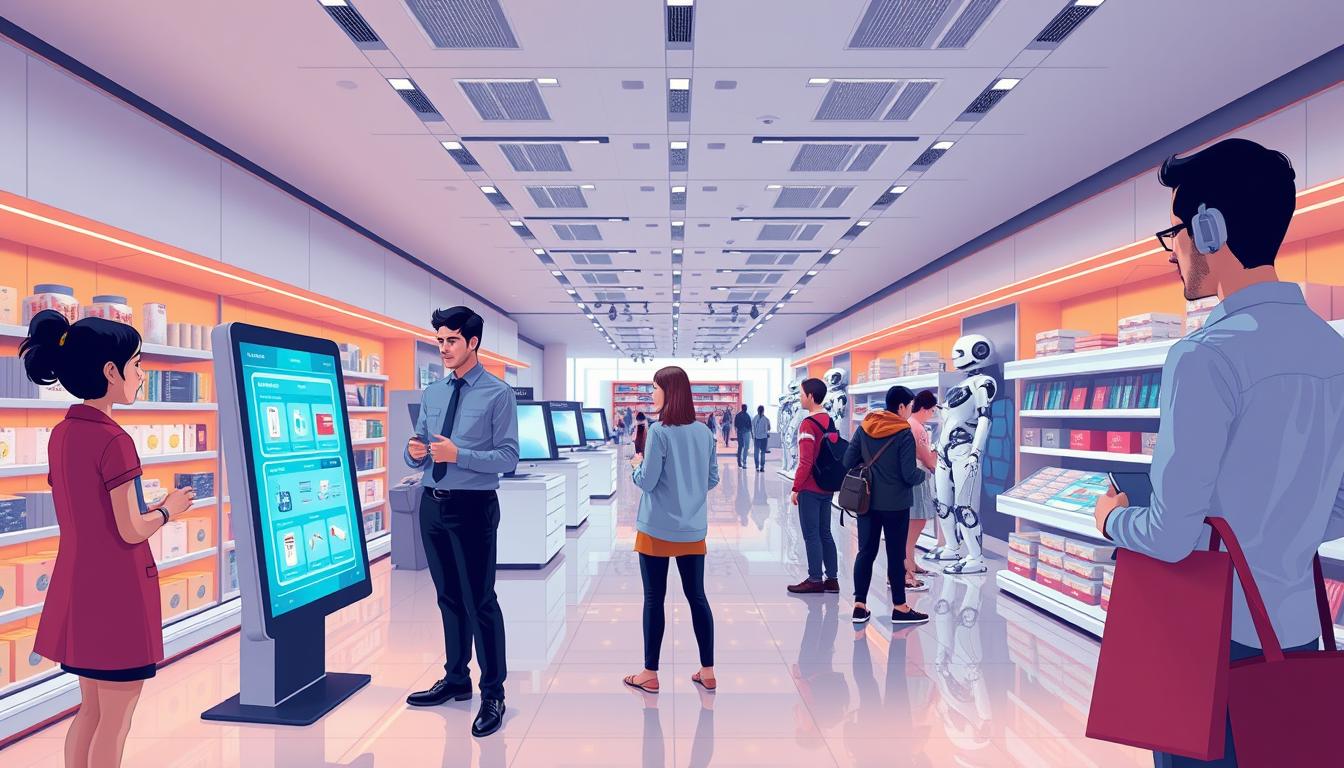
There are moments when a simple purchase shows big changes. Like finding a product that fits perfectly or a quick checkout. These moments show why AI in retail is important.
Retail in 2025 is at a turning point. Changes in shopping habits, tough online competition, and supply chain issues make AI key. Stanford’s AI Index shows fast growth in AI use, and 87% of retailers use AI now.
Market forecasts show big growth in AI for retail by 2032. North America is leading in adoption. Adobe and studies show more people using chatbots and voice shopping. Retailers see more sales, cost cuts, and better sales rates with AI.
This guide is for entrepreneurs, leaders, and innovators. It helps you use AI wisely, balancing ethics and profit. You’ll learn how to use AI to improve retail.
Key Takeaways
- AI adoption in retail is accelerating—most U.S. retailers already use AI in at least one area.
- Artificial intelligence retail trends drive measurable revenue and efficiency gains.
- Consumers are increasingly comfortable with AI tools, from chatbots to voice shopping.
- The market for ai in retail sector innovations is projected to expand significantly through 2032.
- This guide offers practical steps to evaluate, implement, and scale AI while managing ethics and ROI.
Introduction to AI in Retail
Artificial intelligence changes how stores work and how people shop. Stores use systems that learn from people, see images, and do tasks on their own. These tools help online and in stores, making things better and faster.
AI in retail includes many things like learning from data and understanding images. It helps make shopping personal and quick. This is true for checking out, marketing, and getting orders ready.
At first, AI was used for suggesting products and improving ads. Now, new tools like generative AI help make ideas real fast. This lets teams try new things quicker than before.
There are big reasons for using AI in retail. Shoppers want things just for them and fast help. Online stores are getting more competition, and supply chains need to be better. These reasons make AI very important.
Even though AI is growing, there’s more to do. Not many stores are using AI in a big way yet. But, using AI can really help stores. It can make more sales, reduce returns, and get orders out faster.
Big names like Walmart, Target, and Amazon show how AI works in retail. They show how to use AI to make money and stay strong. Their stories help others see how AI can help.
| Area | Typical AI Capabilities | Business Impact |
|---|---|---|
| Customer Experience | Personalization, chatbots, visual search | Higher conversion rates, longer retention |
| Inventory & Supply Chain | Predictive analytics, demand forecasting, robotics | Lower stockouts, reduced carrying costs |
| Operations & Fraud | Computer vision, anomaly detection, automation | Improved accuracy, reduced losses |
| Marketing | Campaign optimization, content generation | Better ROI, reduced acquisition cost |
What is AI in Retail?
AI in retail means systems that learn and make choices on their own. It helps stores understand customers, manage supplies, and keep things safe. The goal is to make smarter, faster choices for more people.
The Importance of Innovation in Retail
Innovation keeps stores relevant and competitive. Using AI helps stores make things better and find new ways to make money. Stores that use new technologies are more likely to succeed in a changing world.
Key AI Technologies Transforming Retail
The retail world now relies on a few key technologies. These tools change how stores sell, serve, and stock. They make shopping better, reduce waste, and open up new ways to make money.
Machine Learning and Personalization
Machine learning helps stores offer personalized shopping experiences. It uses data to suggest products, set prices, and send special offers to each customer. For example, Amazon’s system boosts sales by about 35%.
Companies like Slazenger have seen huge success with AI. They use it to target customers better and send messages across different channels. This approach has brought them a 49x return on investment and a 700% increase in new customers.
Natural Language Processing in Customer Service
Natural language processing makes chatbots and voice assistants work. They help with questions, support, and buying things. This way, stores can serve customers 24/7 without needing more staff.
Avis found that its WhatsApp bot handled 70% of questions. This cut costs by almost 39% in a year. Most people are okay with chatbots when they need quick answers. This leads to more sales and less waiting time.
Robotics in Inventory Management
Robotics and automated vehicles make picking, packing, and moving items faster. They also cut down on mistakes and make work easier in warehouses.
AI, IoT sensors, and smart shelves give a clear view of stock levels. They also automatically restock when needed. Big stores like Lowe’s use these systems to keep their shelves full and avoid running out of items.
Retail automation brings all these together. Personalization engines guide inventory robots. NLP tools help fulfill customer orders. This makes the whole shopping experience better and more efficient.
Enhancing Customer Experience with AI
The retail floor is changing. Now, it focuses on personal moments. AI uses data to make shopping feel special and timely.
Personalized Shopping Experiences
Personalization is more than just saying hello. AI uses data to offer what you want. This makes shopping better and keeps customers coming back.
Brands like Starbucks use AI for loyalty rewards. These rewards make customers visit more and spend more too.
Studies show people like to buy from brands that know them. Retailers who use AI see more sales and happy customers. This shows AI is key for success.
Virtual Try-Ons and Augmented Reality
AI and AR make virtual try-ons possible. You can try clothes, glasses, makeup, and furniture from home. This means fewer returns and more confidence in your choices.
Warby Parker uses AI to show how glasses will look on you. Retailers use AR to show how rooms and outfits will look. This makes buying easier and faster.
AI helps make product visuals and 3D models fast. This saves time and lets retailers offer more experiences. It’s a big step for the future of retail.
AI and immersive tools make shopping personal and easy for brands. They need to invest in data and design for success.
AI-Driven Inventory Management Solutions
Retailers always try to match stock with demand. Now, they use data, sensors, and learning machines. This makes their guesses better and answers faster.
The first step is using predictive analytics. It looks at past sales, promotions, and weather. It even checks local events and live data to guess demand.
This helps avoid running out of stock and wasting items. It also makes sure orders are delivered on time.
Predictive modeling in practice
Algorithms keep getting better at guessing demand. Big names like Target and Macy’s use these models. They make their products better and cut down on returns.
Stores that use these tools see big improvements. They have less mistakes in guessing demand. They also move items faster and save money.
Automated restocking systems
Automation makes these guesses real. Smart shelves and robots help restock. This keeps shelves full and saves labor.
Some stores are even testing checkout-free shopping. This uses tech to keep track of items. It makes shopping faster and saves on labor.
| Metric | Typical Improvement | Impact Area |
|---|---|---|
| Inventory levels | 20–50% reduction | Holding costs, working capital |
| Shipping costs | 15–30% reduction | Logistics spend |
| Forecast error | Up to 50% reduction | Order accuracy, waste |
| On-time, in-full deliveries | 10–20% improvement | Customer satisfaction |
| Operational cost (example) | 23% drop | Coca-Cola AI initiatives |
Using automation helps stores respond fast to changes. It makes vendor schedules better and saves money. It also helps the planet by reducing waste.
Check out Miloriano for more on how AI works. They share real examples of how AI helps.
When you use predictive analytics and automation together, things get better. Stores become more agile and waste less. This shows how AI is changing retail for the better.
Transforming Marketing Strategies with AI
Marketing in retail is changing. It’s moving from big campaigns to small, focused actions. AI helps teams understand what customers want, choose the best way to reach them, and make campaigns faster. This change is making retail more digital and how brands talk to shoppers better.
Data-Driven Targeting and Segmentation
AI sorts people into groups based on what they might want. Teams can send special offers to small groups at the right time. This makes more people buy things.
Retailers get better results when they use AI to plan and do things. Slazenger used AI to send messages across email, web push, and SMS. They saw big gains in return on investment and got more new customers.
AI-Powered Content Creation
AI makes lots of copy, product descriptions, and pictures fast. H&M uses AI to make descriptions from images, then edits them to keep the brand’s voice. This saves time and keeps content the same everywhere.
Tools like Sirius AI™ and big platforms help with testing and making content faster. Teams have more time for planning. This helps with SEO, keeps things legal, and makes things more personal for customers.
| Capability | Primary Benefit | Retail Example | Impact |
|---|---|---|---|
| Predictive Segmentation | Higher relevance for offers | Slazenger omnichannel campaigns | Improved acquisition and ROI |
| Send-Time Optimization | Better open and conversion rates | Major retailers using timed emails | Lift in engagement |
| Generative Content | Scales product descriptions | H&M image-to-text workflows | Faster time-to-market |
| Next-Best Channel | Automated channel selection | Omnichannel CRM platforms | Consistent customer journeys |
| Creative Automation | Maintains brand tone at scale | Retail teams using AI asset tools | Reduced manual editing time |
The Role of AI in Supply Chain Optimization
Retailers have thin margins and customers who want things now. Using technology wisely makes supply chains work better. This section talks about how new tools make things more efficient, green, and help vendors work together better.

Real-time Analytics for Supply Chain Efficiency
Real-time analytics turn data from trucks, warehouses, and stores into quick decisions. Companies like IBM and Microsoft use this data to update delivery times. This cuts down on delays and saves fuel.
Unified commerce platforms with AI add supply chain smarts to dashboards. Store managers get alerts about problems and know what to do. This includes moving stock or changing who does what.
It’s also good for the planet. Smarter routes mean less pollution. And AI helps cut down on packaging waste, helping meet green goals.
AI in Demand Forecasting
AI in demand forecasting goes beyond simple trends. It looks at holidays, sales, weather, and local events to guess when to order more. This helps avoid too much stock and not enough stock.
Tools that predict demand help vendors know when to send more. Retail teams say they have better stock levels and lower costs. This is because forecasting is more accurate.
Stores that use advanced forecasting and automation see their profits go up. They have better stock turns and service levels, even when prices are high.
| Capability | Primary Benefit | Representative Provider |
|---|---|---|
| Real-time shipment tracking | Faster ETA updates; fewer delivery disruptions | IBM Sterling |
| Route optimization | Lower fuel use; reduced emissions | Descartes Systems Group |
| Generative supply insights | Actionable alerts for store teams | Microsoft Dynamics 365 |
| Predictive demand models | Improved fill rates; reduced overstocks | Blue Yonder |
| Automated replenishment | Faster restocking; lower manual effort | Oracle NetSuite |
Ethical Considerations in AI Usage
Retailers face big challenges as AI grows in stores and online. They must balance new tech with keeping customers’ trust. This section talks about important steps to protect customers and keep businesses strong.
Data handling, transparency, and trust
Retailers collect lots of data for personalization. They need to tell customers how they use this data. This builds trust and better relationships.
PayPal uses AI to fight fraud, showing how it can help. They use biometrics and watch data in real-time. This makes shopping safer and keeps false alarms low.
More laws are coming to guide how retailers use AI. They should check their policies to keep up. The paper on ethical AI in retail has good advice: ethical AI in retail guidance.
Bias mitigation and fair outcomes
AI can be unfair if it’s trained on bad data. It’s important to watch for bias in pricing and hiring. This is true for tools like recommendation engines.
Checking AI regularly and making it explainable helps. Using diverse data and fairness metrics is key. Without effort, AI can make things worse.
Governance, operations, and measurable safeguards
Use an ethical framework for AI. This means setting rules and making sure they’re followed. It’s also important to track how well things are working.
Choose AI solutions that are open and clear. Watch how they affect customers and make sure everyone is treated fairly.
| Risk Area | Mitigation | Metric |
|---|---|---|
| Data misuse | Consent controls, encryption, limited retention | Consent opt-in rate; breach incidents per year |
| Fraud and security | Real-time monitoring, biometric verification | Fraud loss reduction (%); false positive rate |
| Algorithmic bias | Regular audits, diverse datasets, explainability tools | Fairness index; audit remediation time |
| Regulatory compliance | Policy updates, legal reviews, employee training | Compliance findings; training completion rate |
| Customer trust | Transparent communication, opt-out options | Trust score; retention after disclosure |
By following these steps, retailers can handle AI well. This is important because 75% of them use AI now. Taking care of data helps avoid legal problems and keeps customers happy.
Case Studies of Successful AI Implementation
Companies of all sizes use AI to get better at what they do. They focus on making things better for customers. We’ll look at how big names and small brands use AI to improve.
Retail Giants Showing Scale and Impact
Amazon shows how AI can make things personal and change prices often. Their system helps a lot of sales happen. It makes sure prices match what customers want.
Walmart uses voice shopping and smart delivery. Working with Google and Siri makes shopping easier. This helps customers buy more and makes shopping smoother.
PayPal is great at keeping payments safe. AI helps stop fraud, making shopping safer. This makes customers trust PayPal more.
Niche Brands and Local Pilots Driving Focused Innovation
Warby Parker lets you try glasses online. This means fewer returns and faster buying. It’s a smart way for small brands to meet customer needs.
Aldi is testing stores without cashiers in places like Illinois. This makes shopping faster and changes how stores work. It shows how small cities can try new things.
Smaller brands can also see big results with AI. For example, a sports brand’s online campaign worked well. This shows AI can help in many ways.
Cross-cutting Success Factors
Many things help these companies succeed. They use one place for customer data, test new things first, and measure success. They also work with vendors and train employees. These steps help them get better fast.
| Company | AI Use Case | Primary Benefit | Key Success Factor |
|---|---|---|---|
| Amazon | Personalization & dynamic pricing | Higher conversion and revenue share | Real-time price and recommendation engines |
| Walmart | Voice commerce & hybrid fulfillment | Smoother reorders and larger baskets | Channel integration with voice assistants |
| PayPal | Deep learning fraud detection | Reduced fraud losses and stronger trust | Advanced model training on payments data |
| Warby Parker | AR virtual try-on with 3D mapping | Lower returns and improved fit confidence | High-fidelity AR and product modeling |
| Aldi (Aurora pilots) | Checkout-free stores via computer vision | Faster throughput and labor reallocation | App-based entry + vendor vision systems |
| Slazenger (Insider campaign) | Omnichannel AI marketing | Large acquisition uplift and ROI | Personalized messaging across touchpoints |
These stories show how AI helps in many ways. They teach us about choosing the right technology and measuring success. Big companies and small ones use AI to improve customer experiences.
Future Trends in AI Innovations for Retail
The next big change in retail will change how stores work and how customers interact with brands. Leaders at Target, Walmart, and Amazon are testing new systems. These systems use AI, sensors, and automation to make things faster and better.
The rise of ai chatbots is more than just simple answers. Today’s chatbots can guess what you want and even finish deals without a person. Sephora and Best Buy use these chatbots to help customers find things and book appointments.
During busy times, chatbots help a lot. They answer many questions, saving time and money. This keeps sales going strong when it’s busy.
Generative AI is getting better at helping with shopping and after-sales care. This means customers get more personal service and help anytime they need it.
AI is also getting better at working with physical things. Smart shelves and cameras send signals to AI. This helps with restocking, keeping things safe, and understanding what’s happening in stores.
Integrating ai with iot in retail makes stores work better. AI, robots, and sensors help make checkout-free stores and faster restocking. This means less waste, happier customers, and more time for staff to help.
AI and IoT also help the environment. They make things more efficient, reducing waste. Brands that focus on this save money and meet customer expectations for being green.
Here’s a quick look at what’s new and how it helps. The table shows how these trends work and some examples from brands.
| Trend | Key Capability | Operational Impact | Example Use Case |
|---|---|---|---|
| The rise of ai chatbots | Predictive, end-to-end conversational flows | Faster conversions, 24/7 service, lower support costs | Sephora virtual shopping assistant guiding product selection |
| Integrating ai with iot in retail | Real-time sensor data fused with edge AI | Automated restocking, shrink reduction, better store layouts | Smart shelves triggering automated replenishment at Walmart |
| Generative AI for commerce | Automated content and personalized offers | Higher engagement, tailored promotions, faster merchandising | Target using AI to personalize homepage and promotions |
| AI + Robotics | Autonomous fulfillment and in-store assistance | Improved pick accuracy, labor efficiency, faster delivery | Amazon Robotics boosting warehouse throughput |
When planning to use AI, it’s important to move fast but also be careful. Testing shows the benefits, but making sure everything is safe and fair is key. This careful approach is how we’ll see the future of retail with AI.
Challenges Facing AI Adoption in Retail
AI can make things more efficient and give customers better experiences. But, there are real challenges that slow things down. Retailers need to find a balance between new tech and keeping people happy.
Infrastructure and Cost Barriers
Many stores use old systems that don’t work well together. This makes it hard and expensive to start using AI.
Setting up AI costs a lot. It includes buying new tech and paying for services. Only a few stores in the U.S. are ready to use AI on a big scale.
Retail leaders should start small. Begin with small tests to see if AI works. Then, grow it slowly. This way, costs are easier to manage.
Resistance to Change Among Employees
People are key to making tech work. Employees might worry about losing their jobs or privacy with AI. This can make it hard to start using AI.
Stores that succeed teach their teams well. They show how AI helps, not hurts. This makes employees feel more secure.
Being open and fair with data builds trust. Small wins that make work easier get everyone on board. This includes both workers and managers.
- Short-term tactic: launch small, visible wins that improve daily tasks.
- Mid-term tactic: create cross-functional squads with IT, operations, and store teams.
- Long-term tactic: embed continuous learning and clear career paths tied to AI skills.
Fixing both tech and people issues helps AI succeed in retail. Leaders who focus on both tech and people can move faster and make things better.
Conclusion
The retail world is changing fast with ai. Now, personalization and forecasting help stores make more money. They also keep customers coming back.
Stores see big wins like more sales and less waste. This happens when they use technology wisely and manage data well.
The Future Landscape of Retail with AI
Seeing ai as a big deal is key. Focus on big wins like making shopping personal and predicting sales. Use a Customer Data Platform to make ai work better for everyone.
Training staff and setting rules are essential. This turns new ideas into lasting success.
Being careful with ai is important. Protecting privacy and avoiding bias is a must. The future of shopping will be smart and personal.
Retailers who start now will lead the way. They’ll make shopping better and more sustainable for everyone.
FAQ
What is AI in retail?
AI in retail uses tech like machine learning and computer vision. It helps make shopping better and faster. It uses data to suggest products and improve store operations.
Why is innovation with AI critical for U.S. retailers in 2025?
Retail is changing fast. AI helps with personalization and keeping up with online shopping. It makes stores more efficient and helps with customer service.
Which AI technologies are transforming retail today?
Machine learning and NLP are big changes. They help with personalization and chatbots. Robotics and generative AI also play a big role.
How does machine learning boost personalization and sales?
Machine learning uses data to suggest products. This makes shopping more personal. It helps stores sell more and keep customers happy.
What results can retailers expect from NLP and conversational AI?
NLP makes chatbots and voice assistants. They help with customer service. This saves money and makes shopping better.
Where does robotics fit into inventory and fulfillment?
Robotics helps with picking and packing. It makes stores run smoother. This saves time and money.
Can AI reduce returns and improve fit for apparel and accessories?
Yes. AI helps with sizing and virtual try-ons. This makes shopping more accurate and reduces returns.
How do predictive analytics and automated restocking work together?
Predictive analytics forecast demand. Automated restocking then fills orders. This keeps stores stocked and saves money.
What marketing gains come from AI-driven targeting and content creation?
AI helps with marketing by targeting the right customers. It also creates content faster. This makes marketing more effective.
How does AI improve supply chain visibility and sustainability?
AI tracks shipments and optimizes routes. This reduces waste and emissions. It makes supply chains more efficient.
What are the main data privacy and security concerns for retailers using AI?
Retailers collect a lot of data. They must protect it. AI helps with security but must be used wisely.
How should retailers address AI bias and fairness?
Retailers must check for bias in AI. They should use fair models and monitor results. This ensures AI is fair for everyone.
Which retailers exemplify successful AI adoption?
Amazon and Walmart lead with AI. PayPal uses AI for security. Warby Parker and Aldi also show AI’s benefits.
What future AI trends will shape retail over the next 3–7 years?
Expect more AI in shopping and supply chains. This will make shopping better and more efficient.
What are the biggest obstacles to scaling AI across retail organizations?
Old systems and lack of skills are big hurdles. But, there are ways to overcome these challenges.
How can retailers overcome employee resistance to AI?
Leaders must explain AI’s benefits. Training employees helps too. This builds trust and acceptance.
What governance steps should retailers take to ensure responsible AI use?
Retailers need clear AI rules. They should audit AI for fairness and privacy. This ensures AI is used right.
Where should U.S. retail leaders start when building an AI roadmap?
Start with an AI check-up. Focus on key areas like personalization. Plan for growth and training.
What measurable outcomes justify AI investment in retail?
AI boosts sales and cuts costs. It makes shopping better. This shows AI’s value to retailers.
How will AI affect sustainability and operational efficiency?
AI reduces waste and emissions. It makes stores run better. This helps the environment and saves money.
Is consumer demand ready for more AI-driven retail experiences?
Yes. People want more AI in shopping. They like chatbots and personalized services.
What is the market outlook for AI in retail?
The AI market in retail is growing fast. North America is leading. Retailers are investing in AI to stay ahead.
What final tactical recommendations help move from pilot to enterprise AI?
Focus on data and clear goals. Choose modular systems and partner with vendors. Train employees and plan for growth. This makes AI work for everyone.