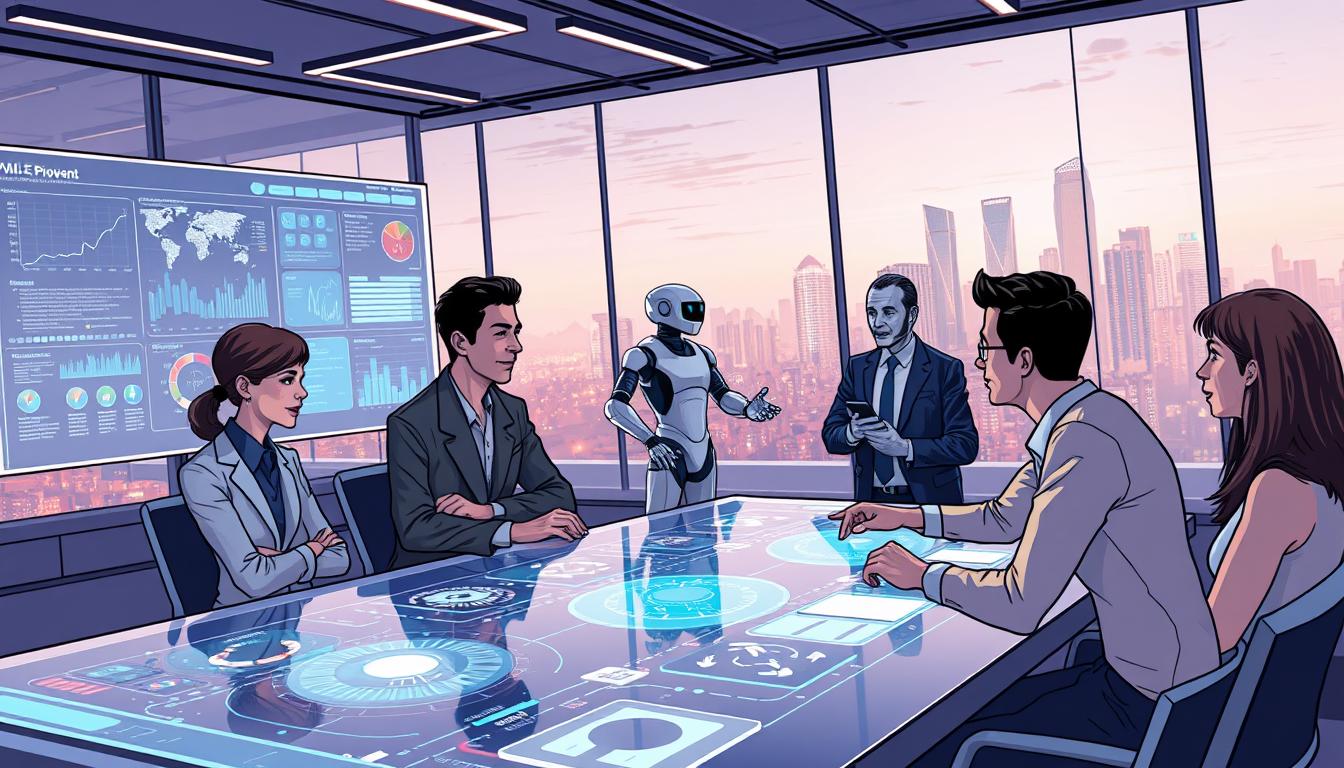
Imagine an HR leader looking at a dashboard, feeling the pressure of many decisions ahead. They must balance numbers, budgets, and keeping employees happy. This is where AI for workforce planning becomes key.
This article is a guide on using AI for better workforce planning. It shows how AI can make predictions better, cut down on paperwork, and make things run smoother. Many HR teams, like those at Workday and Visier, are already using AI.
It’s important to note that 42% of HR teams use AI, but only 7% have a clear AI plan. This means there’s a big chance for those who start early.
The article will explain how to use AI for better planning. It will cover what AI tools do and how to use them. It will also talk about how to get started, improve your team, and make sure AI is used right.
Benefits include making better choices, working more efficiently, saving money, and making employees happier. These results are seen in companies like Visier, Workday, and TeamSense.
Key Takeaways
- AI for workforce planning turns complex HR data into clear, actionable forecasts.
- An ai-driven workforce strategy reduces routine work and improves predictive accuracy.
- Workforce planning solutions deliver measurable gains in productivity and cost control.
- Artificial intelligence workforce optimization requires data readiness and ethical governance.
- Early adopters who combine pilots with upskilling gain a strategic advantage.
Understanding the Role of AI in Workforce Planning
Workforce planning helps figure out who we need, what skills they should have, and where to find them. It looks at now and the future. AI makes this easier by using computers to analyze data and suggest actions.
Defining Workforce Planning
Workforce planning is like making a map for your team. It uses tools like Visier and Workday to predict who will leave and who to hire. It also finds out where skills are missing.
AI helps by running different scenarios. It figures out what hiring will look like if the company grows or changes. This helps plan for the future.
Importance of Data-Driven Decisions
Good data is key for making smart plans. Bad data messes up AI’s work. Clean, organized HR systems are essential.
AI gives us important numbers like how many people will leave and how many we need to hire. This helps HR plan ahead instead of just reacting.
More HR teams are using AI, but not all have a plan. To get started, list your HR data, clean it up, and make sure it matches business goals. Then, use advanced tools to plan your workforce.
First, check your HR systems and fill any gaps. Try AI on one area to see how it works. This will help you use AI more in your company.
Benefits of Implementing AI in HR
Artificial intelligence makes HR work better. It automates tasks like payroll and scheduling. This frees up time for more important work.
HR teams can screen CVs much faster, up to 75% quicker. Recruiters save about 36% of their time on scheduling. Most HR leaders see big cost savings with AI tools like TeamSense.
Increased efficiency and productivity
AI and machine learning make HR work better. They can improve HR productivity by up to 30%. Tools like TeamSense help match candidates better and forecast workloads.
These tools also reduce mistakes in payroll and records. This makes HR more accurate and compliant.
AI helps plan the workforce faster. It creates personalized onboarding and learning paths. Self-service agents make HR services quicker and easier.
Enhanced employee engagement
AI helps find out what employees like early on. It uses surveys and analytics to spot issues before they get big. Tools like Culture Amp turn feedback into actions that boost morale.
AI helps keep employees happy by focusing on their growth. It offers personalized career paths and learning. Tools like Copilot Studio and TeamSense make work better for everyone.
AI helps HR do more than just routine tasks. It lets HR focus on talent, planning, and design. This makes companies more agile and competitive.
Here’s a quick look at how AI can improve HR work:
| Impact Area | Typical Improvement | Representative Tools |
|---|---|---|
| CV screening time | Up to 75% faster | machine learning hr tools, applicant screening modules |
| Recruiter scheduling time | ~36% time saved | ai-powered workforce planning tools, interview coordinators |
| HR productivity with GenAI | Up to 30% gain | GenAI assistants plus human oversight |
| Labor cost savings reported | 95% of leaders note savings | artificial intelligence workforce optimization platforms |
| Compliance and error reduction | Fewer manual errors, stronger records | Gusto, BambooHR, ADP DataCloud |
Key Features of AI-Powered Workforce Planning Tools
The best ai-powered tools predict, work fast, and connect well. They turn HR data into actions: predict needs, adjust schedules, and guide hiring. Companies like Workday, ADP DataCloud, and Visier show how to plan ahead.
Predictive Analytics
Predictive analytics use past data to forecast needs. Tools from OneModel and Workday predict turnover and skills gaps. They help focus hiring efforts.
Visier and ADP DataCloud offer dashboards for headcount and skill needs. They show how accurate the predictions are over time.
Real-Time Data Processing
Real-time data helps make quick decisions. Tools like Workday Prism Analytics update fast. This lets managers make quick changes.
Quick updates help avoid downtime. They allow for smart changes like swapping shifts or hiring on the spot. This keeps planning and action in sync.
- Scenario modeling and what-if analysis: Tools like Nakisa and ChartHop help plan reorganizations and seasonal needs.
- Natural language interfaces and chatbots: Copilot and Leena AI make onboarding faster and answer questions.
- Frontline access and multilingual support: SMS-first platforms like TeamSense reach hourly workers easily.
- Integration and interoperability: APIs connect to various systems for smooth workflows.
- Accuracy and governance: Models trained on company data reduce errors; smart routes help solve issues.
To see how well these tools work, track time saved and vacancy days. Also, watch prediction accuracy and fill rates. These metrics show the value of ai tools and workforce software.
Industry Applications of AI for Workforce Planning
AI for workforce planning is used in different ways across industries. But, everyone wants to predict demand, match skills, and cut downtime. Companies use new technologies to plan their workforce better.
This change helps them make smarter hiring choices and move people around easier.
In tech, AI is used to guess how many people will need for certain jobs. Tools like Eightfold.ai and SeekOut help find the right people for the job. Teams use LinkedIn and ChartHop to plan who to hire and how much to pay them.
Tech Industry Case Studies
One way tech companies plan is by looking at how many people they need. They use talent marketplaces and maps to move people around. This makes them more flexible and saves time and money when they change plans.
Tools that forecast help figure out the best way to get the skills they need. This makes it easier for big companies like Microsoft and Amazon to make decisions.
Healthcare Sector Innovations
Hospitals use AI to plan their staff based on patient needs. They use advanced tools to make sure they have the right people at the right time. This helps them avoid being short-staffed and follow rules for certifications.
Tools like TeamSense help doctors and nurses talk better and show up on time. Learning systems suggest training to help staff get better at their jobs. This makes patients safer and keeps staff happy.
Across industries, AI helps with seasonal planning, following rules, and adapting to changes. For more information, check out KPMG’s research on AI and workforce planning at strategic workforce planning with AI agents.
Overcoming Challenges in AI Adoption
Using AI in HR needs careful planning. This includes how to handle data and change in the workplace. Companies that plan ahead for AI adoption face less risk and move faster.
Good planning means clear rules, encryption, and audit trails. This makes AI solutions trustworthy for everyone in the company.
Working together is key to solving data privacy issues. HR, IT, and legal teams must work together. They need to set up rules for data use and follow laws like GDPR.
It’s important to test vendors and keep data safe. This way, you can use data for insights without risking privacy.
Addressing Data Privacy Concerns
Bias and fairness are big challenges. You need to test AI models for fairness and keep humans involved in important decisions. This way, you can explain AI decisions to everyone.
A good plan helps manage AI risks. Create clear rules and test AI in small ways before using it everywhere. This makes sure AI works well and safely.
Managing Change Resistance
People might be scared or unsure about AI. Start with small tests that show quick benefits. This builds trust and makes it easier to use AI in more areas.
Teach HR about AI to reduce fear. Training helps everyone understand and support AI. Working together across teams makes it easier to adopt AI.
Start small and learn as you go. Use tools that fit your company’s needs to avoid problems. For tips and examples, check out this guide on AI adoption challenges.
| Challenge | Mitigation | Expected Outcome |
|---|---|---|
| Data privacy and compliance | Encryption, role-based access, retention policies, vendor audits | Lower legal risk and higher stakeholder trust |
| Model bias | Diverse training data, bias testing, human review | Fairer decisions and clearer explanations |
| Organizational resistance | Pilots, quick wins, upskilling, cross-functional teams | Faster adoption and sustained buy-in |
| Operational risk | Test-and-scale, audit trails, vendor tools tied to company data | Reliable deployment and reduced misinformation |
How AI Enhances Recruitment Processes
The way we find workers is changing. Companies use AI to find the right people faster and more fairly. This part talks about how AI makes screening quicker and improves the candidate experience. It also shows that human judgment is always important.
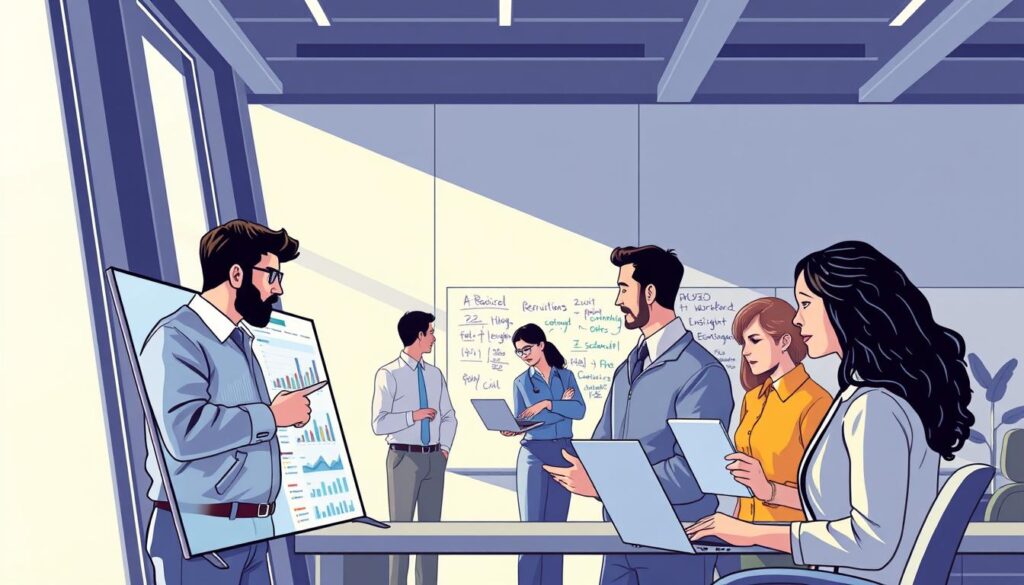
AI helps find the best candidates by sorting them out. Tools like HireVue and SeekOut make it easier to look through resumes. They help find people who are a good fit for the job.
Tools like Pymetrics use science to understand candidates better. But, humans are needed to make sure they fit well with the company. This way, AI and humans work together to find the best people.
Chatbots help with simple tasks like answering questions and setting up interviews. This makes things easier for candidates and helps them stay interested. AI also helps make the hiring process more personal and improves how companies are seen by job seekers.
Tools like LinkedIn Talent Insights help understand the job market. This information helps companies plan their hiring better. It makes sure they hire the right people at the right time.
It’s important to make sure AI doesn’t make things unfair. Companies check AI’s work to make sure it’s fair. Humans always have the last say in who gets hired.
| Recruitment Area | AI Capability | Business Impact |
|---|---|---|
| Candidate Sourcing | Semantic search, passive candidate surfacing, ranked lists | Faster pipeline creation; broader talent reach |
| Screening & Assessment | Automated CV parsing, behavioral assessments, skills matching | Reduction in screening time; improved quality-of-hire |
| Candidate Engagement | Chatbots, interview scheduling, personalized journeys | Lower drop-off; higher candidate satisfaction |
| Workforce Alignment | Predictive demand signals, integration with HR systems | Better hiring-to-need fit; informed workforce planning |
| Governance & Fairness | Bias testing, human-in-loop review, outcome monitoring | Safer deployments; measurable compliance |
Integrating AI with Existing HR Systems
Adding AI to HR systems needs a good plan. First, understand how things work now. Then, check what systems you have, like Workday and ADP. Lastly, decide what success looks like before starting the tech work.
System compatibility
Make sure the AI tools you pick work with your HR systems. Look for APIs and connectors for systems like Workday and ADP. Tools that sync data smoothly and support standard formats make things easier.
Choose between adding AI modules or using a full suite. Some tools, like Visier, add advanced analytics to big suites. Check how well each tool integrates and ask for demos to see how it works.
Data migration strategies
Begin by matching data from different systems. Make sure employee IDs and job details match up. Clean up any duplicate or wrong data to get accurate numbers.
Test small groups first. Check how it works and fix any problems before doing it for everyone. If direct connections are hard, use tools to help move data safely.
Keep everything secure and follow rules. Use strong passwords and check vendors well. Keep records of how data is changed to help with audits.
Get teams from IT, HR, and more involved early. This helps avoid problems and makes adopting new tools easier. It also makes sure the new tools fit with your overall HR plan.
For lasting success, pick tools that can grow with you. Make sure they can update easily and show how well they work. This keeps your forecasts and reports reliable and up-to-date.
Evaluating AI Solutions for Workforce Planning
Choosing the right platform is key. You need to know what you want. Look at tools for things like predicting staffing needs or matching talent.
Try out tools first. This helps you see if they really work for your team.
Key considerations for selection
- Make sure the tool fits your needs. Does it help with staffing, talent matching, or improving shift coverage?
- Check if the tool uses your data well. Ask for sample reports and data on how accurate it is.
- See if the tool works with your HR systems. It should grow with your company.
- Look for features that keep your data safe. Make sure it follows rules and keeps things fair.
- Choose a vendor with good references. Check if they have success stories with other companies.
Cost vs. benefit analysis
First, list what you’ll save. This could be time on CVs, fewer scheduling problems, or less turnover.
Use real numbers to figure out savings. For example, saving up to 75% on CV screening is a good start. Then, multiply that by how much you pay your workers to see the big picture.
| Metric | Baseline Impact | How to Measure | Notes for Procurement |
|---|---|---|---|
| CV screening time | Up to 75% reduction | Average hours per hire before and after pilot | Pilot with hiring funnel data; validate with company resumes |
| Recruiter time savings | ~36% saved | Hours spent on sourcing and screening | Use time-tracking and compare against recruiter quotas |
| Time-to-fill | Improvement varies by role | Days from req to offer acceptance | Segment by role complexity and geography |
| Retention rate | Improved with better matching | 12-month retention of hires sourced via AI | Track cohorts and control for onboarding changes |
| Forecast accuracy | Measured uplift post-implementation | Variance between forecasted and actual headcount | Require sample forecasts during proof of concept |
Start with short tests. Make sure they have clear goals like saving money or improving forecasts. Compare costs to see if it’s worth it.
Choose vendors that understand your company. This makes sure the tool works right for you. It also helps everyone get on board with new ideas.
Future Trends in AI for Workforce Planning
Companies will use new tech to plan their workforce better. They will look at skills in different places and guess who they need. Leaders will use data and rules to make smart choices.
This change will help HR plan better, not just react. It will make HR more strategic.
The Rise of Remote Work Analytics
Remote work analytics will show how teams work together. It will tell us about meetings and how productive people are. Teams will find out where important skills are and keep people engaged.
AI will link remote work to who stays and who leaves. This will help make better teams. Companies will find the right people easier and faster.
Automation in Workforce Management
Automation will do simple HR tasks like scheduling and payroll. This will free up teams to think about big plans. New tools will connect AI to everyday work.
These tools will do things like set up new employees and change shifts. They will also help plan careers and give feedback right away. It’s all about making work better for everyone.
As AI gets used more, making sure it’s fair will become more important. We will need to make sure AI is clear, fair, and follows rules.
When HR shows AI works, other parts of the company will want to use it too. This will help everyone work better together.
| Trend | Near-term Impact | Action for Leaders |
|---|---|---|
| Remote work analytics | Improved hybrid staffing and lower turnover | Run pilots to map distributed skills and collaboration hotspots |
| Automation & orchestration | Reduced administrative load and faster provisioning | Integrate orchestration tools with HRIS and payroll |
| Hyper-personalization | Individual learning paths and tailored career journeys | Test generative plans for a subset of roles; measure engagement |
| Ethical governance | Greater transparency and reduced bias risk | Adopt explainability tools and regular bias audits |
| Cross-functional rollout | Enterprise-wide efficiency gains | Build AI literacy programs and share HR case studies |
Here’s what to do: get your data ready, teach people about AI, and start small projects. Companies that start early will be ready to use AI all over their business.
Case Studies: Successful AI Implementations
Leading organizations use ai-powered tools to match talent with demand. Each example shows how they integrate AI, achieve results, and learn for the future. This helps them build a strong AI-driven workforce strategy.
Notable Companies Using AI
Workday, Oracle HCM Cloud, and ADP DataCloud help big companies by putting HR data in one place. This makes forecasting better. Visier and One Model offer tools for predicting turnover and running scenarios.
Eightfold.ai and SeekOut use deep learning to find the right talent. HireVue and Pymetrics help pick the best candidates fast. TeamSense helps frontline workers with an SMS assistant that answers questions and routes problems.
Impact Analysis on Workforce Efficiency
Companies that use these tools save a lot of time. CV screening can be up to 75% faster. Recruiters save about 36% of time scheduling interviews.
AI helps schedule workers better, reducing gaps. Teams make decisions quicker, have less downtime, and match headcount to demand better.
Strategic wins include smoother rollouts and up to 30% more productivity in HR. This comes from using AI with human oversight.
- Efficiency metrics: key indicators include screening time, scheduling time, and productivity gains.
- Operational outcomes: focus on downtime reduction, scheduling accuracy, and faster decisions.
- Strategic results: link workforce planning solutions to improved planning cycles and internal mobility.
Lessons learned include the importance of clean data, executive support, and starting with small, measurable projects. Reviewing AI decisions and following rules keeps things accurate and compliant as you grow your AI strategy.
Best Practices for Implementing AI in HR Strategies
Organizations need to use AI wisely. Start with small projects to see results fast. Look at how quickly you fill jobs, how accurate predictions are, and how happy employees are.
Training should be useful and specific. Teach HR teams to understand AI results and make good decisions. Give different training to managers and staff so everyone can use AI tools well.
Workshops help HR, IT, legal, and finance work together. They make sure everyone knows how to handle data. This makes it easier to use new software.
Training and Development for HR Teams
Make learning paths for different HR tasks. Include hands-on practice with real data. Also, train on specific vendor tools if you use them.
Have mentors for HR teams. They should learn about data and AI ethics. Keep learning short to keep skills up to date.
Continuous Improvement Techniques
Start small and then grow. Set goals and share results. Make sure AI can explain its decisions and keep records of important choices.
Listen to feedback from managers and employees. Use this to improve AI. Regularly check for bias and privacy issues to keep trust.
Always have humans involved in important decisions. Set clear rules for vendors. Demand clear explanations for big decisions.
- Define KPIs: time-to-fill, cost-per-hire, retention, accuracy of forecasts.
- Pilot metrics: time saved, accuracy gains, reduction in repetitive tickets.
- Governance: bias audits, privacy checks, transparent communication channels.
Share success stories to keep everyone excited. Use them to get more support. For advice on using AI ethically, check AI HR ethical considerations.
Conclusion: The Future of AI in Workforce Planning
AI is changing how we plan and manage work. It makes forecasting better, automates tasks, and makes work more personal. This helps HR focus on strategy, not just paperwork.
AI brings real benefits like faster hiring, smarter schedules, and keeping employees happy. These changes show AI’s value in planning workforces.
Success with AI needs good data, ethics, and training. Not many companies have a plan yet. So, making a clear plan is key.
Using AI for planning, along with tools like Visier and Workday, can help a lot. But, it’s important to focus on accuracy and following rules.
HR leaders should start by checking their data. Then, pick a key area to test AI, like hiring or analytics. Set goals to see if it works.
Training HR and others is important. Working with IT and legal helps too. Start small and grow carefully to avoid problems.
Now is the time to use AI for better workforce planning. Companies that prepare and use AI wisely will be more flexible and caring. Miloriano.com says HR teams should use AI for a better future.
FAQ
What is AI for workforce planning and how does it change HR strategy?
AI for workforce planning uses smart tech to predict staffing needs. It helps match skills to business goals and optimizes resource use. This makes HR more proactive and strategic, improving accuracy and freeing up time for talent management.
How is workforce planning defined in an AI context?
Workforce planning is about predicting staffing needs and aligning skills with business goals. AI helps by automating data tasks and predicting turnover. This way, leaders can make informed decisions.
Why is data readiness critical before deploying AI tools?
Good data is key for AI to work well. Bad data can lead to wrong forecasts. Make sure your data is clean and consistent before using AI.
What measurable metrics can AI provide for workforce planning?
AI can give insights on turnover, hiring needs, and productivity. These metrics help track KPIs like accuracy and cost savings.
What are the primary features to look for in AI-powered workforce planning tools?
Look for tools that predict turnover and hiring needs. They should process data in real-time and offer scenario modeling. Also, check for natural language interfaces and strong integration capabilities.
Which vendors are notable for predictive workforce analytics and talent matching?
Visier and One Model are known for predictive analytics. Eightfold.ai and SeekOut excel in talent matching. Workday, Oracle HCM Cloud, and ADP DataCloud offer enterprise solutions. TeamSense is great for frontline, SMS-first employee assistants.
How does AI improve recruitment and candidate screening?
AI speeds up sourcing and screening by ranking applicants. It matches job descriptions to candidate profiles. This saves time and improves hiring efficiency.
What benefits does AI bring to employee engagement and retention?
AI helps with pulse surveys and early warning systems for turnover. It provides insights for better employee experiences. Personalized onboarding and L&D pathways also enhance retention.
What are recommended first steps for HR teams starting with AI?
First, check your data readiness. Then, pick a pilot project that aligns with business goals. Measure KPIs and scale up based on results.
How should organizations manage privacy, security, and compliance when using HR AI?
Use role-based access and encryption. Do vendor checks and document data flows. Work with legal and IT to ensure compliance and explainability.
How can bias and ethical risks be mitigated in AI-driven HR tools?
Use diverse training data and run bias audits. Have human review for important decisions. Set clear policies and monitor for fairness.
What integration and migration challenges should be anticipated?
Expect issues with field mappings and data normalization. Use tools and collaborate closely to overcome these challenges.
How do organizations evaluate ROI and perform a cost vs. benefit analysis?
Measure time saved and cost savings. Use conservative estimates and factor in costs. This helps model the return on investment.
What governance frameworks are recommended for HR AI?
Implement vendor checks and encryption. Document data flows and perform bias audits. Set KPIs for accuracy and fairness.
How can HR teams overcome change resistance to AI adoption?
Communicate benefits and start with small projects. Involve stakeholders and celebrate successes. This builds trust and momentum.
Which industries see the biggest near-term gains from AI in workforce planning?
Retail, hospitality, healthcare, and manufacturing gain from AI. Tech firms benefit from forecasting specialized roles and talent marketplaces.
What outcomes have companies reported after deploying HR AI?
Companies report time savings, improved forecasts, and better staffing. They also see higher retention and productivity gains, up to 30% with GenAI.
How should organizations select between specialized AI vendors and enterprise suites?
Choose based on your needs. Specialized vendors excel in talent matching or analytics. Enterprise suites offer broader HR workflows. Evaluate integration, scalability, and governance.
How do frontline tools like TeamSense differ from broader HR platforms?
TeamSense focuses on frontline questions and uses SMS. Broader platforms like Visier or Workday offer analytics and data consolidation for strategy.
What KPIs should be monitored during and after AI pilots?
Track time saved, accuracy, and other metrics. Use these to validate pilots and guide scaling decisions.
What training and upskilling should HR teams receive for AI adoption?
Offer training on AI literacy and role-specific skills. Provide workshops for cross-functional teams to align expectations and governance.
How will remote work analytics shape future workforce planning?
Remote work analytics will show where skills exist and affect turnover. Use these insights to source remote talent and balance office footprints.
What practical mitigations reduce risk when deploying AI in HR?
Start small and ground AI answers in company documents. Maintain human oversight for critical decisions. Perform audits and build feedback loops to retrain models.
Where should HR leaders begin to capture competitive advantage with AI?
Begin with a data readiness audit and select a high-impact pilot. Upskill HR and governance teams. Partner with IT and legal to ensure accuracy and compliance.