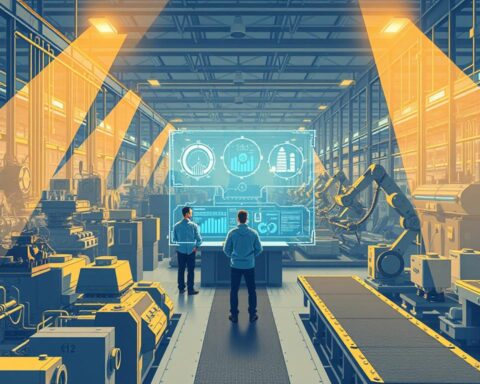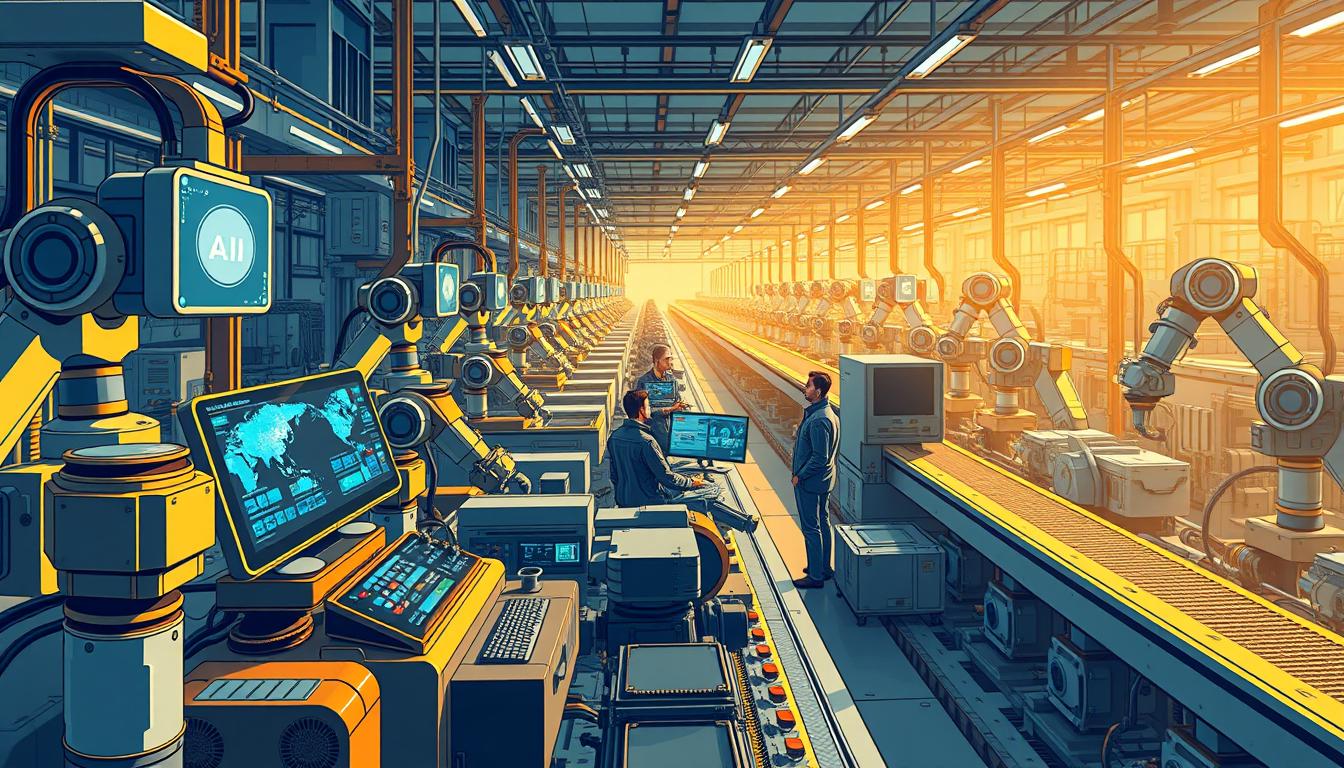
Some mornings, a factory floor feels alive. Machines hum and conveyors pulse. One failure can mess up a week’s plans.
Many leaders remember when a key machine stopped. The cost was more than parts lost; trust was lost too. That’s why AI in manufacturing is more than a trend. It solves real problems on real floors.
AI now looks at sensor data like temperature and movement. It predicts failures before they happen. This way, production keeps going.
Smart tech like machine learning and digital twins make decisions based on data. Teams can plan maintenance, cut waste, and keep production smooth. Deloitte’s research shows 86% of leaders think these smart factory tools will make them more competitive in five years.
AI also makes things more precise and consistent. For example, it helps industrial blenders mix things evenly. Vision systems catch defects early. AI brings big wins: lower costs, faster production, and better quality.
When used right, AI does routine tasks fast. It helps make quick decisions and keeps improving things.
Key Takeaways
- AI in manufacturing processes prevents unplanned downtime through predictive maintenance.
- Smart manufacturing technologies enable real-time optimization and autonomous adjustments.
- Artificial intelligence in manufacturing improves product consistency and reduces waste.
- AI optimization for factories supports faster decision-making and cost savings.
- Executive surveys show wide industry confidence in intelligent factory technologies.
Introduction to AI in Manufacturing Processes
The manufacturing floor is changing. It’s moving from manual rules to using data. Leaders at General Motors and Siemens say AI helps solve problems faster.
This change lets staff focus on improving designs and processes. It’s a big step forward.
Overview of AI Technologies
AI uses tools like machine learning and computer vision. These tools work with data from sensors and IoT devices. They create digital twins that show how production lines work.
Predictive maintenance looks at vibration and temperature trends. It predicts when machines might fail. This helps avoid downtime.
Quality teams use data to find problems right away. They have tools that check for issues and reduce false alarms. Robots work with humans on tasks that need repetition.
A guide from Cisco talks about how AI uses sensor data. It explains how AI helps with maintenance and quality checks. You can read more about AI in manufacturing here.
Importance in Modern Manufacturing
AI makes manufacturing more precise and reduces waste. Companies that use AI for production have shorter lead times and fewer mistakes. AI helps manage inventory and meet demand.
Data analytics make supply chains stronger. AI helps design products faster and gives engineers new ideas. This means products get to market quicker and operations can grow with demand.
Key Benefits of AI in Manufacturing
AI changes factory floors by making data useful. It helps see what’s happening better, makes things faster, and cuts down on unexpected stops. This is thanks to smart use of automation and AI in factories.
Enhanced Efficiency
Predictive maintenance stops surprises by predicting problems. This keeps machines running longer and saves money on repairs. AI helps plan work shifts and skills to meet demand, making more with less.
AI also makes sure materials move smoothly and schedules change fast. Digital twins let teams test changes safely before they happen. This makes improving processes faster and safer.
Improved Quality Control
AI finds defects quickly with computer vision and learning. This means less waste and more consistent products. Systems watch for small problems and fix them right away.
AI helps make adjustments to production based on feedback. This reduces mistakes and keeps quality high. It also helps improve products over time.
Cost Reduction
Less downtime and waste save money. AI helps use less energy by making smart changes and watching usage. This saves money without cutting production.
AI also predicts inventory needs, avoiding too much or too little stock. For more on AI in manufacturing, check out this guide: AI in manufacturing.
| Benefit | How AI Delivers It | Impact |
|---|---|---|
| Uptime | Predictive maintenance, anomaly detection | Fewer stoppages; higher throughput |
| Quality | Computer vision, real-time quality monitoring | Lower defect rates; consistent output |
| Labor Efficiency | AI-driven scheduling, task automation | Optimized staff utilization; reduced fatigue |
| Inventory | Demand forecasting, automated replenishment | Less capital tied in stock; fewer shortages |
| Energy | Usage monitoring, adaptive control systems | Lower energy bills; smaller carbon footprint |
| Cost | Waste reduction, process optimization | Measurable cost reduction in manufacturing |
Applications of AI in the Manufacturing Sector
AI makes factories and logistics better. Companies using AI find problems faster, move parts smarter, and make products better. Here are some ways AI helps a lot.
Predictive Maintenance
Predictive maintenance uses sensors and weather data to predict when machines will break. This way, repairs can be planned ahead, reducing downtime and making things safer. It also helps machines last longer and cuts down on emergency repairs.
Supply Chain Optimization
AI helps predict demand, manage stock, and buy parts better than old systems. It uses digital twins to test how supply chains work under different conditions. This helps food and car makers keep things running smoothly.
Quality Assurance Systems
AI checks products fast and finds defects better than people. It connects with other systems to fix problems quickly. AI also makes checklists and guides for fixing issues, helping things move faster.
| Application | Primary Inputs | Key Benefits | Example Use |
|---|---|---|---|
| Predictive Maintenance | Sensors, maintenance logs, weather data | Less downtime, lower repair costs, safer operations | Assembly-robot monitoring to prevent failures |
| Supply Chain Optimization | Sales history, market signals, logistics data | Reduced inventory, improved fill rates, faster response | Seasonal demand forecasting for food producers |
| Quality Assurance Systems | High-speed cameras, inspection records, operator feedback | Higher defect detection, consistent inspections, faster corrective action | Vision-based defect scanning in electronics lines |
| Cross-Application Insight | Data analytics for production, integrated dashboards | Unified view of performance, actionable KPIs | Real-time dashboards linking uptime, quality, and inventory |
AI Technologies Transforming Manufacturing
Manufacturing is moving from old ways to new, data-based systems. New algorithms, robots, and devices help teams work better. These tools make things more efficient and better quality.
Machine Learning Algorithms
Machine learning helps predict when machines will break and when to fix them. It uses past data and sensor info to make smart guesses. This cuts down on unexpected stops and makes machines last longer.
Deep learning and computer vision help spot problems fast, even before humans do. They also help make new designs quickly. General Motors and Siemens say these tools help find problems quicker.
Want to know more about AI in making things? Check out this quick guide: AI in manufacturing solutions.
Robotics and Automation
Now, robots work with people, not just replace them. They do things like assemble parts and lift heavy stuff. This lets skilled workers do more important tasks.
Robots can adjust to small changes thanks to computer vision and planning. Amazon and Tesla use robots to pack and assemble cars. This makes things faster and more consistent.
Internet of Things (IoT) Integration
IoT connects sensors and machines to AI systems. This gives real-time data for making smart choices. It helps track energy use and keep machines running well.
IoT devices give AI the info it needs to make production better. When sensors, clouds, and machines talk to each other, teams can see everything clearly.
| Technology | Primary Benefit | Typical Use Case |
|---|---|---|
| Machine learning for production | Predicts failures and optimizes throughput | Predictive maintenance, process optimization |
| Robotics in manufacturing | Automates repetitive and hazardous tasks | Assembly, welding, picking/packing |
| Internet of Things integration | Provides real-time monitoring and control | Digital twins, energy management, condition monitoring |
| Smart manufacturing technologies | Combines AI, robotics, and IoT for system-wide gains | End-to-end production optimization and quality assurance |
Implementing AI in Manufacturing Processes
First, set clear goals like cutting downtime, improving yield, and better inventory control. Match each problem with an AI solution, like predictive maintenance or quality checks. Cloud platforms help save money and test ideas quickly, while keeping systems working together.
Assessing Business Needs
Focus on problems that offer clear benefits. Get input from production, maintenance, and supply chain teams. Set goals that help digital transformation and get support from leaders.
Data Collection and Management
Good data is key for AI. Collect data from PLCs, sensors, and ERP systems. Make sure it’s clean and organized for AI to learn from.
Digital twins are great for testing changes safely before they go live.
Pilot Projects and Scaling Up
Start with small AI projects to test ideas fast. Pick one area or asset, set goals, and team up across departments. Use cloud computing to start training models, then improve them based on results.
Once pilots succeed, plan to roll out AI in stages. Work with experts if needed. Remember to budget for development, testing, and upkeep. Train staff to use AI and keep an eye on how it’s doing.
Challenges in Adopting AI Solutions
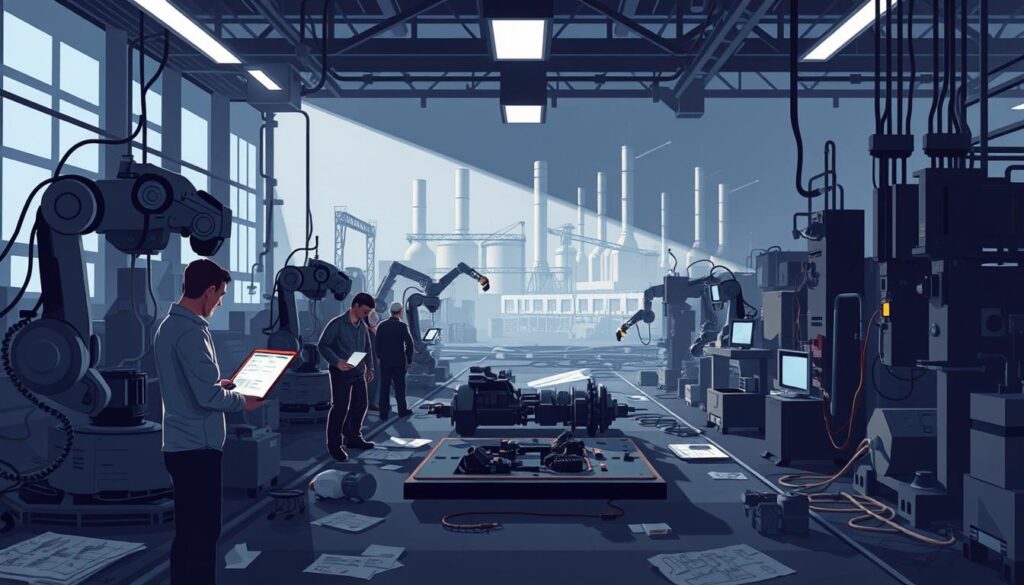
AI is promising but also has big challenges. Many factories struggle with data, talent, and money. A smart plan can turn these problems into smaller tasks and clear wins.
Workforce Adaptation
There’s a big need for AI and data science skills. Old ways of doing things can make it hard for staff to change. To help, start with small steps, work with vendors, and keep learning.
By training both operators and engineers, you can make a team that works well together. Start with small projects that show clear benefits. This helps everyone get on board.
Data Security and Privacy
More connected systems mean more risks. It’s important to keep data safe and protect secrets. Use strong encryption and control who can see what.
Good management is key to avoiding data problems. A recent study shows how bad management can hurt AI efforts: the challenges preventing AI adoption.
High Initial Costs
Starting with AI can be very expensive. Look for cloud options that grow with you. Start small to see if it’s worth it.
Integrate systems bit by bit and use APIs for old equipment. Small tests can show if AI is worth the big investment.
To overcome these hurdles, use a mix of tech and people solutions. Make sure data is well-managed, keep systems safe, train your team, and plan your spending carefully. This way, you can move from testing to using AI in your factory.
Case Studies of Successful AI Implementation
The manufacturing world is now seeing real results from AI. Studies show better uptime, quality, and cost control. Leaders are more confident in AI after seeing it work well in pilots.
General Motors’ AI initiatives
General Motors uses AI for planning, quality checks, and robotics. They use machine learning to find defects early and know when robots need fixing. This has cut down on unplanned stops and helped find quality issues quicker.
Siemens’ digital manufacturing work
Siemens uses digital twins, IoT sensors, and AI to improve production. They link PLCs and edge analytics for quick adjustments. This setup boosts production and cuts down on problems while keeping robots running smoothly.
Honeywell’s AI-driven production
Honeywell uses AI for better processes and safety. They apply AI to energy, finding oddities, and control loops to reduce waste and improve consistency. Plants using these systems have smoother operations and meet specs better.
These stories show a key point: AI and robotics together bring real benefits. Companies that use AI for maintenance, quality, and control see fewer problems and can grow more easily.
Measuring the Impact of AI on Manufacturing
Turning innovation into value is key. Firms that measure AI impact find better ways to use it. They make smart choices on how to use models and improve processes.
Key Performance Indicators
Start with KPIs that match your goals. Look at downtime, how often things break, and how many defects there are. Also, check maintenance costs and safety.
Quality metrics show how good you are at catching defects. Look at how fast you can get orders out and how accurate you are. These show how productive you are.
Return on Investment Analysis
Do an ROI analysis for AI. Look at savings in labor, maintenance, energy, and waste. Also, consider the cost of keeping models up to date.
Include soft benefits like better employee performance and happier customers. This shows the full value of AI.
| Metric | What to Measure | Why It Matters |
|---|---|---|
| Downtime Reduction | Hours per month lost to unplanned stops | Directly affects throughput and revenue |
| MTBF | Average time between equipment failures | Informs maintenance scheduling and spare parts planning |
| Defect Rate / Yield | Percentage of units meeting quality specs | Drives cost of rework and customer returns |
| Energy & Waste | kWh per unit and scrap percentage | Impacts operating margins and sustainability goals |
| Inventory Turnover | Turns per year and days of stock | Reflects supply chain efficiency and capital use |
| Time-to-Market | Weeks from design to production | Measures impact of generative design and automation |
| Employee Productivity | Output per labor hour | Captures human–AI collaboration gains |
Use data analytics to update KPIs quickly. This helps teams make better decisions fast.
Always keep measuring. Start with a baseline, run pilots, and compare results. Update your ROI analysis often. This keeps your measurements relevant and useful.
Future Trends in AI and Manufacturing
The world of making things is changing fast. Smart systems are becoming common on factory floors. Big names like General Motors and Siemens are leading the way with new ideas.
Increased automation is coming. Robots will work with people to do hard or boring jobs. This will let skilled workers focus on important tasks.
Factories will soon use special “factory in a box” units. These units have AI, sensors, and analytics. They help make things faster and more flexible.
AI-driven design is making things faster and more creative. Tools like Autodesk and Siemens NX help make new designs quickly. This means we can make things just for you, fast.
AI and simulation are making it easier to make new things. They help find the best designs for weight, strength, or cost. This makes making things go smoothly from start to finish.
sustainable manufacturing practices are becoming important. AI helps use less energy and plan better. This makes factories greener and cuts down on waste.
Circular manufacturing is also growing. AI helps recycle better and track materials. This makes supply chains stronger and more green.
Here’s a quick look at some trends, what they mean, and examples in different fields.
| Trend | Primary Impact | Representative Technologies | Example Industry Use |
|---|---|---|---|
| Increased automation | Higher throughput; lower labor risk | Cobots, autonomous AGVs, PLC integration | Automotive final assembly with collaborative robots |
| AI-driven design | Faster prototyping; optimized performance | Generative design, simulation, CAD integration | Aerospace lightweight structural components |
| Sustainable manufacturing practices | Reduced energy use; improved material lifecycle | ML energy managers, material tracking, circularity platforms | Electronics firms cutting waste and recycling PCBs |
| Localized, modular production | Faster market response; lower logistics costs | Containerized production units, edge analytics | On-demand spare parts production near customers |
| Supply chain resilience | Better risk forecasting; fewer interruptions | Scenario modeling, demand-sensing AI | Food processors managing supplier variability |
Regulatory and Ethical Considerations
Companies using AI face many rules and choices. They need clear guidelines to avoid trouble and build trust. This helps them stay legal and fair.
Compliance with Industry Standards
Businesses must follow rules like ISO quality management. They use tools to keep records and pass audits fast. AI helps spot problems with data privacy.
Contracts must be clear about data use and who owns it. Testing models and keeping data safe are also key. This protects secrets and keeps systems running smoothly.
Ethical Use of AI in Manufacturing
AI must be fair and safe for workers. Companies check models to make sure they’re right. This makes sure decisions are good and fair.
Training workers helps them keep their jobs. Deals with vendors should say who’s responsible for AI choices. Regular checks and talks with people help keep AI in line with company values.
Training and Upskilling for AI Integration
Manufacturers need to mix technology with people. A good learning plan keeps production lines running smoothly. It also helps new tools work well.
Employee Training Programs
Begin with training that fits each role. Teach technicians, engineers, and operators how to use AI systems. Use hands-on labs and simulation exercises to build skills.
Focus on short lessons about data, model outputs, and fixing problems. Mix classroom learning with on-the-job training. This helps solidify what they learn.
Offer certification tracks through Coursera or local universities. This shows progress and boosts confidence on the job.
Building an AI-Ready Workforce
Use AI to find skill gaps and create training plans. Start with basic digital skills. Then move to analytics, understanding models, and safe automation.
Make it clear how training can lead to new career paths. Work with community colleges and companies like Siemens. This helps fill talent gaps and speeds up adapting to AI.
Make learning a part of job goals. Investing in training for AI makes teams stronger, safer, and more ready for new systems.
Conclusion: The Future of AI in Manufacturing
AI is changing how we make things. It helps us fix problems before they start. This means less downtime and better products.
Long-Term Industry Implications
Factories will get smarter over time. They’ll make custom products easily and design things faster. They’ll also use digital twins to manage supply chains.
This makes getting products to market faster. It also helps companies be more sustainable. This builds strong, lasting success.
Embracing Change for Competitive Advantage
Starting small and learning as you go is key. Use good data and cloud technology. Keep training your team.
Check your progress with clear goals. This way, AI helps save money and makes things faster. Companies that do this stay ahead of the game.
FAQ
What is AI in manufacturing and why does it matter?
AI in manufacturing uses smart tech to analyze data and automate tasks. It helps make decisions in real time. This makes factories more efficient and products better.
Deloitte says 86% of factory leaders think AI will make them more competitive soon.
What core AI technologies power modern factory systems?
Modern factories use predictive maintenance and quality monitoring. They also use machine learning and computer vision. Robotics, IoT, and digital twins are key too.
Generative AI helps with making documents and prototypes. These technologies work together to improve factory performance.
How does predictive maintenance work and what benefits does it deliver?
Predictive maintenance uses sensors and data to predict when machines will fail. This way, factories can fix things before they break down.
This leads to less downtime, longer machine life, and lower costs. It also makes products more consistent.
How does AI improve quality control on the production line?
AI uses computer vision to check products for defects. It’s more accurate than humans. This helps factories make better products.
Quality management systems tie this to audit trails and actions. Digital twins let teams test changes virtually.
What operational cost reductions can manufacturers expect from AI?
AI helps factories save money by reducing downtime and waste. It also improves energy use and inventory management. This leads to lower costs in maintenance, materials, and labor.
Which manufacturing applications most commonly use AI?
AI is used for predictive maintenance, supply chain optimization, and quality assurance. It’s also used for labor scheduling, energy management, and automated inspection. Robotics and digital twins are used for assembly and logistics.
How do digital twins and IoT work together with AI?
IoT sensors feed data to digital twins, which are virtual models of equipment or lines. AI models then analyze this data to predict faults and suggest improvements. This helps with safer testing and faster troubleshooting.
What steps should a manufacturer follow to implement AI successfully?
First, identify areas where AI can help. Make sure data is clean and well-organized. Start with small pilot projects to test AI.
Use cloud platforms to save money and integrate with legacy systems. Scale up AI gradually and keep monitoring its performance.
What are the main barriers to AI adoption in manufacturing?
High costs, data management, and skills shortages are big hurdles. Change management and cybersecurity risks are also concerns. To overcome these, start small, partner with vendors, and upskill employees.
How should manufacturers measure AI impact and ROI?
Track KPIs like downtime, quality, and maintenance costs. Include supply chain metrics too. Analyze these to see how AI is saving money and improving efficiency.
Can you give real company examples of AI in manufacturing?
Siemens uses digital twins and AI to optimize production. General Motors applies AI in production planning and quality. Honeywell uses AI for process optimization and safety.
These examples show how AI improves factory efficiency and productivity.
What role does generative AI play in manufacturing?
Generative AI supports prototyping, design, and documentation. It’s a growing part of AI in manufacturing. It helps speed up design and automate tasks.
How can a company build an AI‑ready data foundation?
Start by checking your sensors and data sources. Standardize formats and clean up old data. Set up data governance and use secure cloud storage.
Good data quality is key for AI and digital twins to work well.
What is the recommended timeline and budgeting approach for AI projects?
Start with quick wins in 3–6 months. Then, scale up in 12–24 months. Budget for development, cloud services, and training.
Plan for ROI milestones and set aside money for security and change management.
How do manufacturers choose between on‑premises and cloud AI solutions?
Choose cloud for scalability and lower costs. On-premises is best for local data and strict security. Hybrid solutions offer the best of both worlds.
What governance should be in place for AI model lifecycle management?
Create procedures for model validation and versioning. Set up schedules for retraining and monitoring. Define data and model ownership and maintain documentation.
Use anomaly detection to catch model errors.
How does AI improve supply chain resilience?
AI forecasts demand and optimizes inventory. It automates procurement decisions. Digital twins simulate disruptions and test solutions.
This reduces stockouts and improves supply chain efficiency.
What metrics show improved employee outcomes from AI adoption?
Look at injury rates, productivity, and training completion. Upskilling and hands-on labs show workforce readiness.
How should manufacturers evaluate AI vendors and partners?
Check vendor expertise, references, and integration capabilities. Look at data governance and security practices. Choose partners for clear SLAs and model validation.
What role do standards and industry bodies play in AI adoption?
Standards and bodies provide guidance on safety and interoperability. They help create benchmarks for model validation and cybersecurity. This reduces vendor lock-in and speeds up trusted deployment.
How often should models be retrained and validated?
Retrain schedules depend on data and process changes. Many models need monthly or quarterly updates. Continuous monitoring and alerts for drift are key.
Can small and mid‑sized manufacturers benefit from AI, or is it only for large enterprises?
Small and mid-sized manufacturers can benefit from AI. Cloud platforms and focused pilots make it accessible. AI tools for quality and maintenance are available for smaller budgets.
What immediate KPIs should a pilot target to demonstrate value?
Focus on reducing downtime, defects, and energy use. Improve first-pass yield and mean time to repair. Early wins build momentum for wider adoption.
How does AI affect regulatory compliance and audits?
AI can streamline compliance by generating audit trails and automating documentation. But, ensure data integrity and model explainability. Proper access controls are also important.
What is the strategic roadmap for long‑term AI success?
Start by identifying pain points and setting up data governance. Run validated pilots and invest in training. Build scalable architectures and track KPIs.
Refine models and plan for ongoing maintenance and security to keep the competitive edge.