When a bill comes, it’s not just math. It’s a choice between cost, comfort, and doing the right thing. Many look for smarter ways to save energy. AI in energy efficiency offers a way to do this with tools that learn and save energy.
Studies by the IEA and others show AI helps save energy. It makes power plants run better and cuts down on mobile network use. This means big savings for businesses and the planet.
This article is your guide to using AI to save energy. It shows how AI cuts energy use and talks about the challenges. You’ll get tips and examples to make saving energy easier and more effective.
Key Takeaways
- AI enables measurable reductions in energy use across power plants, grids, and industry.
- Artificial intelligence for energy conservation turns operational data into cost savings.
- Data-driven decisions for energy saving improve uptime and lower emissions.
- Adoption barriers include regulation, interoperability, and skills gaps.
- Real-world projects demonstrate savings from incremental to substantial—making adoption a pragmatic choice.
Understanding Energy Efficiency and Its Importance
Energy systems are getting more complex. They are becoming more electrified, digitalized, connected, and decentralized. This complexity makes it important to have clear metrics and make quick decisions.
Smart tools can help. They turn data into steps to reduce fuel use, lower emissions, and improve reliability. This is true for buildings, grids, and industry.
What is Energy Efficiency?
Energy efficiency means using less energy to get the same service. For data centers, it means the same work with less cooling. For factories, it means the same production with less energy.
The key is to measure, control, and keep improving. This is how efficiency works.
The Role of Energy Efficiency in Sustainability
Efficiency helps reduce emissions and eases the load on the grid. When buildings and factories use energy wisely, the grid works better. This makes it easier for renewables to join in.
Accurate weather forecasts and predictive controls help plan and operate better. This is true across different sectors.
Economic Benefits of Energy Efficiency
Better efficiency means lower costs and higher profits. The International Energy Agency says there’s a lot of savings in operations and maintenance. There are also clear gains in light industry.
Investments in efficiency often pay back quickly. They also make systems more resilient against price changes.
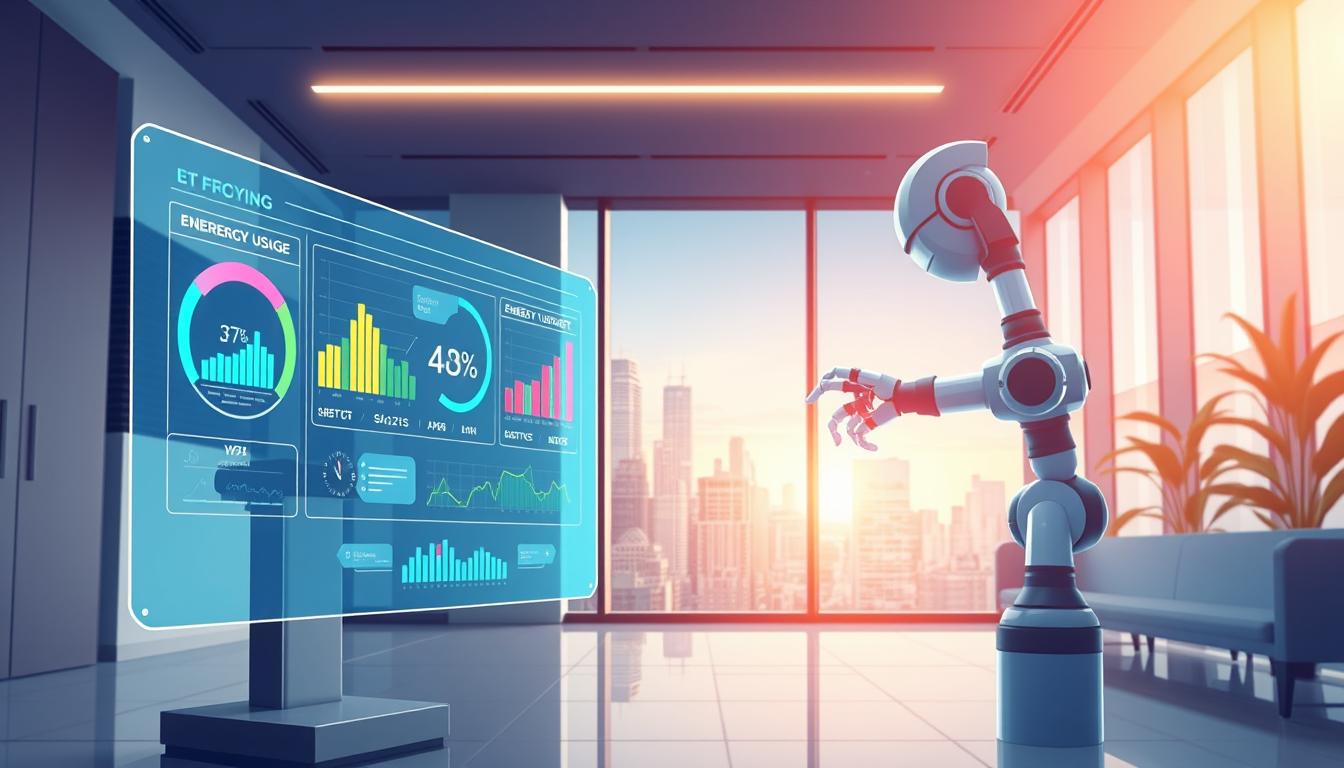
Modern methods use ai and smart technology for power efficiency. They turn monitoring into action. Advanced analytics help find waste, schedule loads, and tune systems to demand patterns without losing performance.
How AI Technology Impacts Energy Usage
The energy sector is changing. It’s moving from fixing problems after they happen to controlling things before they start. Machine learning helps predict demand and find ways to save energy. Digital twins and sensors let us test ideas without real-world risks.
AI looks at lots of data from sensors and systems. It finds patterns we can’t see. This leads to less waste and better use of clean energy.
AI Algorithms in Energy Management
AI uses different models for different tasks. It predicts demand and finds problems with equipment. This helps save energy and use more clean energy.
AI also makes control systems better in real time. It helps balance energy supply and demand. This is good for the grid and for industries that use a lot of energy.
Real-Time Data Analysis for Enhanced Efficiency
Real-time data helps make quick, smart choices about energy. Streaming platforms give AI the data it needs fast. This helps shift energy use to cheaper, cleaner times.
For example, data centers and telecom operators use AI to save energy. They make big machines use less power when it’s not busy. This saves money and makes things last longer.
| Mechanism | Primary Benefit | Representative Impact |
|---|---|---|
| Demand forecasting (time-series ML) | Reduced overproduction | Up to 10% lower industrial energy use in pilot deployments |
| Predictive maintenance (anomaly detection) | Fewer unplanned outages | Lower downtime and maintenance cost |
| Digital twins with scenario runs | Risk-free optimization | Safer rollouts and faster tuning of renewables |
| Real-time load balancing | Improved grid stability | Enables additional transmission capacity and demand response |
| Edge inference in data centers | Lower operational energy | Reduced cooling and compute costs through efficient models |
When we use advanced analytics and clean data, we get better results. Planners see clear plans and operators get important alerts. This helps reach energy goals faster.
But, we need good data, rules, and skilled people. Companies that invest in sensors and AI get better results. The right mix of AI, digital twins, and people makes data useful for saving energy.
Applications of AI in Residential Energy Savings
The home is now a place for AI to help save energy. Small devices and cloud platforms connect many things. They help cut down on waste.
People see lower bills and easier ways to help the grid. This is thanks to AI.
Smart Thermostats: Learning User Patterns
Smart thermostats from Nest and Ecobee learn how we live. They use machine learning to adjust the temperature. This is based on room sensors, past settings, and weather.
When we use them smartly, they only work when needed. This cuts down on energy use. It also means less wear and tear on the system.
Energy Consumption Monitoring Systems
Home energy monitors track how much energy we use. They use AI to understand this better. This helps find ways to use less energy.
These systems show us when we use too much energy. They help us plan better. They also help us join in with the grid’s efforts to save energy.
| Feature | Residential Benefit | Typical Outcome |
|---|---|---|
| Adaptive HVAC control | Comfort with lower runtime | 10–20% heating/cooling savings |
| Occupancy-based zoning | Heat or cool only occupied rooms | Reduced energy waste; smaller bills |
| Home energy monitoring | Identify inefficient devices | Faster payback on upgrades |
| EV charging optimization | Lower charging cost; grid-friendly timing | Shifted load away from peaks |
| Demand response participation | Incentives and grid support | Revenue or bill credits for homeowners |
Using AI to save energy at home doesn’t mean big changes. Adding smart sensors and thermostats makes a big difference. It’s a step towards a greener home.
AI Solutions for Commercial Energy Efficiency
The commercial sector gets big benefits from using artificial intelligence for energy saving. It works with building systems and operations. Big data from meters and sensors helps find problems and fix them.
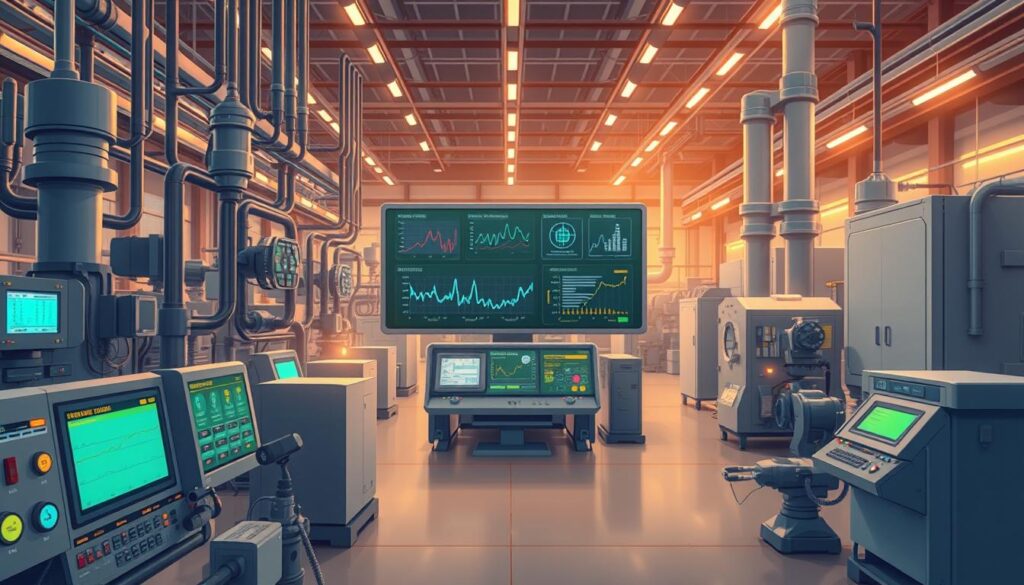
Predictive maintenance in HVAC systems uses machine learning. It predicts when things might break. This way, repairs are done before they’re needed, saving time and money.
Digital twins are like virtual models of HVAC systems. They let teams test and improve without affecting people. This way, they can keep buildings comfortable while saving energy.
AI-driven energy audits are fast and accurate. They help decide which upgrades to do first. This makes it easier to get funding for energy-saving projects.
Studies show machine learning can cut energy use by up to ten percent. Companies like CBRE and JLL use this to plan better. They can see how much money they’ll save.
Now, there are tools that help make buildings more efficient. They use data to adjust how buildings work. This makes buildings use less energy over time.
Teams can start small and grow their efforts. They can start by measuring energy use and then add more sensors. This way, they can see how well their efforts are working.
When companies plan with sustainability in mind, AI helps a lot. It leads to using less energy and making better choices. This makes buildings work better and saves money.
Innovations in AI for Renewable Energy Integration
Renewable systems are getting smarter with new algorithms and more data. The IEA and industry leaders have made big strides. They’ve improved forecasting, grid controls, and sensor networks.
This lets solar and wind power play a bigger role in our energy systems. And it’s all done without increasing costs. These advances help make operations smarter and guide investments better.
Distributed sensing and analytics at the plant level spot problems fast. This includes faults, soiling, and shading. Operators use this info to clean panels better and adjust their tilt.
This boosts the energy output of solar panels. It’s all about using AI to make energy use more efficient.
For short-term forecasts, AI uses data from satellites, turbines, and weather stations. It combines these to make accurate predictions. This reduces waste and lets grid operators use more renewable energy.
Digital twins and advanced analytics help plan projects better. Teams can test ideas in a virtual world before spending money. This makes projects safer and faster to start.
Wind forecasting with AI helps find the best places for wind farms. It also improves how wind farms work together. This makes energy dispatch smoother and reduces emergencies.
Solar optimization at the module level uses AI to find and fix problems. It guides robots to clean panels and schedules maintenance. Over time, this increases the energy made by solar panels.
Better battery dispatch comes from accurate forecasts and advanced analytics. This reduces unnecessary battery use and tightens power reserves. It also lowers costs and helps batteries last longer.
The table below shows how AI helps in different ways. It lists the benefits and what teams can expect.
| AI Approach | Primary Benefit | Practical Output |
|---|---|---|
| Short-term ML Forecasting | Reduced curtailment and reserve needs | 30–60 minute solar/wind output predictions; improved dispatch schedules |
| Panel-level Analytics | Higher yield and lower downtime | Module fault alerts; optimized cleaning and maintenance plans |
| Digital Twins | Risk reduction and design validation | Scenario simulations for siting, storage sizing, and grid interactions |
| Grid-aware Control Systems | Better balancing of supply and demand | Real-time dispatch adjustments; reduced transmission bottlenecks |
| Integrated Sensor Networks | Finer operational insight | High-resolution performance maps; localized anomaly detection |
Challenges and Considerations in AI Implementation
AI can make grids smarter and bills lower. But, there are real barriers to using it. People need to think about data rules, costs, and tech readiness for energy-saving projects.
There are worries about data privacy as systems collect detailed usage info. AI needs access to meter data, how people use spaces, and building management systems. It’s important to protect data, control who sees it, and get clear consent.
Getting systems to work together is hard in many places. The International Energy Agency says rules, data access, and skills are big problems. Working together and using open platforms can help.
Starting a project can be expensive. Costs include buying hardware, software, training staff, and integrating systems. Small businesses often find it hard to pay for these costs, even though they save money in the long run.
When planning, think about the total cost, how much energy you’ll save, and any help you can get. For advice, look at reports from places like EY on AI and sustainability.
Good management means looking after data safety, knowing where data comes from, and making sure vendors do their job. Make sure contracts are clear about data use, what to do in case of a breach, and when to update models. Getting help from experts can also speed up progress.
Starting small is a good idea. Begin with projects like fixing things before they break, moving energy use to off-peak hours, or controlling lights. These small steps can show how AI can save money and help the environment.
Future Trends of AI in Energy Efficiency
The next decade will bring big changes to energy systems. We’ll see more compute power, smarter grids, and more sensors. AI in energy will become a key part of our systems.
New devices and methods will help in material science and storage. Machine learning will help make renewable energy cheaper and better. This will give utilities and makers new options.
Emerging AI Technologies in Energy
We’ll see more AI models made just for energy tasks. These models will use less energy but work well. Startups and labs are making these models smaller and cheaper.
Open-source tools and shared data will help AI grow faster. There’s room for more AI in energy. Working together will make AI solutions better and faster.
The Role of AI during Energy Crises
AI is great at finding patterns, even in tough times. It can help predict demand, use resources wisely, and manage load shedding. AI is already helping in big ways.
Policy, standards, and training will shape AI’s growth. Companies that work together and plan for the future will get the most from AI. For more on AI in energy, check out IBM’s analysis and Green AI research.
Wider digital infrastructure and clear rules will speed up AI’s growth. When standards match practical tools, AI will help us save money and be more resilient.
Case Studies: Successful AI Implementations
Real-world examples show how AI in energy efficiency works. The International Energy Agency talks about early use in oil, gas, and power. Automation and software make big datasets.
Companies and research groups use these data to save energy and money.
Large Corporations Leading the Way
Big companies get amazing results. NVIDIA makes new hardware that uses less power than old computers. This shows how smart tech can save a lot of energy.
Studies say AI can save up to USD 110 billion a year by 2035. Battery factories and plant improvements give lots of data. Companies use this data to work better and waste less.
Community-Level AI Projects
Projects with many groups show big changes. The AI4Green project, with KTH, Orange, and others, cut mobile network energy by 30%. They used digital twins and shared data.
Community projects got help from people and government funding. They show how to save energy by sharing data and working together.
Studies at all levels show the same thing. Good data, smart models, and everyone working together are key. This way, AI in energy efficiency can make big changes. It shows how smart tech can help us all.
How to Get Started with AI in Your Energy Strategy
Start by doing an energy audit. This will show how much energy you use. It also checks if your systems are ready for AI.
The International Energy Agency says you need good digital tools and data. Small steps like fixing HVAC or making data centers better can help a lot.
Assessing Your Energy Needs
Look at your systems and pick the most important ones. Check if you have the right sensors and internet. Also, think about data privacy and how different systems work together.
Use basic numbers to see if new ideas work. This helps prove that saving energy is real.
Choosing the Right AI Tools and Partners
Find tools and partners that fit your needs and budget. There are many options, like open-source or managed services. Use digital twins and real data for training.
Look for grants to help pay for tests. Start small, track how well it works, and keep it safe. When it’s good, grow it to more places.
FAQ
What is energy efficiency and why does it matter?
Energy efficiency means using less energy to do the same things. It’s important because it saves money, cuts down on pollution, and makes things work better. It helps businesses and utilities save money and avoid big expenses.
How does AI change traditional energy-efficiency approaches?
AI makes energy use smarter. It uses big data to predict needs, find problems, and fix them fast. This way, energy use gets better all the time, not just in big checks.
What AI algorithms are commonly used for energy management?
There are many AI tools for energy. Some find problems, others predict what will happen, and some control things. They all help make energy use better.
How does real-time data analysis improve efficiency?
Real-time data helps find and fix problems fast. It makes energy use better by balancing loads and fixing things before they break. This saves energy and keeps things running smoothly.
How do smart thermostats and learning controls save energy at home?
Smart thermostats learn what you like and adjust to save energy. They avoid wasting heat or cool air. When many homes use them together, it helps everyone save money.
What role do energy consumption monitoring systems play in residential savings?
Monitoring systems show how much energy you use and give tips to save. They find high-energy appliances and help you use less. They also help with electric cars and solar panels.
How can AI enable predictive maintenance for commercial HVAC systems?
AI predicts when HVAC systems might break down. This way, maintenance can fix problems before they happen. It saves money and makes systems last longer.
What is an AI-driven energy audit and how is it different from a traditional audit?
AI audits use computers to find ways to save energy. They look at data and make plans to save more. This makes audits faster and more accurate than old ways.
How does AI optimise solar panel performance?
AI looks at solar panel data and weather to make them work better. It finds problems and suggests fixes. This makes solar panels more efficient and saves money.
Can AI improve wind energy forecasting and turbine operation?
Yes. AI uses weather data and sensor info to predict wind better. This helps turbines work more efficiently and saves energy.
What are the chief data privacy concerns when deploying AI in energy systems?
Using AI in energy raises privacy worries. It’s important to protect data and follow rules. This keeps information safe and follows the law.
How should organisations evaluate initial investment and expected ROI for AI projects?
Start with an energy audit to see where you can save. Pick projects that have proven results. Calculate costs and savings to see if it’s worth it.
Which emerging AI technologies will shape energy efficiency in the next decade?
New AI tools will make energy use better. Expect more use of digital twins and edge learning. These will help find new ways to save energy.
How can AI help during energy crises or peak events?
AI helps manage energy during crises. It predicts needs, manages resources, and adjusts controls. This prevents outages and saves money.
Which large corporations are leading AI adoption in energy efficiency?
Big companies are using AI to save energy. They use it in grids, industries, and data centers. This shows how AI can help big.
Are there community-level AI projects that demonstrate measurable savings?
Yes. Groups have shown AI can save a lot of energy. They use digital twins and data to find ways to save. This shows AI can help communities too.
What practical first steps should organisations take to adopt AI for energy efficiency?
Start with an energy audit and check if you’re ready for AI. Pick simple projects to begin with. Make sure data is safe and you have a plan to measure success.
How important is collaboration and open data in scaling AI energy solutions?
Working together is key. Sharing data and tools helps everyone. This makes AI solutions better and faster to use.
What barriers commonly slow AI adoption in energy, and how can organisations mitigate them?
Many things slow down AI adoption. Rules, data, and skills are big ones. Start small, use services, train staff, and talk to regulators to overcome these.
How do organisations prioritise AI use cases for maximum energy impact?
Focus on where you have data and can measure savings. Use cases like predictive maintenance and HVAC control are good places to start. They show quick results.
Can small and medium-sized enterprises (SMEs) benefit from AI for energy efficiency?
Yes. SMEs can use cloud services and sensors to start small. Programs and incentives help them take the first steps without big risks.
How should organisations address cybersecurity when deploying AI in energy systems?
Cybersecurity is very important. Use strong networks, encrypt data, and manage access. Have a plan for when things go wrong to keep everything safe.
What metrics should be used to measure AI-driven energy savings?
Use kWh saved, peak demand, and cost savings to measure. Also, look at how long things last and the return on investment. This shows how well AI is working.
Where can organisations find funding or partnerships for AI energy pilots?
Look for grants, incentives, and partnerships. Innovation agencies, utilities, and research groups can help. This makes starting AI projects easier.
How rapidly can organisations expect measurable benefits after launching AI pilots?
Benefits vary by project. Some show savings quickly, like in a few months. Others take longer. Having clear goals helps see progress faster.