Learning can feel very personal at times. Like when you get something after staying up late to study. Or when a teacher’s words change your whole path. AI in education is making these moments happen more often by making learning fit each person’s needs.
AI is changing how we make and take courses. It uses smart tools to adjust what you learn and predict who might need extra help. This makes learning more personal and efficient.
The demand for AI in eLearning is huge. It’s worth about $5.1 billion and is growing fast. New tech like natural language processing and automated grading is helping teachers teach more and do less paperwork.
This guide will show you how AI in education works. It will explain why it’s important and how it helps online learning. It will also give you steps to use AI in your teaching. For more on AI in eLearning, check out this article from TalentDesk: AI in eLearning.
Key Takeaways
- AI in education and e-learning personalizes learning and improves accessibility.
- Artificial intelligence in education reduces grading time and automates course creation.
- Online learning platforms and virtual classrooms benefit from predictive analytics and adaptive learning.
- The eLearning AI market is growing rapidly, signaling widespread adoption.
- Practical guidance in the following sections will show how to implement AI strategically.
Understanding AI’s Role in Education
Artificial intelligence changes schools from one way to many ways. It makes learning fit each student better. Schools use data to make lessons better, give feedback right away, and help more students.
Definition of AI in Education
AI in schools means systems that learn about each student. They make learning paths just for them. These systems help with tutoring, grading, and even talking to students.
Importance of AI in Learning
AI makes learning better for lots of students at once. Teachers have more time. Students get help that fits them and feedback right away.
AI also finds students who might struggle early. This way, teachers can help before it’s too late.
Current Trends and Technologies
AI uses many kinds of learning to help students. It uses simple and complex methods to understand students better. This helps make learning more personal.
Now, schools use new tech like smart classrooms and virtual reality. This makes learning more fun and real.
Benefits of AI in E-Learning
Artificial intelligence changes how we learn and how schools measure success. It offers targeted support, new ways to engage students, and saves teachers time. These changes lead to better learning, faster feedback, and less work for teachers.
Personalized Learning Paths
Adaptive algorithms create learning paths based on how well you do, what you like, and how fast you learn. Sites like Khan Academy and Coursera use these to suggest the right materials for you.
AI helps you learn what you need to work on. It gives you feedback right away, helping you learn more and reach your goals.
Improving Student Engagement
AI makes learning fun with games and quizzes that match your skill level. This keeps you interested and motivated.
Chatbots answer questions and give you study tips anytime. They make learning more interactive and help you learn more between classes.
Streamlining Administrative Tasks
AI does the grading for you, so you can focus on teaching. It also helps with essays and other tasks. This saves you time and makes your job easier.
AI helps with things like keeping track of who’s in class and checking for plagiarism. It even helps plan your schedule. Companies like LinkedIn Learning use AI to help employees learn new skills.
AI-Powered Tools for Educators
Today’s classrooms have new tools. They help teachers make lessons, grade papers, and help students right away. Schools look for tools that make learning online better.
Learning Management Systems
Learning management systems are smart. They use AI to make lessons fit each student. They also track how well students are doing and help with tests.
Teachers should check if these systems work well together. They should also make sure data is safe. At conferences, you can see cool features like lesson suggestions and virtual tutors.
Intelligent Tutoring Systems
Intelligent tutoring systems talk to students and find mistakes. They give help that feels like a personal teacher. This helps students learn without needing a teacher all the time.
These systems can do lots of things, like practice tests and answer questions. Schools should test how well these tools work. They should also make sure they fit with what they’re teaching.
Virtual Assistants for Teachers
Virtual assistants help teachers with boring tasks. They can write down what was said, translate, and keep track of who’s there. They also help teachers find and use resources.
When picking a tool, make sure it’s safe and works with what you already have. Edutopia has a list of tools that can help teachers work better. You can see it here.
- Assess: Confirm security and privacy safeguards.
- Integrate: Ensure seamless operation with current systems.
- Validate: Allow teachers to review AI-generated content for accuracy.
Enhancing Student Performance with AI
AI changes how teachers watch students grow and help them. It uses data like how often students show up and their past grades. This helps teachers know who needs extra help early.
First, data is collected from online learning systems and classroom tools. Then, it’s cleaned and made safe. Teachers use clear models to help students improve.
Data Analytics for Progress Monitoring
Real-time dashboards show how students are doing. They look at things like quiz scores and how long students work. Teachers use this info to make plans that fit each student’s needs.
Colleges and schools use AI to guess who might drop out. They also use it to plan how to help students. For example, there’s a free course on using AI in teaching: Generative AI for Educators.
Adaptive Learning Technologies
These technologies change what students learn based on how they do. They give quizzes and extra work that fits each student’s level. This helps students learn at their own pace.
Machine learning helps make these systems better. It uses special models to guess how students will do. This makes learning more effective.
Using AI well means teachers also use their own judgment. They check the AI’s work and decide what to do next. This mix makes sure students really get better.
Challenges of Implementing AI in Education
AI in classrooms could make learning better and more personal. But, there are big questions to answer before it’s widely used. Schools and companies face both practical and ethical hurdles.
Ethical concerns and privacy issues
AI needs lots of data to work well. This means student info and learning habits are at risk. Schools must protect this data with strong privacy rules.
Tools like ChatGPT can also risk sharing sensitive info. Schools need to be open about how they handle data. They should make sure vendors are trustworthy and check for AI bias.
Resistance from educators and institutions
Some teachers like AI for saving time. But, others are worried about their jobs or don’t see the point. They might not get enough training or feel the plan is unclear.
School leaders also face challenges like not enough money or old systems. Starting small, showing clear benefits, and training teachers can help. This builds trust and reduces worries.
To tackle these issues, a mix of solutions is needed. This includes having experts check the AI, doing bias checks, and introducing it slowly. These steps help make AI fit the classroom’s needs and address ethical worries.
AI and Accessibility in E-Learning
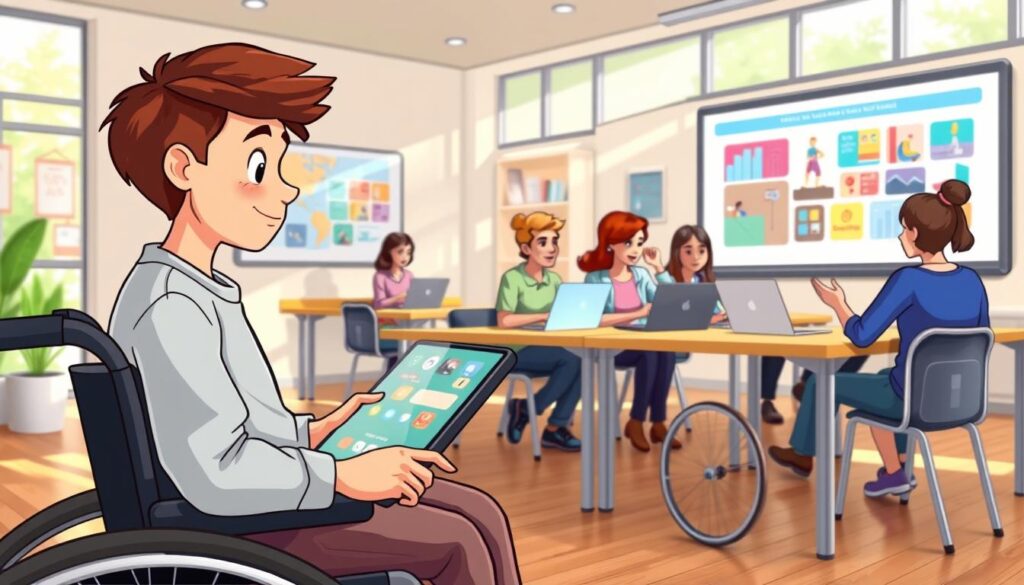
AI changes how we learn online. It mixes smart platforms with tools for everyone. This makes learning easy for all without making it hard.
Tools for Special Needs Students
Microsoft and Google’s speech-to-text helps students with hearing issues. It works with tools like JAWS and NVDA for those with vision problems.
Adaptive platforms like Smart Sparrow and Knewton adjust learning for different brains. They show things in ways students like, like pictures or sounds.
Wearables and IoT sensors can tell if a student is engaged. They adjust learning to keep it fun and right for each student.
Bridging Language Barriers
AI translation makes lectures and resources available right away. Tools like DeepL and Google Translate help everyone understand.
Speech-to-text and translation make live captions and transcripts. This helps students who speak different languages.
Voice assistants make learning hands-free. They help with translations and definitions, making learning easier for everyone.
When picking tools, follow WCAG standards. Talk to special education experts to make sure they work. Keep personal data safe in classrooms.
Future of AI in Educational Content Creation
AI will change how teachers make and share lessons. Early users save time with tools that make quizzes and feedback. This lets teachers work on making lessons better.
Automated Content Generation
AI can make many quizzes and assignments fast. Tools like Quizzizz and Lingio turn simple ideas into lessons. This makes teaching easier.
These tools help teachers grade less and work faster. They also make sure lessons are good and fair for everyone.
Customizable Learning Materials
Teachers can now make lessons fit each student’s needs. AI helps make different versions of lessons and videos. This helps students learn better.
Using AR/VR can make lessons more fun and help students remember more. Testing these ideas helps find the best ways to teach.
Using AI well means setting rules and checking how it works. This keeps lessons fair and helps students learn more.
The Impact of AI on Teacher Roles
AI changes how teachers work every day. It automates tasks like grading and scheduling. This frees up time for teachers to focus on teaching more.
Teachers will now focus on guiding and checking AI’s work. They will make sure the content is right and fair. This keeps learning quality high and teachers in charge.
Evolving Responsibilities in the Classroom
Teachers will create learning plans instead of just teaching. They will focus on designing lessons and helping students grow. This means teachers need to be good at planning and guiding students.
AI will give teachers data on how students are doing. This helps teachers tailor their teaching to each student. Schools that use this approach see better results and happier students.
AI as a Collaborative Tool
AI tools like virtual assistants help teachers by supporting students one-on-one. They don’t replace teachers but help them reach more students. Seeing AI as a helper makes it easier to use.
Teachers need to learn how to use AI well. They should learn about using data and AI tools in class. Workshops and practice help teachers feel more comfortable with AI.
| Focus Area | Teacher Role | AI Contribution | Recommended Action |
|---|---|---|---|
| Administrative Work | Oversee schedules and priorities | Automates grading, attendance, reporting | Redefine job descriptions to reduce clerical load |
| Instructional Design | Create personalized learning paths | Analyzes performance to suggest content | Invest in teacher training ai tools and data literacy |
| Quality Assurance | Verify materials and prevent bias | Generates content and recommendations | Develop feedback loops for model refinement |
| Student Mentorship | Coach critical thinking and socio-emotional skills | Provides individualized practice and tutoring | Prioritize mentoring time enabled by automation |
Case Studies of Successful AI Integration
This section shows how schools move from testing to using AI everywhere. They share how AI helped students stay in school longer and do better. They also talk about how they started, tested, and then used AI in many places.
K-12 examples in practice
In some schools, AI helped with reading and math. Kids were more interested and teachers could help those who were falling behind sooner.
Teachers used AI tools to help with lessons. These tools gave feedback and showed how students were doing. This helped teachers spend less time grading and more time helping students.
One way to teach about AI is to compare old ways with new ones. Students do both and think about how AI helps. For tips on using AI in class, check out this guide for teachers.
University pilots and scale-ups
Universities are using AI to make learning better. They use AI to help students who are struggling and to make sure more students finish their courses.
Working with companies, universities can make online courses faster. Teachers use AI to guess how well students will do and to help them more. This makes students do better and stay interested.
Some universities tested AI in blended learning. They used data and AI to make learning better. This helped them decide how to use AI more widely and how to keep students’ privacy.
| Use Case | Metric Improved | Implementation Path | Key Tool |
|---|---|---|---|
| Adaptive math modules (K‑12) | Engagement +12%, early risk ID | Pilot → teacher training → district scale | AI-driven eLearning platforms |
| Personalized LMS (University) | Course completion +9%, dropout risk reduced | Pilot cohorts → analytics refinement → campuswide rollout | University analytics |
| Automated content for large cohorts | Instructor hours saved: 30% per term | Prototype → SME review → automate at scale | AI content generation tools |
Schools should keep track of how well AI works. This helps them use AI better in the future. It makes it easier to help more students.
Preparing for an AI-Driven Educational Landscape
Institutions have a big choice to make. They can invest in AI or fall behind. Starting with pilot programs and EdTech showcases is key. These help teachers and leaders get hands-on experience.
This approach reduces worries and builds confidence. It’s a step towards using AI in education.
Training Educators in AI Tools
Teaching teachers about AI should mix practice with learning. Short workshops on AI models and data dashboards are good. They should also include coaching and learning with peers.
Districts and universities can offer small badges for learning. These badges can be for using LMS, understanding data, and keeping data safe.
Future Skills for Students in a Tech-Driven World
Teaching students is more than just coding. They need to learn about digital and data literacy. They also need to know how to work with others and think critically.
Teaching AI ethics and privacy is important. It prepares students for the future. Freelancers and corporate learners will need to keep learning as AI changes jobs.
The plan is clear: check if you’re ready for AI, train teachers, test with clear goals, and make sure privacy and fairness are kept. This way, education with AI will be good and trustworthy.
FAQ
What is AI in education and how does it enhance e-learning?
AI in education uses smart systems to learn about each student. It makes learning plans just for them. It also gives feedback right away and helps with learning.
In e-learning, AI makes learning better by making content fit each student. It also helps with tests and talks to students through chatbots. It works with systems like Moodle and Canvas to help find the best courses for students.
Why does AI matter for learning outcomes and administrative efficiency?
AI helps give each student the attention they need. It uses smart learning to help students get better faster. It also finds students who might struggle early on.
AI makes grading easier for teachers. It also gives teachers important information to help them teach better.
What current trends and technologies are driving AI in e-learning?
New trends include deep learning and natural language processing. These help with chatbots and virtual tutors. AR/VR and IoT sensors also play a big role.
More schools and companies are using AI. This is because of the benefits it brings to learning.
How do personalized learning paths work with AI?
AI creates learning paths that fit each student. It looks at how well they do things and changes the path as needed. It also gives them the right practice and quizzes.
Teachers check and improve these paths. They make sure they are good for all students.
Can AI actually improve student engagement?
Yes. AI makes learning fun with games and quizzes. It also talks to students in a way that fits how they learn best. It helps keep students interested in learning.
Which administrative tasks can AI streamline in schools and training programs?
AI can do a lot of work for teachers. It grades papers, checks for plagiarism, and keeps track of who’s there. It also helps with scheduling and answers questions.
AI can even make lesson plans and reports. This lets teachers focus on helping students.
What AI-powered tools should educators evaluate first?
Teachers should look at AI tools that help with learning plans and chatbots. They should also check if these tools work well with what they already use. It’s important to make sure the tools are safe and work well.
How does AI use data analytics to monitor student progress?
AI looks at how students do things to predict how well they’ll do. It finds out if students are struggling early on. This helps teachers help students better.
AI also helps teachers see how students are doing. This lets teachers make plans to help students get better.
What are adaptive learning technologies and how are they different from static content?
Adaptive learning changes how it teaches based on how students do. It’s not just the same thing for everyone. It adjusts to help each student learn at their own pace.
What ethical and privacy concerns come with classroom AI?
There are big worries about keeping student information safe. There’s also the chance that AI might not treat everyone fairly. Schools need to make sure they’re protecting students’ privacy and treating everyone the same.
How can institutions address resistance from educators and schools?
Schools can start small with AI. They can show teachers how it works and help them learn. They should also make sure teachers are involved in how AI is used.
It’s important to show teachers how AI can help them, not replace them.
What AI tools support accessibility and learners with special needs?
There are tools that help students with different needs. They include things that help students hear or see better. They also make learning easier for students with special needs.
It’s important to make sure these tools are safe and work well for everyone.
How does AI help bridge language barriers in e-learning?
AI helps students learn in their own language. It translates and helps with understanding. This makes learning available to more people.
Can AI generate educational content, and what safeguards are needed?
Yes, AI can make learning materials. But, it’s important to check these materials. Teachers should make sure they are right and make sense.
AI can also help with things like quizzes and lessons. This makes making learning materials faster.
How customizable can AI-created learning materials be?
AI can make learning materials fit each student. It can change the level and type of material. It can even use things like AR/VR to make learning more fun.
How will teacher roles change with AI adoption?
Teachers will focus more on helping students. They will work on making learning plans and helping students understand. They will also make sure AI is used right.
Teachers will need to learn about AI and how to use it well.
Is AI meant to replace teachers or augment them?
AI is meant to help teachers. It does things like grading and making learning plans. This lets teachers focus on teaching and helping students.
AI and teachers work together to make learning better.
What measurable outcomes have successful AI pilots shown?
AI has helped students do better in school. It has also made grading easier for teachers. Companies have used AI to help employees learn faster.
Are there examples of K-12 schools and universities using AI successfully?
Yes. Schools use AI to help students who are struggling. Universities use it to help students stay in school and learn better. Research shows AI can predict how well students will do.
How should organizations prepare for AI-driven education?
Start by checking if you’re ready for AI. Make sure teachers know how to use AI tools. Start small and see how it works.
Make sure you’re protecting student information and using AI in a way that makes sense.
What skills will students need in an AI-enhanced learning landscape?
Students will need to know how to use technology and understand data. They should be able to work with AI and solve problems. They should also know how to learn new things.
What practical steps ensure responsible AI adoption in education?
Make sure you’re protecting student information and using AI in a way that makes sense. Choose AI that you can understand and that teachers can use. Start small and see how it works.
Keep teachers trained and listen to what students think. This will help keep AI use fair and effective.