Ever felt upset when a delivery is late or a product is out of stock? It feels like a broken promise. For many leaders, this frustration turns into a big push to use new tools. By 2025, using AI in supply chain management is not just a choice, it’s a must.
Investment in AI is growing fast. Big companies like Maersk and Amazon have seen big improvements. Most supply chain leaders say AI has made their work better, and Gartner says two-thirds have automated important tasks.
Customers want fast delivery and to track their orders in real time. AI helps with this by making logistics more efficient. It cuts down on costs and helps companies grow.
This guide is for those who want to use AI in their supply chain. It gives practical advice and examples. For more details, check out this link.
Key Takeaways
- AI in supply chain management is essential in 2025 for operational resilience.
- AI-powered supply chain optimization reduces costs and improves fulfillment.
- Machine learning for logistics addresses last-mile inefficiencies and inventory waste.
- Major brands show concrete ROI from integrating artificial intelligence in SCM.
- The guide helps professionals evaluate and implement practical AI solutions.
Understanding AI in Supply Chain Management
Artificial intelligence in SCM means using tech to learn from data and act smart. It helps move from just fixing problems to planning ahead. This makes supply chains better by reducing uncertainty and making decisions faster.
Definition and Importance
AI in SCM uses tech like machine learning and computer vision. It helps with forecasting, checking quality, and planning routes. Big companies like Unilever and Coca-Cola have seen big improvements.
Leaders find it useful for making better forecasts and reducing stockouts. It helps plan maintenance better. Using predictive analytics, companies can plan ahead instead of guessing.
Key Technologies Involved
Machine learning helps predict demand and spot problems. Retailers and makers use it to adjust prices and plan. Predictive analytics helps predict when things might break or when demand will go up.
Computer vision makes picking and checking quality better in warehouses. Robotics and cobots help move things faster while keeping everyone safe. Digital twins let planners test different scenarios.
Natural language processing and generative AI make talking to suppliers and designing packaging faster. IoT gives data to these models. This data comes from things like fleet sensors and warehouse temperature logs.
Companies should think about what they want to achieve with AI. They might want better forecasts or to spend less on logistics. For more on how to use AI, check out this article: predictive analytics for supply chain.
How AI Transforms Supply Chain Operations
AI changes how companies plan, operate, and respond in supply chains. It moves decisions from reactive to predictive. This shift cuts delays, lowers costs, and raises service levels.
Predictive Analytics
Predictive analytics for supply chain turns raw signals into timely actions. Unilever lifted SKU-location forecast accuracy from 67% to 92% by adding 26 external data sources. Coca-Cola reached 85% accuracy up to 12 weeks ahead. These gains reduce stockouts and free up working capital.
Treasured use cases include risk detection and predictive maintenance. Johnson & Johnson monitors more than 27,000 suppliers and over 10,000 risk signals daily to spot disruptions early. Toyota identifies supplier risks with roughly 91% accuracy and gains lead time to act during floods. Maersk cut vessel downtime by about 30%, saving hundreds of millions through predictive maintenance. The Port of Rotterdam extended asset life with 95% accuracy on maintenance forecasts.
Digital twins enable rapid scenario planning. Procter & Gamble simulated more than 15,000 reroutes during the Suez Canal crisis. Volkswagen ran 27,000 allocation scenarios to ease a chip shortage. These models reveal trade-offs in capacity, cost, and service so leaders can choose the best path.
Automation in Warehousing
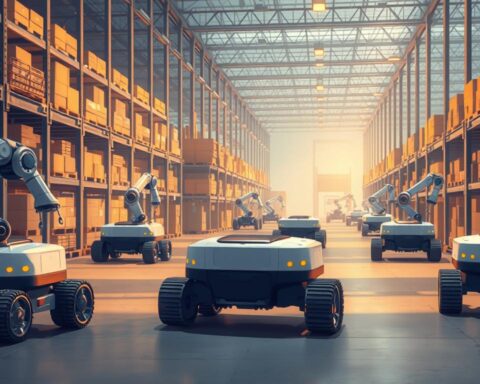
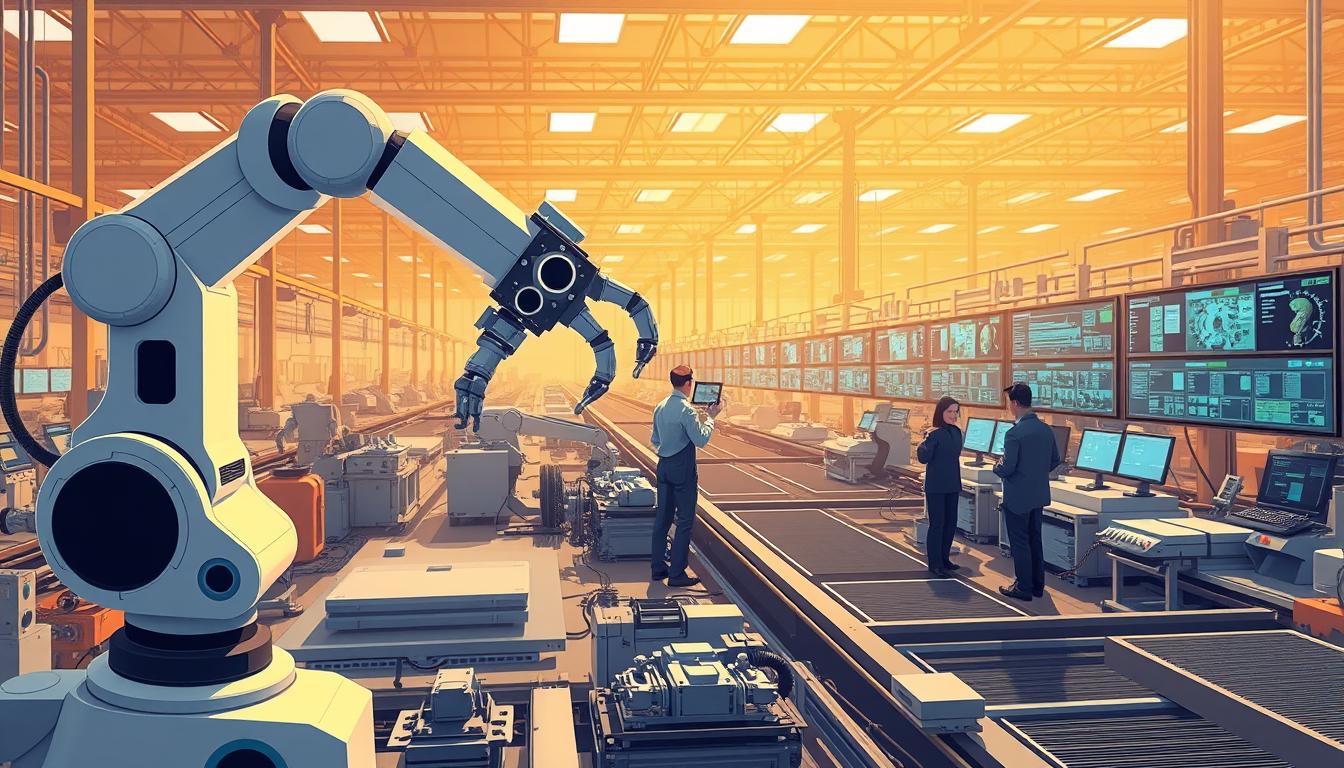
Automation in the supply chain reshapes warehouse economics. Amazon deploys over 520,000 robots, cutting fulfillment costs by about 20% and boosting orders per hour by 40%. Robotics paired with machine learning for logistics refines tasks like sorting, picking, and packing.
Computer vision lifts picking accuracy to near-perfect rates—about 99.8%—which cuts returns and rework. Zara processes more than 300 million weekly transactions to refresh inventory multiple times per day. Samsung manages some 85,000 SKUs across 200 distribution centers with dynamic replenishment.
Workforce optimization blends human strengths with automation. Kuehne+Nagel uses AI for scheduling across 1,300 sites, trimming labor costs by 15% while handling 20% more shipments. This mix improves throughput, reduces downtime, and boosts capacity utilization.
| Capability | Example | Impact |
|---|---|---|
| Forecast Accuracy | Unilever & Coca-Cola | Reduces stockouts; improves inventory turns |
| Risk Detection | Johnson & Johnson; Toyota | Faster responses to supplier disruptions |
| Predictive Maintenance | Maersk; Port of Rotterdam | Less downtime; extended asset life |
| Warehouse Robotics | Amazon | Lower fulfillment costs; higher throughput |
| Computer Vision | Leading retailers | Picking accuracy to 99.8%; fewer returns |
| Dynamic Replenishment | Zara; Samsung | Real-time inventory updates; better availability |
| Workforce Optimization | Kuehne+Nagel | Lower labor costs; improved throughput |
Benefits of AI-Driven Supply Chain Management
AI changes supply chains by using data for quick actions. Leaders see gains in speed, cost, and customer happiness. Companies like Microsoft, DB Schenker, Walmart, UPS, and Amazon show how AI investments pay off.
Improved Efficiency
AI makes planning faster and execution tighter. Microsoft now plans in about 30 minutes, up from four days. This makes planners focus on important tasks.
Real-time tracking is key. DB Schenker watches millions of shipments daily. They spot problems fast, keeping things moving and reducing idle stock.
AI helps predict needs better. Home Depot uses big data to adjust stock quickly. This makes demand sensing a constant effort, not just a task.
Cost Reduction
AI helps manage stock better, saving money. Walmart saved $1.5 billion on inventory costs. They kept a 99.2% in-stock rate.
AI optimizes routes, saving fuel and time. UPS saves millions of liters of fuel yearly with ORION. DHL cut delivery miles by millions with dynamic rerouting.
Predictive maintenance saves on assets. FedEx and the Port of Rotterdam saved millions with AI. AI finds problems before they happen, saving money.
Enhanced Customer Satisfaction
AI makes delivery faster and items more available. DHL cut delivery times by about 25%. Walmart keeps shelves full, making customers happy.
AI improves accuracy and personalizes service. Amazon’s picking accuracy is around 99.8%. AI gives tailored delivery times and clear updates.
AI keeps service going in tough times. Companies like DB Schenker and Target use AI to reroute shipments. This keeps service steady during shocks.
These benefits match what executives look for in AI. They want faster lead times, lower costs, higher fill rates, and happier customers. When AI and process changes work together, the result is a strong, efficient network.
Key Applications of AI in Supply Chains
AI in supply chains helps a lot in forecasting, inventory, and more. Companies like Unilever and Zara show how AI works. They use data to make smart choices.
Demand Forecasting
AI uses machine learning to predict demand. It looks at sales data, weather, and social media. Unilever uses 26 sources to predict demand with 92 percent accuracy.
AI helps avoid too much stock and not enough stock. Unilever saved €300 million and Coca-Cola saved €250 million. This saves money and improves service.
Inventory Optimization
AI makes inventory management better. Zara updates stock levels daily. Best Buy moves stock between stores to save money.
Big companies save a lot of money with AI. Samsung saved $1.2 billion and improved service. AI helps manage stock levels well.
Supplier Relationship Management
AI helps rate suppliers. Siemens rates over 15,000 suppliers to speed up buying. This saves 11 percent of costs.
AI also watches for supplier problems. Johnson & Johnson and Toyota track suppliers to avoid issues. AI stops fraud, saving money for companies like Intel.
Logistics and Transportation
AI makes logistics better. UPS and DHL use AI to plan routes. This saves time and money.
AI also makes last-mile delivery better. Amazon uses drones and smart routes to save money. This makes delivery faster and cheaper.
- Demand forecasting: higher accuracy, fewer stockouts, lower carrying costs.
- AI-driven inventory management: dynamic rebalancing, reduced markdowns, cash release.
- Supplier management: faster procurement, proactive risk control, fraud detection.
- Machine learning for logistics: route optimization, better utilization, lower emissions.
Challenges in Implementing AI in Supply Chains
Using AI in supply chains has big benefits and big challenges. Teams struggle with technical issues, getting everyone on board, and needing lots of data. These problems affect how big the project is, how long it takes, and if it’s worth it.
Data Quality Issues
AI needs good, consistent data. This data comes from sales, logistics, inventory, IoT sensors, and outside sources like weather. Bad data means AI won’t work well and a lot of effort is wasted.
To fix this, teams should clean and organize their data well. They should check for errors before using the data for AI. Testing small parts first helps make sure everything works well.
Integration with Existing Systems
Connecting AI to old systems is hard. Old systems use their own ways of sharing data, but AI needs standard data. Getting ERP to work with AI is often the biggest problem.
To solve this, start small. Test how AI works with old systems, then make it better. Use special tools and ways to talk between systems to keep things running smoothly.
Skill Gaps in Workforce
Teams need people who know about data, supply chains, and AI. Companies must teach their teams how to use AI. This way, teams can make good decisions and use AI’s insights.
Changing how people work is also important. AI can do simple tasks, so people can focus on big ideas and solving problems. Training and practice help teams learn and use AI better.
Other problems include people not wanting to change, not having good rules, and expecting too much. To fix these, start small, set clear goals, and keep AI up to date with changing markets.
| Challenge | Root Cause | Mitigation |
|---|---|---|
| Data quality | Fragmented sources, sensor noise, inconsistent formats | Implement data collection techniques, cleansing pipelines, and validation checks |
| System integration | Legacy ERP/WMS/TMS, lack of APIs, disparate data models | Phased integration with ERP, use middleware, pilot testing, and API standardization |
| Skills shortage | Limited data science and AI operations experience | Skill development for AI via training, hiring, and cross-functional teams |
| Change resistance | Fear of job loss, lack of trust in models | Transparent metrics, stakeholder engagement, and incremental rollout |
| Governance and maintenance | No clear ownership, model drift over time | Establish governance, continuous monitoring, and scheduled retraining |
For more on how to overcome these challenges, check out this article: barriers to AI adoption in supply.
Case Studies of Successful AI Implementation
Big companies use AI to fix real supply chain issues. Each story shows how tech leads to real results. You’ll see how AI helps with supply chain, logistics, and inventory management.

Amazon’s Supply Chain Innovation
Amazon uses over 520,000 robots in its centers. These robots help with AI management and make orders flow better.
Amazon’s computers check items with 99.8% accuracy. This cuts down on mistakes and returns. They also test drone delivery and smart routes to speed up deliveries.
Coca-Cola’s AI Strategies
Coca-Cola uses AI for hundreds of things at once. This makes forecasts 85% accurate up to 12 weeks ahead.
They cut forecast mistakes by about 30%. This saved around €250 million in safety stock. AI also helps with market sensing and demand planning.
Walmart’s Efficient Logistics
Walmart uses AI in 4,700 stores to save $1.5 billion. They keep items in stock almost 99.2% of the time. AI looks at over 200 things for each item to plan restocking.
These systems help avoid stockouts and keep shelves full. This shows AI’s power in keeping sales and profits up.
Other companies also see benefits. Maersk cuts downtime and emissions with AI. UPS ORION saves fuel and reduces CO2. DHL improves forecasts and delivery times with AI.
| Company | Primary AI Use | Key Metric | Business Impact |
|---|---|---|---|
| Amazon | Robotics, computer vision, routing | 99.8% picking accuracy; 20% cut in fulfillment costs | Higher throughput, fewer returns, faster delivery |
| Coca-Cola | Demand forecasting, market sensing | 85% forecast accuracy; 30% lower forecast error | €250M safety stock reduction; better promotions planning |
| Walmart | Inventory optimization, demand algorithms | $1.5B inventory cost savings; 99.2% in-stock rate | Reduced stockouts; improved revenue retention |
| Maersk | Predictive maintenance | 30% less vessel downtime; $300M saved | Lower costs; reduced CO2 emissions by 1.5M tons |
| UPS (ORION) | Route optimization | 30,000 optimizations/min; 38M liters fuel saved | Lower emissions; major fuel cost reduction |
| DHL | Forecasting and smart routing | 95% forecasting accuracy; 25% faster deliveries | Shorter lead times; fewer delivery miles |
Future Trends of AI in Supply Chain Management
The future of supply chains will see more sensors, quicker decisions, and greener practices. Companies that mix human insight with AI’s power will move faster and be more flexible. These changes will affect how we buy, store, and ship goods in real ways.
Increased Integration of IIoT and Sensors
Investments in Industrial Internet of Things (IIoT) are making tracking and maintenance better. Big ports and carriers like the Port of Rotterdam, FedEx, and UPS are using sensors to cut downtime and save fuel. More companies will use IoT to plan better and avoid surprises.
Real-time Data Analysis and Control
Control towers will get better at handling data fast. Logistics platforms already track millions of items and spot problems quickly. This means teams can react fast, not just forecast.
Real-time analytics will be key for quick fixes and handling issues fast.
Sustainable Operations and Circular Strategies
AI helps cut fuel use and emissions by optimizing routes and loads. UPS and DHL have seen big improvements, and Maersk has cut emissions a lot. Companies will plan better and choose suppliers that help the planet.
AI and digital twins will make designing better. Decisions will be made faster in buying, storing, and shipping. Testing in virtual models and using AI can make changes safer and quicker.
For those looking to start, there’s research on how to adopt AI. You can find more at future AI in the supply chain.
Selecting the Right AI Tools for Your Supply Chain
Choosing the right AI tools starts with knowing what you want. Look at big areas like forecasting, planning routes, and cutting inventory. Start small to learn and grow.
Features to Consider
It’s important to connect with your current systems. Look for tools that easily link with ERP, WMS, TMS, and IoT. This makes things work together smoothly.
Being able to understand how AI works is key. Choose tools that explain their decisions clearly. This builds trust in the technology.
Tools should grow with you. Cloud-based systems are best because they can change easily. This lets you add more features as needed.
Easy integration is a big plus. Tools that work well with other systems save time and effort. This makes starting up faster.
Having specific modules for tasks helps a lot. Look for tools that can handle forecasting, planning, and more. This means you can see results sooner.
Keeping data safe is very important. Make sure the tools you choose protect your information well. They should follow all the rules for keeping data safe.
Popular Software Solutions
Big companies often choose all-in-one platforms from Oracle, SAP, and Microsoft. These platforms help with planning, doing things, and analyzing data. They are good for companies that want to use AI for everything.
For specific tasks, there are special tools. Blue Yonder is great for forecasting and inventory. SAS and IBM are good for deep analytics. Startups are good at matching freight and planning routes. These tools help with quick tests.
For automating warehouses, companies like Amazon Robotics have what you need. Their systems work with analytics to make things faster.
Control tower tools give a clear view and help with planning. Companies like DB Schenker use these to stay flexible. Choosing a tool that can plan in real-time is important.
- Define what you want to achieve.
- Find tools that match your needs.
- Start small, learn, then grow.
When picking AI tools, use this checklist. It helps find the right fit for your strategy. This way, you can use AI to improve your supply chain without too much trouble.
Training Employees for an AI-Enabled Supply Chain
Getting teams ready for AI is about culture and tech. Mix practical learning with clear rules. This helps staff feel sure and leaders keep things in order.
Skill Development Programs
Begin with special programs for key skills: understanding data, AI, and rules. Different jobs need different levels of training.
Hands-on labs and workshops are great for practice. They help teams test and improve AI safely.
Team up experts with data scientists. This turns business problems into AI goals. Make sure everyone knows the goals and picks the right tools.
Change Management Strategies
Start with small pilots to show AI’s value. Use clear goals and KPIs to show progress.
Be open about new roles. AI will help staff focus on big ideas. Companies like Microsoft and Nike show how this works.
Make rules for AI use and data quality. Keep training and feedback going. This keeps everyone on the same page.
| Program Element | Audience | Format | Expected Outcome |
|---|---|---|---|
| Data Literacy | All supply chain staff | Workshops, e-learning | Improved interpretation of reports and model outputs |
| Model Interpretation | Operations analysts, managers | Hands-on labs, vendor courses | Faster, more confident decision making |
| AI Engineering | Data engineers, data scientists | University partnerships, certifications | Robust model development and validation |
| Governance & Ethics | Leadership, compliance teams | Roundtables, policy sprints | Clear accountability and ethical safeguards |
| Pilot Programs | Cross-functional teams | Phased deployments | Proof of value and scalable playbooks |
Keep learning and have clear plans for change. This makes teams strong and ready for AI. With the right training, companies do better.
Measuring the Success of AI in Supply Chain
Measuring success is key. It turns tests into real value. We need to link models to money, service, and being green.
Key metrics focus on impact:
- Forecast accuracy: track how much better we are at guessing what’s needed. Unilever went from 67% to 92%.
- Inventory metrics: see how much money we save by not having too much stuff. Walmart saved a lot of money here.
- Operational throughput: check how fast we can get things done. Microsoft went from days to minutes. Amazon keeps picking things right almost all the time.
- Cost metrics: find out how much we save on shipping and keeping things running. UPS, FedEx, and Maersk saved a lot of money and fuel.
- Service levels: see how well we keep things in stock and how fast we deliver. DHL and Walmart show good results here.
- Sustainability KPIs: track how much we reduce pollution and save on gas. This shows we’re helping the planet.
We should check these KPIs often. Use dashboards to see trends, not just one-time numbers. This helps teams catch problems early.
Regular assessment of AI systems is important. We need to keep an eye on how well they work and the results they bring.
- Compare what we predict with what really happens. Update models when they’re not doing well enough.
- Use a plan to grow: test, improve, then use more. Regular checks help find and fix problems.
- Make sure data and learning go together. Companies like Target and DB Schenker show how to do this well.
- Keep things in order: watch data quality, model changes, and follow rules. Share what we learn and update plans to keep getting better.
Teams and leaders should agree on how often to check and what to do when things aren’t good. When we use KPIs and check AI often, we make sure it keeps bringing value to our business.
The Role of Big Data in AI and Supply Chains
Big data is key in today’s logistics. Companies use many sources to see their operations clearly. This helps them make quick decisions and improve their supply chain.
Data Collection Techniques
Supply chains get data from many places. This includes ERP, WMS, and POS records. Home Depot shows how important it is to have a lot of data.
They also look at weather, social media, and news. Companies like Unilever and Procter & Gamble use this to see when demand might change.
IoT and sensors give real-time info. This helps companies like FedEx and UPS find problems early. They can fix them before they get worse.
They also get data from partners and customs. This helps with planning across borders. It’s best to have both real-time and batch data, follow data rules, and clean it before using it.
Analyzing and Leveraging Data
Using data well needs machine learning and other tools. Companies use these to predict demand, find problems, and check suppliers. This helps them make better choices.
They look at many kinds of data. P&G watches social media, and L’Oréal looks at customer talks. Intel uses models to find unusual things in making.
Digital twins help teams try out different plans. Companies like Volkswagen and Nestlé use them to test and improve. This helps them avoid problems and make better plans.
Turning insights into action is important. Companies like DB Schenker and Target work fast to keep things running smoothly. They measure how quickly they can act.
Improving is ongoing. They keep checking how well their models work and update them as needed. This keeps their predictions accurate in changing markets.
| Data Source | Typical Use Case | Example Organization |
|---|---|---|
| ERP, WMS, POS | Inventory visibility and demand history | Home Depot |
| Weather & macro indicators | Demand adjustments and route planning | Unilever |
| IoT telemetry | Asset tracking and preventive maintenance | FedEx |
| Social media & reviews | Demand sensing and product signals | Procter & Gamble |
| Carrier and customs feeds | Global route planning and ETA accuracy | DB Schenker |
| Simulations / digital twins | Scenario testing and disruption planning | Volkswagen |
Conclusion: Embracing AI for Competitive Advantage
AI is changing supply chains. It’s making them proactive instead of just reacting. More IIoT, real-time analytics, and digital twins are key.
Big names like Amazon and Walmart are already using AI. They see big wins in efficiency and customer happiness.
Future Outlook
AI will soon help more than just big tech companies. It will help mid-sized ones too. Gartner says we’ll see a lot more AI in supply chains soon.
AI will also help the planet. It will cut down on emissions and use resources better. This will make our operations greener and cheaper.
Steps for Implementation
Start with clear goals. Choose areas like demand forecasting or inventory management. Make sure they match your KPIs.
Get your data ready. Clean and organize it from different sources. Then, test small pilots to see how they work.
When you’re ready to grow, use APIs to connect your systems. Make sure your team knows how to work with AI. Keep checking how things are going and make changes as needed.
FAQ
What is AI in supply chain management and why is it essential in 2025?
AI in supply chain management uses technologies like machine learning and predictive analytics. It helps automate forecasting and decision-making. By 2025, it’s a must-have for businesses to stay competitive.
Which core technologies should companies evaluate when adopting AI for supply chains?
Look at machine learning for forecasting and predictive analytics for planning. Also, consider computer vision for quality control and robotics for automation. Digital twins, NLP, and IIoT integration are also important.
How does predictive analytics improve supply chain performance?
Predictive analytics makes forecasts more accurate and helps spot risks early. It leads to better inventory management and faster responses to disruptions.
What operational benefits does automation in warehousing deliver?
Automation in warehouses boosts efficiency and cuts down on errors. It also lowers costs. For example, Amazon’s robots have improved order processing by 40%.
What measurable improvements in efficiency can organizations expect from AI?
AI shortens planning cycles and improves forecasting. It also gives better visibility into operations. For instance, Microsoft has seen a 24% boost in accuracy.
How does AI reduce supply chain costs?
AI optimizes routes and reduces inventory costs. It also lowers maintenance and freight expenses. For example, Walmart saved
FAQ
What is AI in supply chain management and why is it essential in 2025?
AI in supply chain management uses technologies like machine learning and predictive analytics. It helps automate forecasting and decision-making. By 2025, it’s a must-have for businesses to stay competitive.
Which core technologies should companies evaluate when adopting AI for supply chains?
Look at machine learning for forecasting and predictive analytics for planning. Also, consider computer vision for quality control and robotics for automation. Digital twins, NLP, and IIoT integration are also important.
How does predictive analytics improve supply chain performance?
Predictive analytics makes forecasts more accurate and helps spot risks early. It leads to better inventory management and faster responses to disruptions.
What operational benefits does automation in warehousing deliver?
Automation in warehouses boosts efficiency and cuts down on errors. It also lowers costs. For example, Amazon’s robots have improved order processing by 40%.
What measurable improvements in efficiency can organizations expect from AI?
AI shortens planning cycles and improves forecasting. It also gives better visibility into operations. For instance, Microsoft has seen a 24% boost in accuracy.
How does AI reduce supply chain costs?
AI optimizes routes and reduces inventory costs. It also lowers maintenance and freight expenses. For example, Walmart saved $1.5 billion in inventory costs.
In what ways does AI enhance customer satisfaction?
AI leads to faster and more reliable deliveries. It also improves inventory accuracy. This results in higher customer satisfaction.
How do AI models improve demand forecasting and inventory optimization?
AI models use data from various sources to improve forecasting. This leads to better inventory management and cost savings. For example, Unilever has seen a 92% accuracy rate.
How can AI improve supplier relationship management and risk detection?
AI scores suppliers and monitors risks continuously. It helps identify anomalies early. This leads to better supplier management and risk detection.
What logistics and transportation gains does AI deliver?
AI optimizes routes and improves freight matching. It also boosts capacity utilization. This results in cost savings and efficiency gains.
What are the main data quality and integration challenges when implementing AI?
Data quality and integration are key challenges. Poor data can lead to weak models. A phased approach helps overcome these challenges.
How should organizations address skill gaps for AI adoption in supply chains?
Invest in cross-functional skill development. Use hands-on training and vendor programs. Encourage collaboration between data teams and domain experts.
Can you give concrete case study results that show ROI from AI in supply chains?
Yes. Amazon’s robotics and computer vision have improved efficiency and reduced costs. Walmart saved $1.5 billion in inventory costs. These examples show the ROI from AI.
How will IoT and real-time data shape the next phase of AI in supply chains?
IoT will provide more data for predictive maintenance and asset tracking. Real-time control towers will monitor shipments and take action quickly. This will improve efficiency and resilience.
What sustainability benefits can AI deliver for supply chains?
AI reduces emissions through optimized routes and predictive maintenance. It also helps design more sustainable operations. Examples show significant reductions in emissions.
Which features matter most when selecting AI tools for supply chain use?
Look for data connectivity, scalability, model explainability, and strong security. Also, consider vendor experience in control towers and freight optimization.
What software solutions and vendors should organizations consider?
Consider end-to-end platforms from Oracle, SAP, and Microsoft. For specialized needs, look at Blue Yonder, SAS, and IBM. Choose vendors based on successful deployments and industry fit.
How should companies pilot AI to ensure measurable success?
Start with clear goals and audit your data. Run a focused pilot and measure outcomes. Integrate successful pilots and upskill staff. Monitor performance continuously.
What KPIs should measure AI impact in supply chain projects?
Track forecast accuracy, inventory savings, and throughput. Also, measure cost savings and service levels. Regular monitoring keeps models aligned to business value.
How should organizations maintain model performance over time?
Implement continuous monitoring and schedule retraining. Maintain governance and create feedback loops. Regular pilot reviews ensure sustained performance.
What data sources are essential for robust AI models in supply chains?
Use internal and external data sources. Combine sales history, ERP, and weather data. Clean and govern your data for reliable models.
How can companies translate data into actionable insights and automation?
Use ML and NLP to extract signals from data. Build digital twins for scenario testing. Operationalize insights through control towers and automated workflows.
What future trends will shape AI in supply chain management?
Expect more IIoT adoption and real-time analytics. Digital twins and generative AI will become mainstream. Sustainability and resilience will drive AI investments.
What practical steps should leaders follow to implement AI in their supply chains?
Define clear goals and audit your data. Pilot AI with measurable KPIs. Integrate successful pilots and upskill staff. Monitor performance continuously.
.5 billion in inventory costs.
In what ways does AI enhance customer satisfaction?
AI leads to faster and more reliable deliveries. It also improves inventory accuracy. This results in higher customer satisfaction.
How do AI models improve demand forecasting and inventory optimization?
AI models use data from various sources to improve forecasting. This leads to better inventory management and cost savings. For example, Unilever has seen a 92% accuracy rate.
How can AI improve supplier relationship management and risk detection?
AI scores suppliers and monitors risks continuously. It helps identify anomalies early. This leads to better supplier management and risk detection.
What logistics and transportation gains does AI deliver?
AI optimizes routes and improves freight matching. It also boosts capacity utilization. This results in cost savings and efficiency gains.
What are the main data quality and integration challenges when implementing AI?
Data quality and integration are key challenges. Poor data can lead to weak models. A phased approach helps overcome these challenges.
How should organizations address skill gaps for AI adoption in supply chains?
Invest in cross-functional skill development. Use hands-on training and vendor programs. Encourage collaboration between data teams and domain experts.
Can you give concrete case study results that show ROI from AI in supply chains?
Yes. Amazon’s robotics and computer vision have improved efficiency and reduced costs. Walmart saved
FAQ
What is AI in supply chain management and why is it essential in 2025?
AI in supply chain management uses technologies like machine learning and predictive analytics. It helps automate forecasting and decision-making. By 2025, it’s a must-have for businesses to stay competitive.
Which core technologies should companies evaluate when adopting AI for supply chains?
Look at machine learning for forecasting and predictive analytics for planning. Also, consider computer vision for quality control and robotics for automation. Digital twins, NLP, and IIoT integration are also important.
How does predictive analytics improve supply chain performance?
Predictive analytics makes forecasts more accurate and helps spot risks early. It leads to better inventory management and faster responses to disruptions.
What operational benefits does automation in warehousing deliver?
Automation in warehouses boosts efficiency and cuts down on errors. It also lowers costs. For example, Amazon’s robots have improved order processing by 40%.
What measurable improvements in efficiency can organizations expect from AI?
AI shortens planning cycles and improves forecasting. It also gives better visibility into operations. For instance, Microsoft has seen a 24% boost in accuracy.
How does AI reduce supply chain costs?
AI optimizes routes and reduces inventory costs. It also lowers maintenance and freight expenses. For example, Walmart saved $1.5 billion in inventory costs.
In what ways does AI enhance customer satisfaction?
AI leads to faster and more reliable deliveries. It also improves inventory accuracy. This results in higher customer satisfaction.
How do AI models improve demand forecasting and inventory optimization?
AI models use data from various sources to improve forecasting. This leads to better inventory management and cost savings. For example, Unilever has seen a 92% accuracy rate.
How can AI improve supplier relationship management and risk detection?
AI scores suppliers and monitors risks continuously. It helps identify anomalies early. This leads to better supplier management and risk detection.
What logistics and transportation gains does AI deliver?
AI optimizes routes and improves freight matching. It also boosts capacity utilization. This results in cost savings and efficiency gains.
What are the main data quality and integration challenges when implementing AI?
Data quality and integration are key challenges. Poor data can lead to weak models. A phased approach helps overcome these challenges.
How should organizations address skill gaps for AI adoption in supply chains?
Invest in cross-functional skill development. Use hands-on training and vendor programs. Encourage collaboration between data teams and domain experts.
Can you give concrete case study results that show ROI from AI in supply chains?
Yes. Amazon’s robotics and computer vision have improved efficiency and reduced costs. Walmart saved $1.5 billion in inventory costs. These examples show the ROI from AI.
How will IoT and real-time data shape the next phase of AI in supply chains?
IoT will provide more data for predictive maintenance and asset tracking. Real-time control towers will monitor shipments and take action quickly. This will improve efficiency and resilience.
What sustainability benefits can AI deliver for supply chains?
AI reduces emissions through optimized routes and predictive maintenance. It also helps design more sustainable operations. Examples show significant reductions in emissions.
Which features matter most when selecting AI tools for supply chain use?
Look for data connectivity, scalability, model explainability, and strong security. Also, consider vendor experience in control towers and freight optimization.
What software solutions and vendors should organizations consider?
Consider end-to-end platforms from Oracle, SAP, and Microsoft. For specialized needs, look at Blue Yonder, SAS, and IBM. Choose vendors based on successful deployments and industry fit.
How should companies pilot AI to ensure measurable success?
Start with clear goals and audit your data. Run a focused pilot and measure outcomes. Integrate successful pilots and upskill staff. Monitor performance continuously.
What KPIs should measure AI impact in supply chain projects?
Track forecast accuracy, inventory savings, and throughput. Also, measure cost savings and service levels. Regular monitoring keeps models aligned to business value.
How should organizations maintain model performance over time?
Implement continuous monitoring and schedule retraining. Maintain governance and create feedback loops. Regular pilot reviews ensure sustained performance.
What data sources are essential for robust AI models in supply chains?
Use internal and external data sources. Combine sales history, ERP, and weather data. Clean and govern your data for reliable models.
How can companies translate data into actionable insights and automation?
Use ML and NLP to extract signals from data. Build digital twins for scenario testing. Operationalize insights through control towers and automated workflows.
What future trends will shape AI in supply chain management?
Expect more IIoT adoption and real-time analytics. Digital twins and generative AI will become mainstream. Sustainability and resilience will drive AI investments.
What practical steps should leaders follow to implement AI in their supply chains?
Define clear goals and audit your data. Pilot AI with measurable KPIs. Integrate successful pilots and upskill staff. Monitor performance continuously.
.5 billion in inventory costs. These examples show the ROI from AI.
How will IoT and real-time data shape the next phase of AI in supply chains?
IoT will provide more data for predictive maintenance and asset tracking. Real-time control towers will monitor shipments and take action quickly. This will improve efficiency and resilience.
What sustainability benefits can AI deliver for supply chains?
AI reduces emissions through optimized routes and predictive maintenance. It also helps design more sustainable operations. Examples show significant reductions in emissions.
Which features matter most when selecting AI tools for supply chain use?
Look for data connectivity, scalability, model explainability, and strong security. Also, consider vendor experience in control towers and freight optimization.
What software solutions and vendors should organizations consider?
Consider end-to-end platforms from Oracle, SAP, and Microsoft. For specialized needs, look at Blue Yonder, SAS, and IBM. Choose vendors based on successful deployments and industry fit.
How should companies pilot AI to ensure measurable success?
Start with clear goals and audit your data. Run a focused pilot and measure outcomes. Integrate successful pilots and upskill staff. Monitor performance continuously.
What KPIs should measure AI impact in supply chain projects?
Track forecast accuracy, inventory savings, and throughput. Also, measure cost savings and service levels. Regular monitoring keeps models aligned to business value.
How should organizations maintain model performance over time?
Implement continuous monitoring and schedule retraining. Maintain governance and create feedback loops. Regular pilot reviews ensure sustained performance.
What data sources are essential for robust AI models in supply chains?
Use internal and external data sources. Combine sales history, ERP, and weather data. Clean and govern your data for reliable models.
How can companies translate data into actionable insights and automation?
Use ML and NLP to extract signals from data. Build digital twins for scenario testing. Operationalize insights through control towers and automated workflows.
What future trends will shape AI in supply chain management?
Expect more IIoT adoption and real-time analytics. Digital twins and generative AI will become mainstream. Sustainability and resilience will drive AI investments.
What practical steps should leaders follow to implement AI in their supply chains?
Define clear goals and audit your data. Pilot AI with measurable KPIs. Integrate successful pilots and upskill staff. Monitor performance continuously.