In a small home office, a 90-second video changed everything. It landed on a suggested list and brought steady traffic. This shows why video content optimization is key. It connects creativity with growth.
To boost video visibility, start with a clear plan. Use targeted keywords, create engaging videos, and add the right metadata. On YouTube, SEO combines search principles with platform-specific signals. This helped grow a channel to over 77K views per month and 1.7K subscribers.
SEO is essential: billions of searches happen daily. Content must please both people and search engines. Modern video content must consider AI, mobile indexing, and engagement signals. Tools like YouTube Search Suggest and VidIQ help find important keywords.
Key Takeaways
- Video SEO mixes traditional keyword targeting with video-specific metrics like watch time and engagement.
- Optimized video content requires deliberate metadata: titles, descriptions, tags, and upload strategy.
- Use platform tools and reports—such as YouTube “Traffic Source: YouTube search”—to find high-impact keywords.
- Target keywords that show video results in Google and have meaningful monthly search volume to improve cross-platform visibility.
- Promotion—Quora, email signatures, embeds, playlists—amplifies discovery beyond the host platform.
- Stay aware of algorithm shifts: personalization and AI-driven recommendations change how visibility is earned.
- For a tactical look at how video optimization is evolving, consult recent analysis on video content trends and platform behavior at video content optimization in 2025.
Understanding Video Content Optimization
Video publishing needs a plan that mixes creativity with technical setup. This intro talks about making videos better so they reach the right people. They should do well on YouTube and Google.
What is Video Content Optimization?
Video content optimization makes titles, descriptions, tags, and metadata better. This helps platforms show the right videos. It also looks at how well videos do, like how long people watch and if they like it.
People start by finding keywords and looking at what others do. They check Google to see if their keywords can be found.
Importance of SEO for Video Content
SEO for videos is key because people often look for visual answers. This includes tutorials, reviews, and guides. Videos that are optimized get seen more and bring in more viewers from YouTube and search.
Being ready technically is important too. This means videos work well on phones, load fast, and have captions. Videos that keep people watching and get likes and comments do better. By 2025, being relevant and engaging will matter even more.
Key Elements of Video Optimization
Creating great video content starts with making smart choices. These choices help people find and watch your videos. Things like titles, descriptions, and thumbnails are key. They tell YouTube and search engines what your video is about.
Getting these right can make your video more visible. It also makes people more likely to click on it.
Title and Description Best Practices
Titles should be clear and have at least five words. Put the main phrase at the start. This helps search engines find your video.
Keep your title short, under 60 characters. This makes it easier to see in search results.
Descriptions should start with the main phrase in the first 25 words. Then, add more details. Aim for 250 words to include timestamps and links. Good descriptions help viewers understand your video and keep watching.
Thumbnail Design and Its Impact
Thumbnails are important because they get people to click. Use bright colors and big text. Make sure your brand looks the same on all thumbnails.
A good thumbnail can make more people watch your video. It sends a positive signal to YouTube.
Make thumbnails interesting and clear. Try different versions to see what works best. Using the same style for all thumbnails helps viewers recognize new videos.
Tags and Categories for Better Visibility
Tags help YouTube understand what your video is about. Start with the main phrase as the first tag. Then, add similar phrases and topics.
Use tools to see what other creators in your field use. This helps your video show up in suggestions.
Choose categories that match what your video is about. This helps people find your video. It also helps YouTube understand your content better.
| Element | Primary Goal | Best Practice |
|---|---|---|
| Title | Signal intent to search | 5+ words, keyword near start, ≤60 characters for SERP |
| Description | Provide context and links | 250+ words, keyword in first 25 words, include timestamps and a relevant link to a performance guide like video optimization best practices |
| Thumbnail | Increase CTR | Bold colors, readable text, consistent branding, test variants |
| Tags | Improve categorization | First tag = exact target keyword, include variations and related topics |
| Category | Align with audience | Choose the best-fit channel category to aid suggested placements |
| Retention Focus | Boost ranking signals | Create engaging structure; longer videos can outperform if retention remains high |
Choosing the Right Platform for Video Hosting
Choosing a video hosting platform is key. It affects how people find and watch your videos. Think about what you want: do you want more people to find your videos, or do you want to keep your brand looking perfect?
Consider how well the platform works with search engines, how easy it is to share videos, and how fast it loads. Also, look at how well it tracks your video’s performance.
YouTube vs. Vimeo: Pros and Cons
YouTube is huge, with lots of people watching videos there. It’s great for getting your videos seen by more people. To get noticed, make your channel look good and share your videos everywhere.
Vimeo is better for those who want a clean look and more control over their videos. It’s perfect for professional projects. But, Vimeo doesn’t get as many viewers as YouTube, so it’s harder to be seen.
Social Media Integration for Wider Reach
Sharing your videos on Facebook, X, Instagram, and LinkedIn helps more people see them. Make sure your videos fit well on mobile devices. Videos that look good on phones do better on social media.
Using ads on Google or Meta can help get your videos seen faster. Keep an eye on how people react to your videos. This helps you decide where to host them and how to make them better.
Crafting Engaging Video Content
Creating videos that grab attention starts with a clear plan. Viewers decide in the first 10 seconds if they’ll stay. Use a strong hook, show the value, and keep it fast to boost watch time.
Developing a Compelling Script
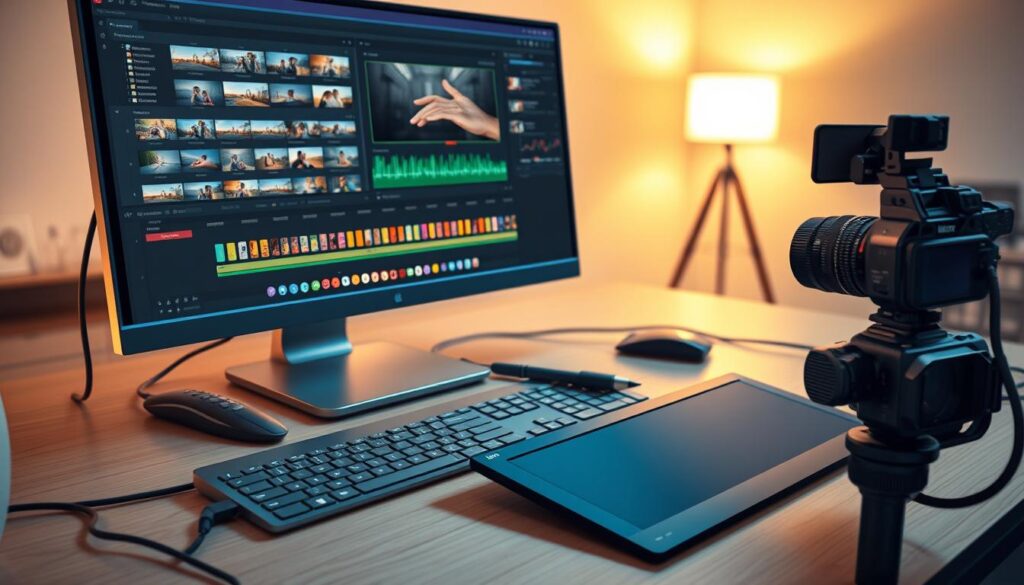
Scripts should outline key points and what viewers want. Start with a promise, show it in short scenes, and end with one key takeaway. Write in a way that sounds natural when spoken.
Break the script into parts: hook, proof, demonstration, and value recap. This helps keep viewers watching and supports video marketing.
Using High-Quality Visuals and Audio
Good visuals and clear audio make it easy to watch. They help viewers focus on the message, not technical issues. Test how it looks and sounds on mobile devices.
Use different visuals like cutaways and on-screen text to keep it interesting. These elements make viewers trust and like the video more.
Effective Calls to Action in Videos
Calls to action should feel like part of the story. Ask viewers questions to get them to comment, invite subscriptions after showing value, and suggest next steps. This matches what viewers want.
CTAs that get viewers to interact help with video marketing. They increase likes, shares, and subscribes. These actions help videos rank better when they keep viewers watching.
Importance of Video Metadata
Video metadata is like a map for search engines and recommendation systems. It includes title, description, tags, video length, upload date, and view count. These elements help find videos across platforms and support video search engine optimization.
Good metadata helps YouTube find and show videos to the right people. Saying target keywords aloud helps YouTube understand the video better. This makes the video easier to find and watch.
What is Metadata?
Metadata is like web meta tags: title tags, meta descriptions, and headers. For videos, metadata is both on-platform (title, tags, description) and off-platform (schema, JSON-LD on the hosting page). Channel-level fields, like the About section, help find the channel when they include niche keywords.
Transcripts and captions add text that search engines can read. This makes videos more searchable than just visual and audio cues. Mobile and technical metadata—sitemaps and video sitemaps—help search engines find videos well.
How to Optimize Metadata for SEO
Begin with the title: include the full keyword naturally and keep it short. Put the primary keyword early in the description—within the first 25 words—and aim for 250+ words. Repeat the keyword two to four times while keeping the copy useful for viewers.
For tags, put the exact keyword first. Add variations and related topic tags to improve recommended-video matching. Use structured data on the hosting page; JSON-LD video schema helps search engines understand context and runtime.
Channel metadata is important. Fill the About field with niche-relevant keywords to strengthen channel-level signals. Add transcripts and captions for extra crawlable text; these support both video search engine optimization and accessibility.
Lastly, watch engagement metrics and update metadata based on performance. Accurate metadata paired with strong viewer signals improves relevance in AI-driven recommendation systems and refines YouTube video optimization over time.
Utilizing Closed Captions and Transcripts
Captions and transcripts turn spoken content into searchable text. This helps creators reach viewers who watch on mute. It also helps those who need accessibility support.
Adding precise closed captions and clean transcripts can improve indexing. This makes content easier to find across platforms.
Captions increase comprehension and retention for diverse audiences. Viewers on mobile or in quiet settings often keep sound off. Captions meet that behavior and boost engagement.
Platforms such as YouTube auto-transcribe videos. Saying your target phrase aloud helps automatic transcripts capture it accurately.
Transcripts supply rich, crawlable text that search engines use to understand context. This extra text helps with long-tail conversational queries and voice-search optimization. Publishers who include searchable transcripts give algorithms more material to index.
This can improve video visibility in crowded feeds.
Human review raises accuracy and readability. Automated tools speed the process. Yet, a quick edit corrects misheard words and ensures brand terms remain consistent.
Accurate captions and transcripts reduce bounce rates and increase watch time. These outcomes strengthen overall video SEO.
Services vary by needs: Goldcast offers real-time captioning for live events. YouTube supports auto-translate. Tools like VEED.io and Amara let teams refine output. Read more about captioning options at captioning best practices.
Use the checklist below to implement captions and transcripts with impact.
| Step | Action | Expected Impact |
|---|---|---|
| 1 | Record key phrases aloud | Improves auto-transcript accuracy and helps video SEO |
| 2 | Generate closed captions | Boosts accessibility and viewer retention |
| 3 | Publish full transcripts | Creates crawlable text to improve video visibility |
| 4 | Perform human proofreading | Ensures keyword accuracy and better user experience |
| 5 | Localize subtitles when relevant | Expands reach to multilingual audiences |
Promoting Your Video Content
Promotion makes a great video valuable. A good plan helps share your video with the right people. This boosts your video’s visibility and supports your marketing goals.
Sharing Strategies Across Social Channels
Share clips on LinkedIn, Twitter, Instagram, and Facebook. Each platform likes different types of videos. For example, Instagram Reels are great for short clips.
Use LinkedIn for videos that show your expertise. Link them to your full videos. This helps people find more of your content.
Answer questions on Quora and forums with videos. This brings more people to your videos. It also helps your videos get mentioned more.
Create playlists and add videos to blog posts. This makes people watch more videos. It also helps your blog posts get more views.
Email Marketing and Video Content
Put video thumbnails in your emails. This makes people more likely to click. A link to your video brings more views.
Add a short video to your emails. Also, put links in your email signature. This helps promote your videos more.
Use Google Ads and Meta Ads to reach more people. Team this with influencer partnerships and guest blogging. This gets your videos more attention and backlinks.
Analyzing Video Performance Metrics
To get better results, teams need to check video performance often. Start by looking at how people watch, where they come from, and what’s on the page. Use what you find to make titles, thumbnails, descriptions, and page speed better.
Important metrics show how well videos connect with viewers. Watch time tells how long people watch and helps platforms see value. Audience retention shows where people stop watching. Click-through rate shows how good thumbnails and titles are at getting clicks.
Engagement, like likes, comments, and shares, adds more to what we know about viewers. This helps us understand how well videos do.
When videos are on web pages, other metrics matter too. Look at organic search traffic, bounce rate, and how well they work on mobile. Slow pages can hurt how long people stay and what they do next. Use all this data to make your videos and web pages better.
Key Metrics to Track for Success
Focus on a few important things to help improve your videos. Watch time, audience retention, and CTR are key for platforms. Also, check where viewers come from to find good keywords.
Look at engagement and how many subscribers you get. This shows if people like your videos and want more. On your website, watch organic search traffic, bounce rate, and how many people do what you want them to. Also, check how well your site works on mobile and how fast it loads. Use all these signs to decide what to change.
Tools for Analyzing Video Performance
YouTube Studio gives reports on watch time, retention, CTR, and where viewers come from. Use this info to make your titles, thumbnails, and descriptions better. VidIQ and TubeBuddy help with keywords, tags, and comparing to others.
Google Analytics and Google Search Console give more info on your website. They show organic traffic, bounce rate, and page speed. For finding keywords and backlinks, use Ahrefs or SEMrush. Add Google Trends and Google Keyword Planner for more search data.
| Metric | Why It Matters | Best Tool |
|---|---|---|
| Watch Time | Signals overall viewer value and boosts platform ranking | YouTube Studio |
| Audience Retention | Shows drop-off points to improve content and pacing | YouTube Studio |
| Click-Through Rate (CTR) | Measures effectiveness of thumbnails and titles | VidIQ / TubeBuddy |
| Traffic Sources | Identifies discovery paths and useful keywords | YouTube Studio / Google Search Console |
| Engagement (Likes, Comments, Shares) | Reflects viewer satisfaction and community growth | YouTube Studio |
| Organic Search Traffic | Measures SEO impact when videos are embedded | Google Analytics |
| Bounce Rate & Page Load Time | Affects retention and conversions on web pages | Google Analytics / PageSpeed Insights |
| Keyword Volume & Backlinks | Supports strategy to enhance video ranking across platforms | Ahrefs / SEMrush |
Teams should check video performance regularly and keep track of changes. Try different thumbnails and titles with A/B tests. See how changes affect your video’s ranking to know what works best.
Staying Updated with SEO Trends
Creators and marketers need to keep up with video SEO trends. This helps them make their videos more visible. Search habits, platform rules, and what makes videos rank well change a lot.
This year, three things are important. Videos that keep viewers watching are ranked higher. Also, longer videos can rank well if they keep viewers engaged. And, AI and mobile-first indexing change how videos are found.
Analytics and trying new things are key. Use keyword research and watch time to find good niches. Make sure your video’s metadata, thumbnails, and promotion are good for Google and YouTube.
Learning is always needed. Use industry resources and educational sites to stay up-to-date and get better at video SEO.
Current Trends in Video SEO
- Audience retention: make content that keeps viewers interested from start to end.
- AI-powered search: use conversational, long-tail phrases for voice and generative search.
- Mobile-first formats: make videos vertical or square to fit mobile and social views.
- Transcripts and captions: add accurate captions to help accessibility and search signals.
Resources for Ongoing Learning
- YouTube Creator Academy and platform guides for policy and feature updates.
- Semrush, Ahrefs, and Backlinko for in-depth ranking data and case studies.
- VidIQ and TubeBuddy for tools and insights for creators.
- Conferences and webinars from leaders to try new ideas and meet others.
Have a routine: check analytics weekly, try one new thing monthly, and check metadata every quarter. This way, teams can keep up with video SEO changes without losing quality.
Leveraging User Engagement and Feedback
When people interact with your videos, it sends a strong message. It tells platforms and viewers that your content is worth their time. By asking for likes, comments, and shares, you can make your videos more popular.
Simple actions can make a big difference. For example, asking viewers to subscribe at the end of your video can help. You can also ask questions in comments or create playlists to guide viewers to more content.
Engagement also helps you learn what works. Look at YouTube Studio data to see which videos get the most views. Use polls and comments to find out what your viewers want more of.
By using this feedback, you can make your videos even better. Try new things like changing thumbnails or descriptions. You can also make short clips from your best videos to reach more people.
Keep working on your videos based on what viewers say. This way, you’ll make your videos more visible and ranked higher over time.
FAQ
What is video content optimization?
Video content optimization, or video SEO, makes videos easy for platforms and search engines to find. It involves using keywords, metadata, and captions. It also includes making thumbnails and promoting videos to increase visibility on YouTube and Google.
Why does SEO matter for video content?
SEO helps videos get seen by more people. With billions of searches on Google and YouTube, it’s key for getting views. Good SEO makes videos more likely to show up in search results.
What title and description best practices improve video ranking?
Use clear titles with the main keyword early on. Keep titles short for search results but detailed for YouTube. In descriptions, put the keyword first and write at least 250 words. Add links and a channel About section.
How important is thumbnail design and how should thumbnails be created?
Thumbnails greatly affect how many people click on your video. Make them bold, readable, and consistent. They should show what your video is about to keep viewers interested.
How should tags and categories be used for better visibility?
Start tags with your main keyword and add related ones. Use the right category for your video. Tags help YouTube suggest your video to others.
Should creators host videos on YouTube or Vimeo?
It depends on what you want. YouTube is great for getting found by more people. Vimeo is better for a clean look and no ads. Think about what matters most to you.
How can social media integration expand video reach?
Share your videos on Facebook, Twitter, Instagram, and LinkedIn. Use different formats for each platform. This helps get more views and engagement.
What makes a compelling script for high audience retention?
Start strong and keep it interesting. Use stories and clear sections. Make sure to keep viewers engaged throughout.
How much do visuals and audio quality affect performance?
Good visuals and sound help keep viewers watching. But, it’s not just about quality. What you show and how you show it matters more.
What are effective calls to action (CTAs) in videos?
Ask viewers to like, comment, or subscribe after they’ve seen something valuable. Use end screens and playlists to keep them watching. A clear CTA helps the algorithm know your video is good.
What is video metadata and why does it matter?
Metadata includes title, description, and tags. It helps YouTube and search engines understand your video. Good metadata makes your video easier to find.
How should metadata be optimized for SEO?
Use your main keyword in the title and description. Add related keywords and keep your channel About section informative. Make sure everything matches your video’s story.
What benefits do closed captions provide?
Captions help hearing-impaired viewers and those watching on mobile. They improve understanding and retention. They also help search engines understand your video.
How do transcripts support SEO and engagement?
Transcripts add more text for search engines to find your video. They make your content accessible and can be used in other ways. This helps more people find your video.
What promotion strategies boost video visibility?
Share on social media, embed in blog posts, and use paid ads. Playlists and channel pages help turn views into subscribers. This increases your video’s reach.
How can email marketing support video campaigns?
Use email to send targeted video links. Animated GIFs can grab attention. Personalized recommendations can encourage more views.
Which video metrics are most important to track?
Watch Time, Audience Retention, and Click-Through Rate are key. Also, track engagement and subscriber growth. This helps you improve your videos.
What tools help analyze video performance?
YouTube Studio gives you analytics. Use VidIQ and TubeBuddy for keyword research. Google tools help with search volume and intent. Ahrefs and SEMrush analyze cross-platform data.
What current trends should creators watch in video SEO?
Focus on keeping viewers engaged and using AI for personalization. Optimize for voice search and mobile formats. Keep up with Google’s updates to stay relevant.
Where can creators learn and stay updated on video SEO?
Follow YouTube Creator Academy and Google’s Webmaster Central Blog. Industry blogs like Backlinko and Ahrefs are also helpful. Attend webinars and conferences to learn more.
How can creators encourage viewer interaction?
Ask questions and ask viewers to share your video. Use community posts and polls to keep the conversation going. Responding to comments shows you care.
How should creators use feedback to improve future videos?
Use comments and viewer behavior to test ideas. Identify common questions for new videos. Refresh old videos to keep them relevant. Keep making small changes to improve.